

One of the genres I’ve come to review a bit more often lately is that of Metroidvania. At first, these games were extremely scary for me. You have all these intricate platforming sections, tough bosses, and precise combat that would make even a Soulslike player cower in fear. Still, the genre quickly became one of my favorites, which also led me to identify the staples of a good one and a not-so-good one. The truth is that MIO: Memories in Orbit is among the former, and not just a plain good one, but one of the best. It is challenging, gorgeous, addictive, engaging, and even if it is a tad frustrating at times, it is also one of the best Metroidvanias I’ve played in recent memory.
One Deadly and Mesmerizing Ark

Douze Dixièmes via The Nerd Stash
In true Metroidvania fashion, MIO: Memories in Orbit features a cryptic narrative, and I mean that in a good way. You wake up as MIO, a Keeper from this giant ark called The Vessel. With not a lot of information about who you are or what’s going on, it is your job to figure out why most of the machines have gone mad, why some areas are full of overgrown vegetation, and why the Pearls, the guardians of The Vessel, have disappeared.
Most of the game’s narrative unfolds through environmental storytelling as you find notes and a few characters and locate the aforementioned Pearls, big, machine-like entities that used to safeguard this ark. While cryptic, the story builds up slowly as you keep finding Pearls, unlocking new areas, and stopping to talk to a few of the robots that remain somewhat friendly toward you.
The storytelling reminded me a lot of how Hollow Knight did it, with a bit of NieR sprinkled on top of it due to the AI and machines gone rogue type of deal. Even if I wasn’t hooked at first, the truth is that the narrative starts making a lot of sense, and it drops several bombs full of symbolism that make the whole journey more memorable. As usual, I won’t spoil much, but hardcore Metroidvania fans will enjoy the way MIO: Memories in Orbit approaches its story.
A Keeper’s Job
Douze Dixièmes via The Nerd Stash
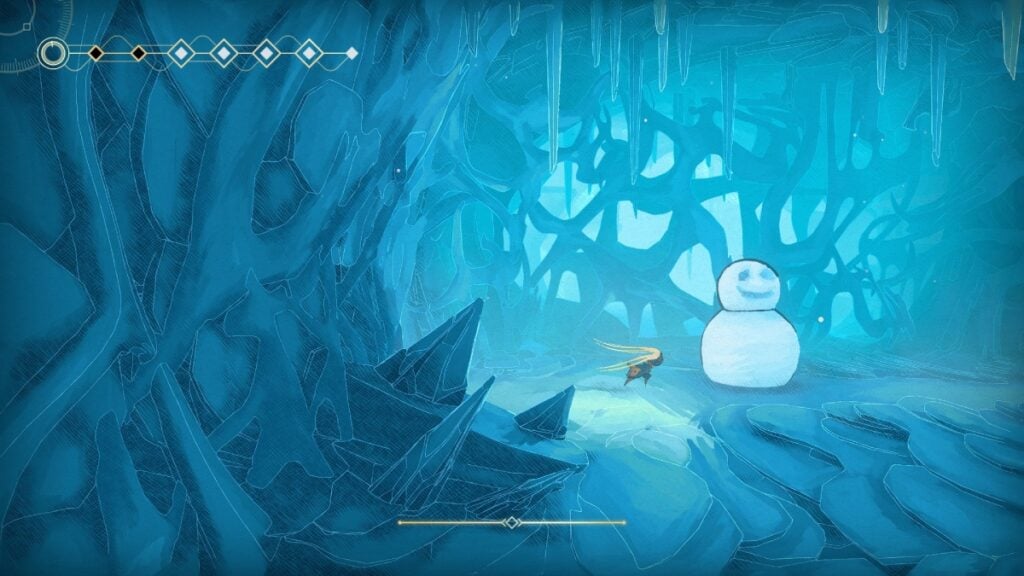
The one aspect I could talk about for hours is the actual gameplay, which is one of the best I’ve seen in the genre, and at times made Silksong look like a walk in the park.
First, I’d like to focus on one of the two core aspects of MIO: Memories in Orbit: the combat. Like a proper Metroidvania, you have a similar kit to that of other games. There’s your typical 3-4 hit combo, your double jump to evade enemies, and a few other tools that make fighting a bit more manageable inside this machine-riddled maze.
The one thing I found neat throughout my playthrough was the modifications system, which is another comparison to NieR: Automata. You might remember how 2B was capable of installing chips if she had enough storage. Well, MIO takes a somewhat similar approach by giving MIO modification slots that she can use to install different components that provide passive effects and even UI elements.

For instance, one of the mods lets you see the HP of enemies, while another lets you trigger an explosion whenever you get hit. There are even some that affect how things in the world function, such as basins that restore your HP being free whenever you use them.
The way you obtain these mods was also interesting, as it encourages you to explore and fight through The Vessel. You can loot a few mods in some hidden areas around the map, but you can also purchase some with Nacre, the game’s currency, and only after unlocking the merchant.
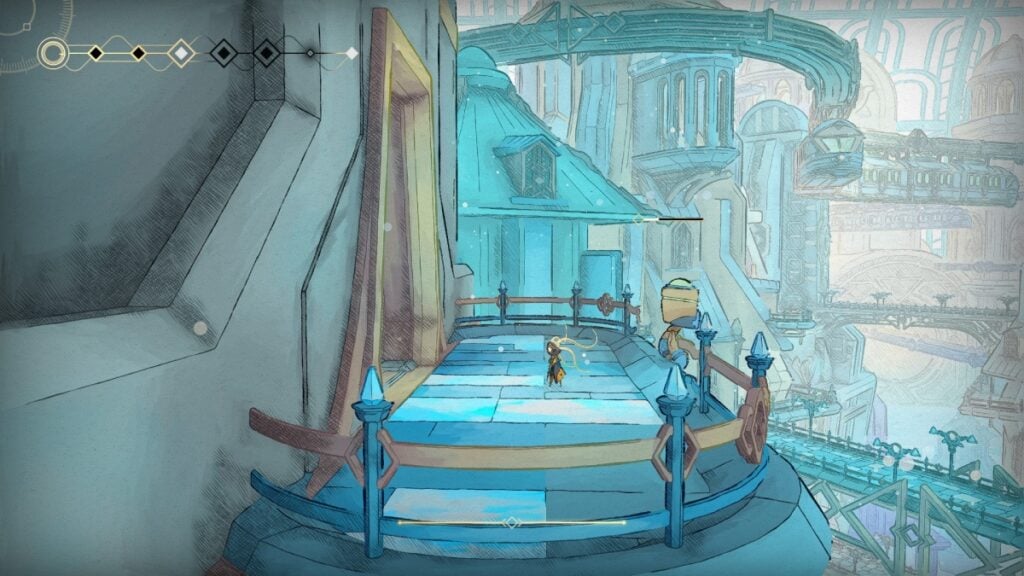
While MIO: Memories in Orbit takes several pages from different Metroidvania books, it also feels quite unique due to its accessibility options that don’t take away the challenge, but make the whole experience more bearable, especially for those who aren’t familiar with these games.
Douze Dixièmes via The Nerd Stash
One thing I liked is the Assist options. All of them are there to make the game easier in some ways, but without trivializing its systems. Take the corrosion assist, for example. Each time a boss defeats you, the boss will weaken, making the next encounter a bit easier, but without removing any of the boss’s skills. Another one pacifies all enemies, but since you’ll require currency to purchase upgrades or mods, you’ll eventually have to attack them, thus starting a fight.
It is quite the feat to make a Metroidvania so approachable, but without making it too easy that it loses its feeling. Many modern Metroidvanias have done this, but have lost their way, making them feel more like a platformer with extra steps—MIO doesn’t fall into that trap. It opens its colorful gates to everyone, but respects the genre’s legacy every step of the way.
My only complaint is that, despite offering many options that change how MIO plays in some ways, combat felt stale in most of my playthrough. Sure, mods change how some abilities work and even make your combos a bit more powerful. Yet, I never felt as if combat really improved. Most of the abilities are made for exploration, and while that is fine, I would have loved to see a balance between combat and exploration. Fortunately, the latter was so good that I didn’t mind seeing combat a bit too stagnant at times.
Exploration At Its Finest
Douze Dixièmes via The Nerd Stash
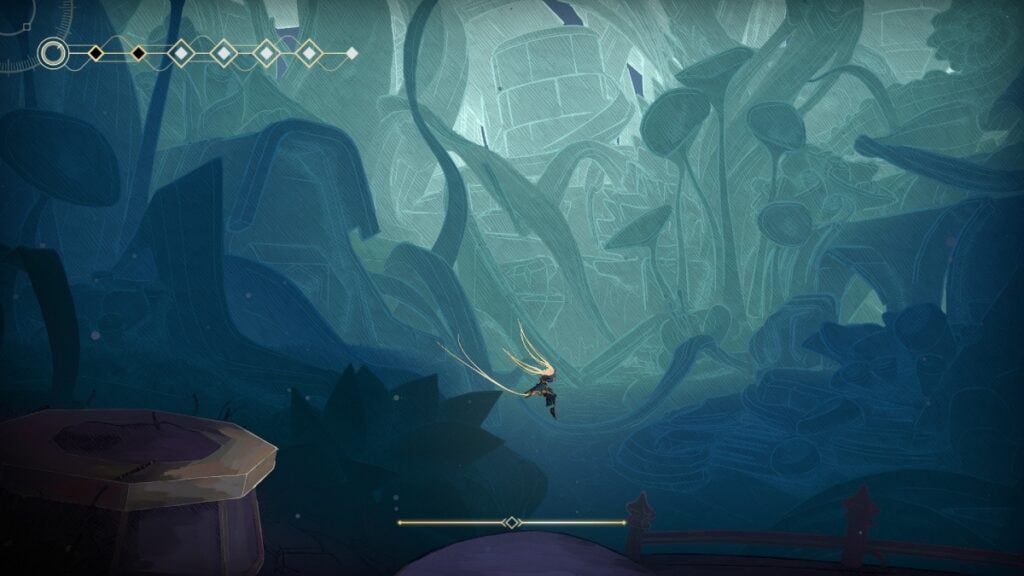
My absolute favorite part of MIO: Memories in Orbit was exploration, and skyrockets this title into one of the best Metroidvania I’ve played in recent memory.
The Vessel, this gorgeous yet eerie ark, is a maze of areas. Each has its own challenges that often have you stopping at specific points to visit other locations to unlock the pesky closed-off path. Spoiler alert: yes, there’s a lot of backtracking. But that was perfectly fine because I always found returning to that untrodden path rewarding.
MIO’s traversal abilities are also great, and unlocking a new one always gave me a boost of dopamine that encouraged me to keep going until I found the next locked path. At first, you start with only your double jump and the ability to hit a few things to reach a higher area. However, you then unlock the ability to glide and even cling to walls.
I’ve played several platforming sections, but few of them have really tested my gaming skills the way MIO: Memories in Orbit did. Some of them are just a gauntlet of fiery traps, robot-eating plants, and exploding things, while others require you to use every single ability you’ve unlocked in quick succession to reach the next area—all of them were terrific.
The only issue with these sections was the checkpoints; I found a few spots that were bugged. Usually, if you fall into a spot that kills you, you spawn back at the last place you stepped on. However, there were a few instances where it would return me to a different spot or place me in a place that was not even supposed to be a checkpoint. Again, not a big deal, but something that might need a quick fix just to make these platforming challenges as enjoyable as they are meant to be.
Metroidvania Done Right

Douze Dixièmes via The Nerd Stash
Ultimately, MIO: Memories in Orbit is one of the most challenging, memorable, oddly soothing, and unique Metroidvania experiences out there. It moves away from the bleak look of the genre and provides one of the most colorful and unforgettable settings ever, but it still nails that deadly difficulty in every encounter or platforming section.
Even if combat felt a bit eclipsed by its superb exploration mechanics, my journey inside The Vessel is one I won’t forget. With dozens of bosses, varied enemies, and rewarding exploration at every turn, MIO: Memories in Orbit easily stands out as one of the best experiences in the genre, and one that only needs a few tweaks here and there to reach that perfect mark.
MIO: Memories in Orbit (PC Reviewed)
MIO: Memories in Orbit stands out as one of the best modern Metroidvania experiences. Even if its combat could use more work, the exploration aspects and mesmerizing art style make it an unforgettable experience for fans of the genre.
Pros
- A mesmerizing art style
- Superb exploration mechanics
Cons
- Combat isn't as deep as the exploration
- A few minor bugs