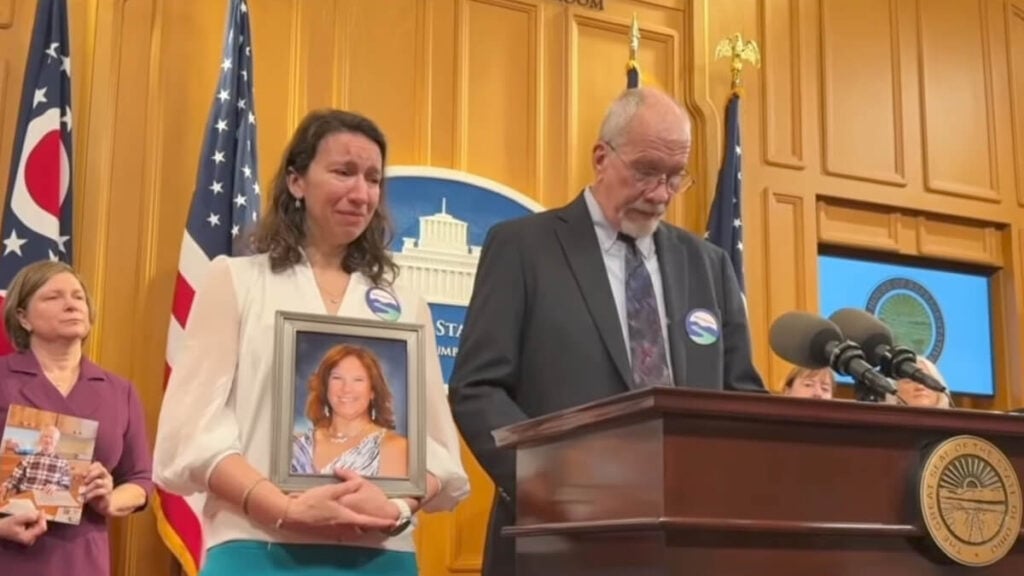
A newly introduced bill in Ohio that would allow terminally ill patients to choose how they end their lives is gaining attention among residents, with some supporting the proposal while others raise concerns about how it could be implemented. The legislation, introduced by State Rep. Eric Synenberg and other Democrats, would permit medical aid in dying for adults diagnosed with a terminal illness and given six months or less to live.
The announcement was made during a recent press conference at the Ohio Statehouse, where lawmakers and advocates gathered to outline the proposal. Reports state that under the bill, eligible patients would need to be at least 18 years old, mentally competent, and evaluated by two separate physicians who confirm their diagnosis and prognosis. The proposal would allow those who meet the criteria to self-administer prescribed medication to end their lives.
During the conference, Synenberg described the decision as a deeply personal choice that should involve the patient’s “faith, their loved ones, and their medical providers.”
Ohio Residents’ Reaction to the End-of-Life Option
In a thread on the subreddit r/Ohio, many residents supported the bill, saying the measure is about giving people control during the final stage of life. “If you’re going to die, let it be on your terms. This needs to be law across the nation!” one commenter wrote. Someone else added, “Thank goodness, where do I volunteer.”
Some also reflected on their own experiences with loved ones who did not have that option. “My grandmother died from ALS and I’ll never understand why it was more moral for her to basically die in hospice from starving and pain meds than to just go out quietly on her own terms,” one person shared. “People thinking this is cruel or vile have never watched someone slowly die from a degenerative disease,” another wrote. “My grandpa had myasthenia gravis and so badly wanted an option like this.”
At the same time, there were others who raised concerns about how the law could be carried out in practice. “The thing I’m afraid of is the possible abuses such legislation may allow to happen. Especially when it comes to children and people with disabilities,” one comment read. Another said, “I don’t oppose assisted dying per se, but I do want the guardrails to be incredibly robust.”
According to Cleveland.com, medical aid in dying is currently legal in several U.S. states and the District of Columbia.