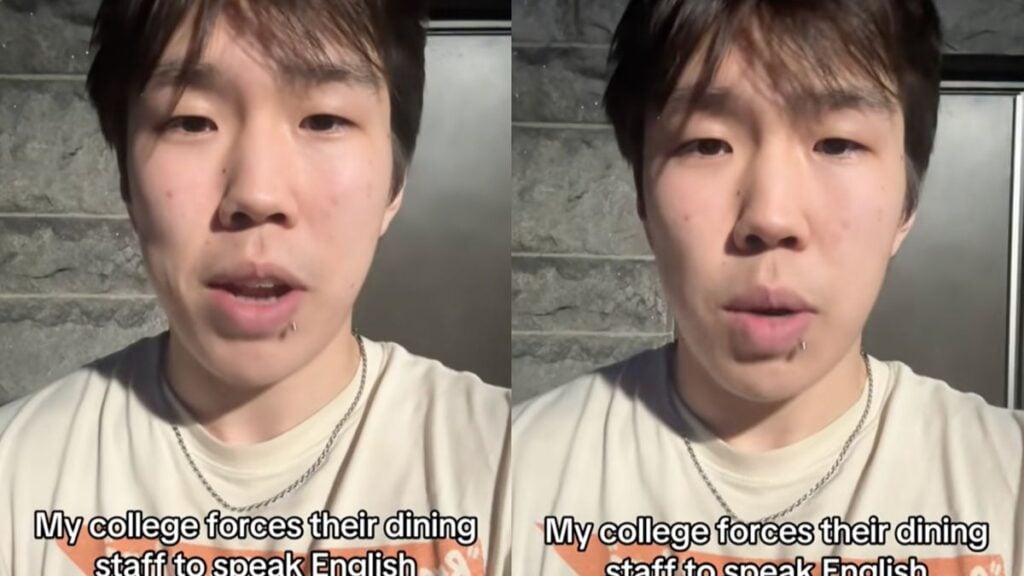
A furious student of College of the Holy Cross in Massachusetts took to TikTok to call out the administration for alleged “discriminatory” practices against staff members. In the clip, the whistleblower stated that his school banned the dining hospitality staff from speaking their native language, making English mandatory. The student noted that the new development was allegedly a product of some students’ complaints.
While he noted that the student was probably just threatened by the staff, calling them “losers,” he considered the Massachusetts school’s decision to implement the rule more disturbing. The whistleblower stated that most of the staff in the dining hall were immigrants who spoke Portuguese and Spanish, and the rule was “overbearing and prejudiced.” He then pointed out the irony since the school prided itself on “Jesuit values and understanding.”
Debate Erupts In The Comments Over The New Rule
The digital reaction to the clip was split between concerns about how far institutional control can go and about labor rights. Some users supported the whistleblower’s sentiment and encouraged taking legal action, while others offered plausible explanations for the rule. An observer advised immediate federal intervention, writing, “If this is the US, you need to contact the EEOC to begin a lawsuit because this is discriminatory.” Another user echoed the whistleblower’s sentiment, highlighting the gap between the institution’s public image and its internal actions. Someone expressed surprise that a religious institution like this one would adopt such a rule, while another user expressed a desire for the workforce to seek legal recourse.
A TikToker called out the group of students who might have filed the complaint against the staff, “Most fragile group of people on the planet. Crying because they’re terrified of other languages.” Another agreed, dismissing the complaints of those bothered by private conversations. An individual joked that the students who felt left out should have used a language app, while someone else shared a contrasting experience of cultural exchange and expressed appreciation for its influence on them.
However, the other group of users argued for the necessity of a common language, especially within the hospitality sector. Someone likened the policy to standard professional expectations, writing, “Honestly, it’s not as bad as you paint it. There are workplace codes of behavior, like dress code, appearance, etc. Speaking English can be seen as being considerate and more inclusive to other coworkers who can’t understand Spanish.”

The whistleblower’s stance and the diverse reactions that followed highlight the need for balance within Massachusetts institutions, including equality and mutual respect. However, controlling someone’s language can come off as impeding their freedom of speech.