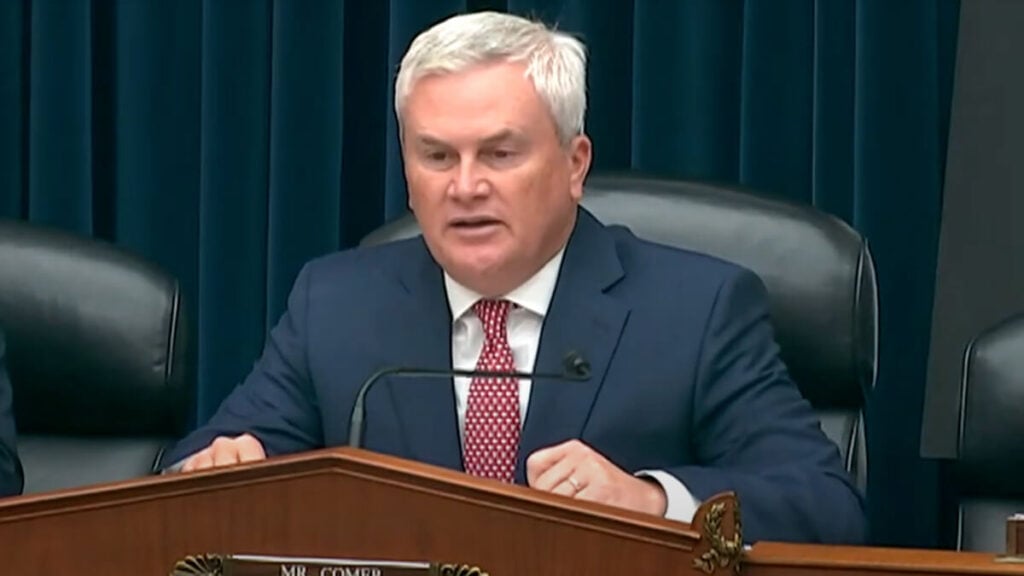
Kentucky Rep. James Comer criticized Senate Republicans over the stalled SAVE Act during a televised interview. He questioned Republican senators who opposed voter identification requirements. Comer argued voter identification “polls in both parties overwhelmingly,” drawing widespread attention online.
The interview circulated across social media and generated widespread discussion. Many responses focused on Senate Republicans and the stalled legislation.
Comer said Senate leadership claimed they lacked enough votes to pass the SAVE Act. He said he did not believe that explanation. Comer asked Republican senators, “Are you that weak?” He added, “If you’re that weak, you don’t need to be a United States senator.”
Comer argued voter identification requirements receive overwhelming support from both parties. He said passing the legislation would give Americans confidence in election integrity. He identified Senate Majority Leader John Thune while discussing the legislation’s prospects.
Senate Republicans Face Backlash After James Comer’s SAVE Act Remarks
Comer’s criticism quickly spilled into online debate, where many users demanded action from Senate Republicans while others questioned both the legislation and Comer’s credibility.
Many users backed Comer’s frustration. One wrote, “Pass the SAVE Act or get replaced.” Another added, “Primary every single weak one in 2026. No more excuses.” A separate response stated, “The Senate is extremely lazy and the Republicans in the Senate who refuse to vote for secure elections need to be primaried.” Another user argued, “James Comer turning up the heat on the Senate is exactly what the grassroots wants to see. The House did its job, the public demands it, and it’s time for Senate Republicans to grow a spine and deliver.”

Not everyone agreed. One response read, “I would call it strength in not passing an unconstitutional, extreme voter suppression bill!” Another wrote, “It’s all performative. Congress is failing to help Trump make America great again.”
The SAVE Act remains stalled in the Senate, leaving its legislative path and the pressure on Republican leadership unresolved.