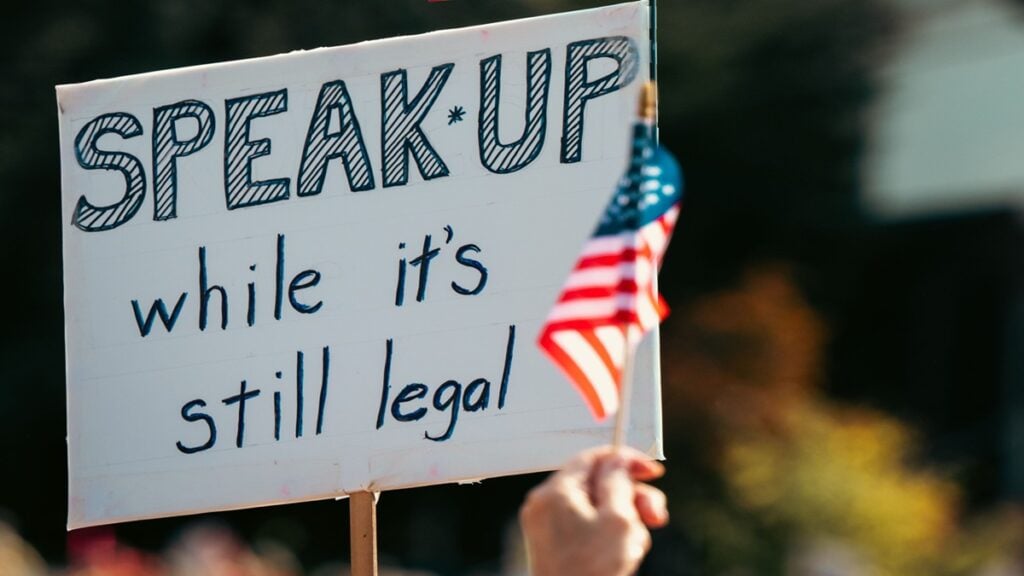
A recent anti-abortion protest at the Alamo in San Antonio, Texas, sparked a fierce debate about restrictions on free speech rights in the United States. A video of a local protester being approached by police at the location divided viewers, with many of them condemning law enforcement’s actions.
The video was originally recorded by an anti-abortion protester called Nathan Irving and then shared by Texas journalist Carlos Turcios on X. In the video, it’s possible to see a local police officer saying that the activist has five minutes to leave the location or he will be arrested. The police officer explains that there are “free speech zones” at the Alamo and that he should protest solely in these locations.
The restriction is due to the officially designated “Free Speech Zone” in the Alamo, where visitors are free to protest without bothering tourists and other visitors to the popular Texas historical site. Right now, this location is Plaza de Valero, as shown on the video’s map.
Internet Reacts to Texas’ Free Speech Zones
Turcios’ post quickly received some traction online, dividing opinions. Some people complained about restricting free speech to a single location: “Why does Texas have designated free speech zones?? Isn’t the entire Texas a free speech zone?”
Others blamed the police officer: “Some of these cops seem to not understand the Constitution. If they don’t understand the law of the land, they need to be removed from a position of power.”
Most users seemed to believe that this “should be illegal. I, for one, am not for abortion, but I’m even more against people being arrested for free speech and the right to protest.” However, even some anti-abortion people online defended the idea as a way to preserve peace: “They’re probably trying to preserve peace at a tourist site. I am pro-life, but abortion is a very volatile topic and could lead to major disruptions.”

Others also agreed with the free speech zones: “Your rights to free speech don’t trump everyone else’s rights. People who are visiting the Alamo to experience and learn its history deserve the opportunity to do that without interference from protesters.”
It remains to be seen whether the political outcry will translate into any change, as designated free speech zones will likely continue to operate at the Alamo for the foreseeable future.