
One thing that has always baffled me is how, despite being such a rich genre with so many possibilities, vampire video games tend to miss the mark. Even when some games try to get the basics down, or promise some mind-blowing vampire fantasy, they end up burning up as the first sunray hits them. But now, The Blood of Dawnwalker is that game many of us have been hoping for, that not only breaks the genre’s curse, but manages to deliver a gripping sandbox RPG with some interesting ideas.
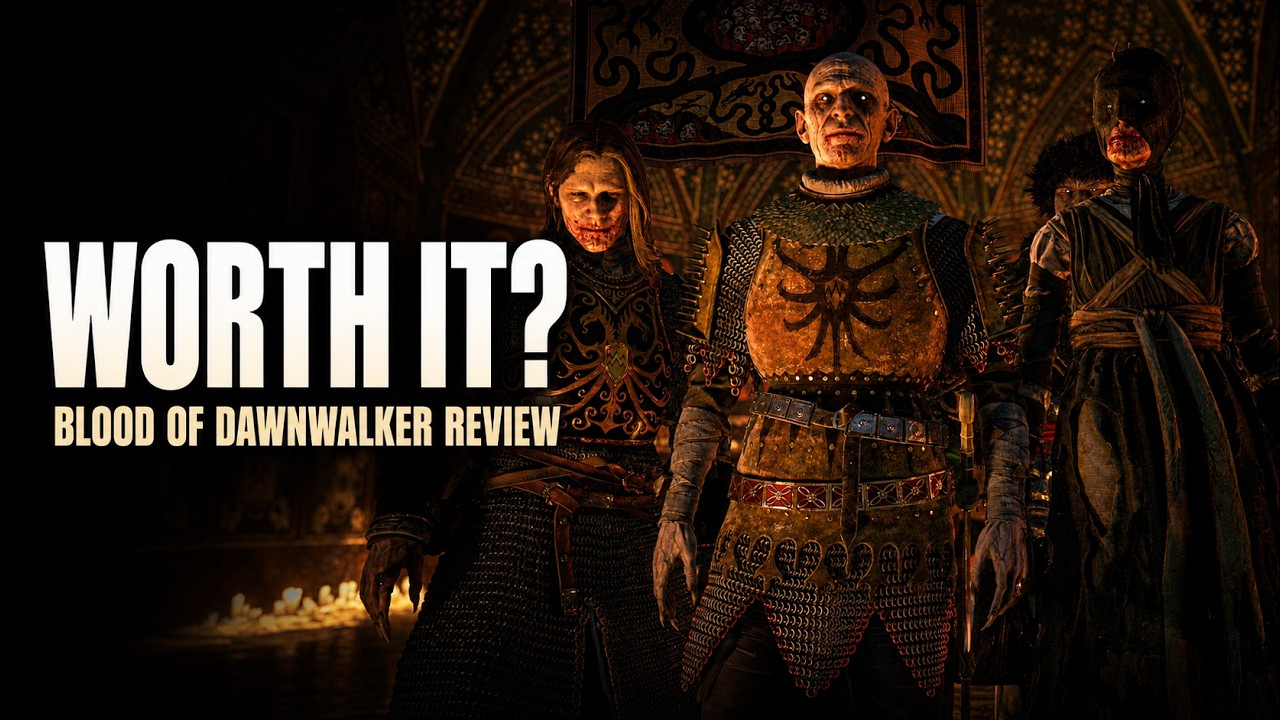
As soon as I learned about The Blood of Dawnwalker, I couldn’t contain my excitement. Like any vampire drinking rancid blood, the latest Bloodlines 2 game just left a bad taste in my mouth. So when I learned a new team made up of people who worked on The Witcher 3 would be working on this one, I buckled up and started counting the days until I could play it. Fortunately, it was worth the wait—for the most part.
In terms of story, you take the role of Coen, the eldest son of a family in a medieval town that lives under the pale fist of Brencis and his offspring. One unfaithful night, Brencis takes Coen’s family away, infects him, and leaves him to die.
Yet, things don’t go as planned for our bald villain because Coen is now a Dawnwalker, cursed as a vampire at night, but still able to walk under the sun as a human. So, with this power, you leave your days as a village boy behind and go off into one of the most amazing dark fantasy worlds I’ve seen in a video game.
As for the overarching narrative, I was glad to see that it truly embraced the sandbox aspect, all of it thanks to its time mechanic. See, once you get infected and the big bad band of vampires steals your family, you have 30 days to rescue them. How and with whom you do it is up to you, and I truly appreciated how the story unfolded due to my choices in how I spent my time.
To give you a quick example, after the tutorial, your only goal is to meet Anca, who will put you on the game’s “critical path.” However, since I always like going off the beaten path, I ended up visiting a town where I took on a mission to rescue an NPC. By doing so, I met the rebellion, which unlocked a new chain of quests that could lead to more help in taking down Brencis.
The same happened in Svartrau. I was following a lead to find a sword, got distracted by signs of fighting in the street, and ended up meeting a vampire who also wanted to track down Brencis.
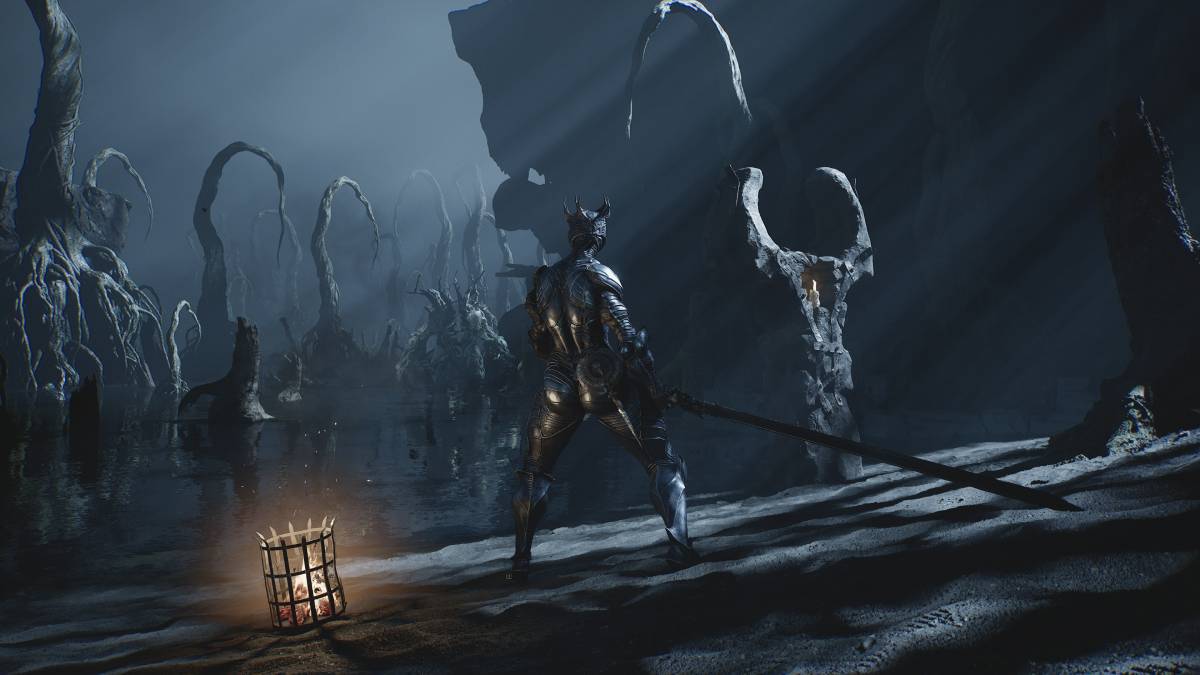
We’ve all seen several games that brand themselves as a sandbox, but I think The Blood of the Dawnwalker really nails the concept. Almost every single thing you do leads to another quest chain or mystery. Heck, even some side quests end up converging with story quests, which is something I found quite surprising.
On top of that, the time mechanic wasn’t as overwhelming as I thought it would be. Yes, 30 days isn’t a lot of time, and when you realize that some actions, such as sabotaging Brencis, take three chunks out of a day, it is normal to worry. Still, I truly enjoyed it, as I weighed every single choice I made. Was it a good idea to spend all night improving my skills? What would’ve happened if I hadn’t missed that time-sensitive quest? It’s all full of possibilities that I would be shocked if someone managed to see everything in one playthrough.
Still, that doesn’t mean everything is perfect. Some janky animations usually take away the seriousness of some moments. And I also saw a few graphical glitches in some scenes that were a bit jarring. Fortunately, I never experienced a crash or something game-breaking, so that’s definitely a bonus, especially with a game of this scope.
Embracing Both Sides
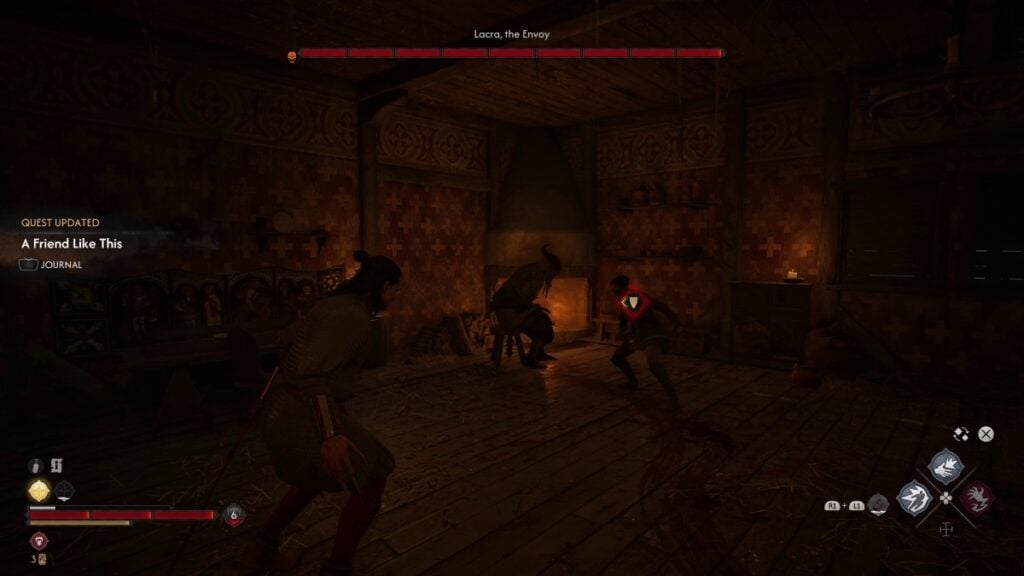
Leaving Coen’s weird sword placement aside, the combat of The Blood of Dawnwalker ended up being another pleasant surprise that worked quite well in all scenarios.
In general terms, it is a mix of the sword-and-magic system many might remember from The Witcher 3 with the directional hits and blocks from Kingdom Come: Deliverance. Initially, I was a bit skeptical as to whether this mix of systems would work, but the end result was pretty engaging, especially after facing more powerful enemies.
Both of Coen’s sword and claw attacks work with that directional system. Whenever you fight an enemy, you can see where they will attack, and by blocking when the shield turns orange, you can perform a perfect block and stagger them a bit.
Magic and active skills work mostly on a cooldown, with the former usually having an HP cost attached to them. I quite liked most of the abilities I unlocked, as some were extremely helpful during some encounters. For instance, one of Coen’s sword skills let me hit several enemies around me with the blade, while one witchcraft skill let me apply a leeching effect to a foe.
Unlocking these skills was also interesting. Most of them are unlocked at the start, but you’ll have to find manuals across the map, through quest rewards, or in traders’ inventories to upgrade or unlock these abilities. This only applies to the witchcraft and sword ones, though.
To unlock vampire skills, you need to consume human or animal blood. Doing so increases your corruption level, thus giving you access to new supernatural powers. There are also some vampire abilities that only come from specific blood samples, but I won’t spoil that part.
Overall, I found the progression system quite deep and extremely customizable. Furthermore, and as I said before, it also has that choice-making aspect, as learning some abilities will use some of the time of your day or night, so you also have to see which skills are worth spending your time and perk points on.
A True Sandbox Experience
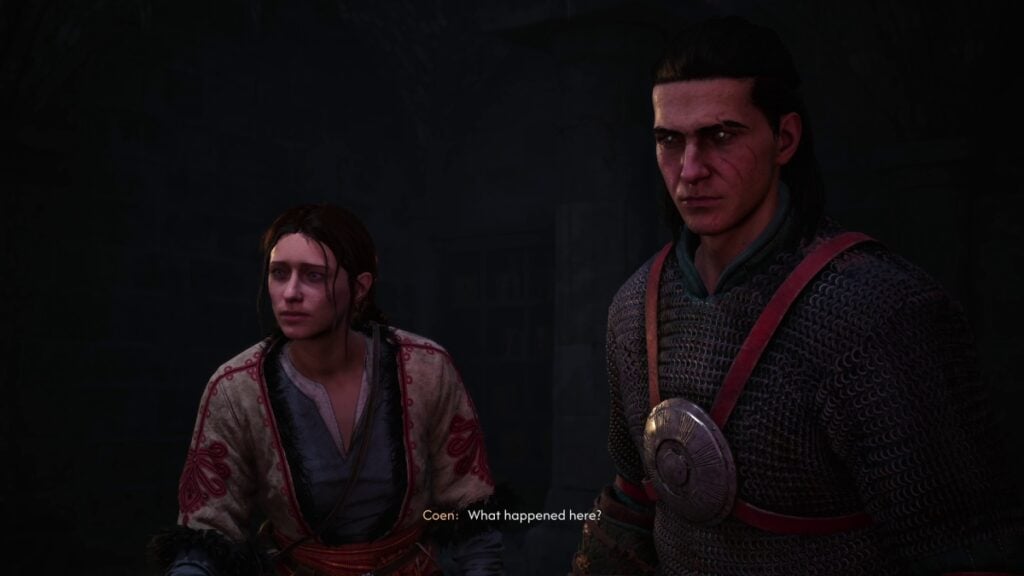
And while all of the above systems are quite great, the truth is that the sandbox elements of The Blood of Dawnwalker are the bread and butter.
Once you are free to explore this gloomy landscape, it is truly up to you where to go, assuming you’re not afraid of the level differences in some zones.
While you’ll often see your objectives on the map, I loved how some side stories popped up as I approached an area and never really knew what the story would be until I talked to an NPC or followed a clue. And as I said before, some of these quests end up unlocking even larger questlines, some of them even converging with the main story.
There’s also the way you approach some of these missions. One of my favorites involved finding a particular place inside the city’s cathedral. At first, I planned to have an NPC lead me there. However, I discovered there was a way to access that area without anyone’s help. I followed that lead and discovered an easier way to complete the objective if I waited until daybreak. I did so and skipped so many other quests that I thought would be mandatory.
This is just one tiny example and just one mission that branched out into four different options, and those are only the ones I discovered. Now, not all quests are like this, of course. But at least the main path, which leads you to rescue your family, is full of choices like this one.
Beyond that, the map is also full of side activities, with my favorite ones being those that task you with sabotaging Brencis’ allies. These take a lot of time to perform, but once you do, your notoriety increases, and the map changes, with Brencis adding patrols to some areas or worse. It reminded me of the assassin network in Assassin’s Creed Shadows, which I thought was great as it led me to meet some of the other villains in the game.
My only complaint about the exploration is movement. Look, I know The Blood of Dawnwalker has many things that feel too The Witcher-y. But I wish Rebel Wolves had at least moved past the clunky walking, and in this case, crouching. Controlling Coen can be pretty inconsistent at times, especially when walking on walls, teleporting as a vampire, or just trying to walk inside a closed space. It can get frustrating at times.
Lastly, I know there was a huge controversy about the 60 FPS mode not being available for players, but the studio quickly corrected that for launch. Well, I didn’t have access to the 60 FPS mode during the review period. I played in balanced mode, which targets 40 FPS, and that was more than enough for me. The frame pacing was great, and I never saw a frame drop whatsoever. Yes, 60 frames would’ve been great, but after a dozen hours, I never thought it was a must for this game.
Lifting the Curse
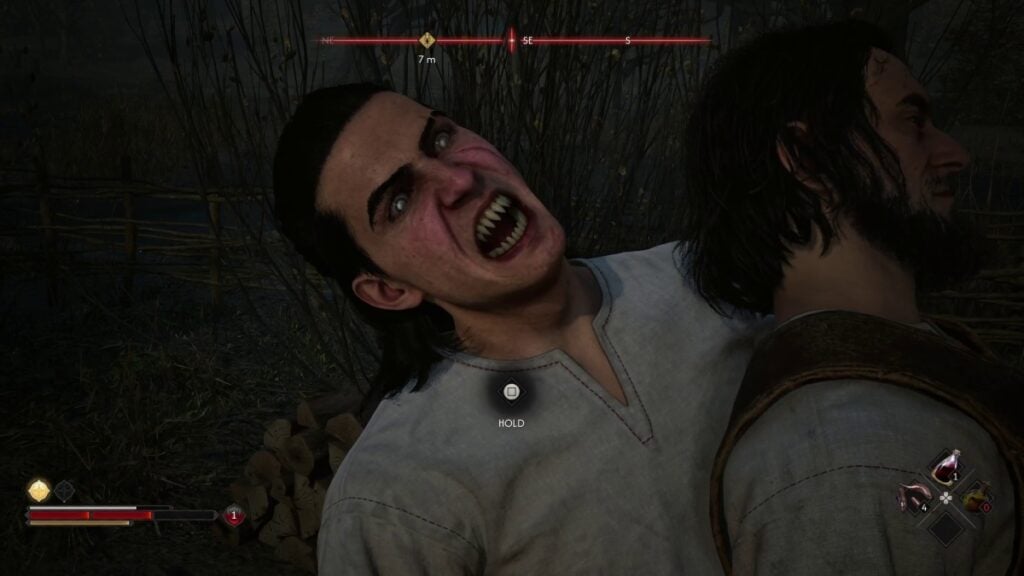
After so many disappointing vampire games we’ve seen in recent years, it is great to see that The Blood of Dawnwalker has finally broken the curse. Besides delivering a compelling narrative, which you can tailor how you see fit, the sandbox elements are on a whole new level, which is what I appreciate the most. Furthermore, The Blood of Dawnwalker embraces the vampire fantasy and does it justice, and that’s a win for me.
For a debut title, Rebel Wolves has done a fantastic job at crafting a memorable dark fantasy world that, despite the clear inspiration from other games, stands out on its own as a strong RPG experience that fans of the genre will love.
Review copy provided by the publisher.
The Blood of Dawnwalker (PS5 Reviewed)
The Blood of Dawnwalker is an excellent dark fantasy RPG that shines thanks to its strong sandbox elements. As a debut title, Rebel Wolves has done a terrific job of finally doing justice to vampires in video games.
Pros
- Outstanding sandbox elements
- Engaging combat and progression systems
- The time mechanic adds a lot of spice to the game
Cons
- Janky movement
- A few visual glitches