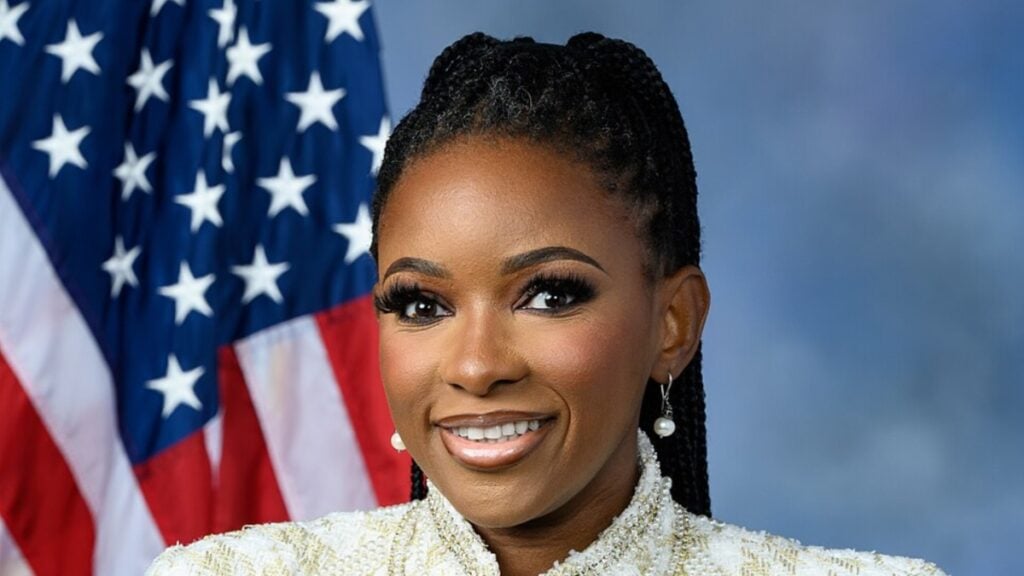
Rep. Jasmine Crockett highlighted a Tarrant County, Texas, lawsuit on X after four Fort Worth women, including City Council Member Deborah Peoples, sued Republican county officials over the elimination of 92 Election Day polling sites. The Oct. 2 filing alleges the cuts make voting harder for Black and Hispanic residents ahead of the Nov. 3 midterms. Online users reacted after the post, with some calling the case a political stunt and others backing the ballot-access claim.
Texas Rep. Jasmine Crockett quote-posted Marc Elias’s alert about an emergency lawsuit filed the day before and named four Fort Worth women she says are fighting for ballot access in Tarrant County: Council Member Deborah Peoples, retired Judge Maryellen Hicks, former Mayor Pro Tem Kathleen Hicks, and Camille Rodriguez, whom she describes as a podiatrist and activist.
She wrote that Peoples “has been on the front lines for a long time” and that “Leadership is bigger than a title.”
The lawsuit those women filed on Oct. 2 asks a district court to restore a net 92 Election Day polling sites. On Sept. 1, the Republican majority on the Commissioners Court voted 3–2 to cut the list from 316 sites in 2022 to 224 for the Nov. 3 midterms.
People told the Fort Worth Report the suit was “a very deliberate, thought-through reaction,” and said, “we need to make voting access easier and not more difficult.” County Judge Tim O’Hare’s campaign strategist, Nick Maddux, called it “a clear political stunt.” The court has not ruled.
A WFAA clip from that Sept. 1 meeting, not from Crockett’s post, shows the vote the lawsuit is challenging. The room is packed, residents are signed up to speak, and some are holding signs. One speaker says, “It makes no sense then that you would now seek to reduce our polling places.”
Resident Emery Calloway says, “We are the front lines, as goes Tarrant County, so goes Texas.” The clip then records the Election Day list passing 3–2. It does not show Crockett, and it does not show the lawsuit being filed.
Responses to the Tarrant County Polling-Site Cuts
Several focused on the size of the cut in a growing county. On X, one commenter wrote, “Tarrant County grew by OVER 80,000 residents, but yet the county judge & 2 commissioners voted to close 90+ polling locations. That in itself makes zero sense.”
Another said, “And I don’t believe that you can close 1/3 of locations without increasing wait times to vote.”
In an MS NOW report, Fort Worth resident Patrick Banta said, “I’m voting with my anger this November,” while Lashaun Williams said, “It actually hurts. I don’t think it’s right.”
Others treated the lawsuit, not the site list, as the problem. One reply on the Elias thread called the case “frivolous” and asked, “Where’s voter suppression?” Another wrote, “Filing a lawsuit is not the same as proving intent,” pointing to countywide vote centers.
At the meeting, O’Hare rejected a poll-tax comparison, saying, “There is no poll tax, and the problem with your analogy is there was no early voting then,” and, “You keep pushing that narrative.”

A speaker who backed the change said, “I support the proposal before us regarding reducing the number of voting locations.” The Fort Worth Star-Telegram reported that about 105 public commenters opposed the cuts that day, while about 10 supported them.
The Tarrant County case is still before a district court, with early voting set to begin Oct. 19. Whether the 92 sites are restored, and how voters respond in November, is now part of the wider fight over ballot access in Texas.