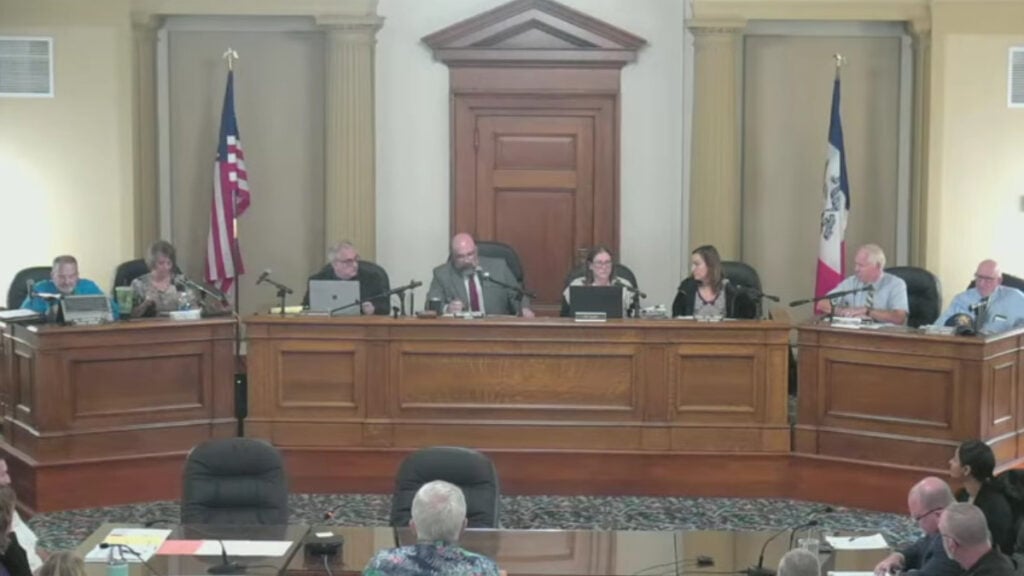
A routine Iowa council meeting in Ottumwa took an unexpected turn Tuesday when an invocation delivered by a representative of the Satanic Temple of Iowa sparked a dispute before officials could continue with the scheduled agenda. The opening invocation was delivered by a former council member and local resident affiliated with the Satanic Temple of Iowa, a non-theistic organization that does not believe in a literal Satan or supernatural deity.
According to the Ottumwa Courier, a local pastor objected shortly afterward, arguing that the invocation required a response. The disagreement unfolded early in the meeting and prompted the mayor to call for a brief moment of silence before proceedings resumed.
The invocation was permitted under a policy adopted by the city in January. Rather than limiting invocations to particular religions, the policy allows people representing different faiths, belief systems and nonreligious viewpoints to participate.
One council member had opposed the policy and was the only vote against its adoption. She had previously warned that its broad language could eventually allow a Satanic invocation. Following Tuesday’s meeting, she again expressed concerns about maintaining government neutrality and whether future speakers could demand responses to controversial invocations.
City officials defended the policy, saying that excluding speakers because of their beliefs could create legal issues and potentially expose the city to lawsuits. Officials also said they do not receive the contents of invocations in advance, meaning they do not automatically approve or endorse what a speaker chooses to say.
Ottumwa Invocation Gets Mixed Reactions
The meeting has since attracted attention online, with the video receiving thousands of views and commenters debating both the invocation and the city’s policy.
Some questioned why religious invocations are included in government meetings at all. They argued that allowing prayers or other religious statements in an official setting can create unnecessary disputes and suggested that eliminating invocations altogether would be the simplest solution.
Others defended the city’s decision to maintain an open policy, arguing that if religious invocations are allowed, people representing different faiths and belief systems should have the same opportunity to participate. Several commenters also noted that excluding a particular group could create its own constitutional and legal problems.

One commenter questioned why some religious groups should be allowed to pray at government meetings while others face criticism for offering their own form of invocation. “Is freedom of religion not allowed? This is how everyone feels when you say, ‘let’s bow our heads and pray.’ Why can you pray but they can’t? Because you have the best God? You have the correct religion?”
The pastor’s reaction also became a source of humor online. Some commenters mocked the idea that the invocation could somehow bring a curse upon the city, while others joked about the awkward transition from the Satanic invocation to the Pledge of Allegiance.
Other commenters took the idea even further, joking that future Ottumwa Council meetings could feature fictional wizard spells or science-fiction oaths if the city intended to represent every possible belief system.
Some participants also suggested that the reaction might have been different if the invocation had come from another minority religion. Meanwhile, some Christians defended the broader principle of religious freedom, while others said they would prefer government meetings to have no invocations at all.
The debate has brought renewed attention to how Ottumwa handles invocations and the balance between religious expression, government neutrality and equal access to public meetings.