
In case you weren’t aware, we are pretty huge fans of Once Human. Back when it launched, we covered it extensively, and since then, several of us have continued to enjoy its unique blend of tight shooting, base building, and scenario-based campaign systems.
NetEase recently released its most ambitious update yet, the Ise of Abyss, and lead game designer Vincent Tao was kind enough to answer some questions about player progression, the challenge of balancing ship building, and the music and radio stations that populate the world.
*Interview edited for clarity*
The Nerd Stash: After a couple of familiar scenarios, what lessons shaped your decision to make Isles of the Abyss feel like a more substantial departure from previous Once Human updates?
Vincent Tao: Over the past two years, we have shipped seven scenarios in a row. Each brought new maps, new Deviations, and new rules, but the underlying core loop stayed the same: explore, gather, build, and fight. The single biggest lesson we took from those scenarios is that players adapt to “new map, new monsters, and new gear” far faster than we ever expected.
We don’t want to lock players’ imaginations of a strange world inside a fixed content-update formula. Content volume was never the goal. Starting from what players actually want, distinctive and solid gameplay is the foundation of any scenario. Room for personal expression and individual experiences is what “high freedom” really means.
Isles of the Abyss was never meant to be just another scenario. We created it as a game expansion. We set out to change how the world is organized.
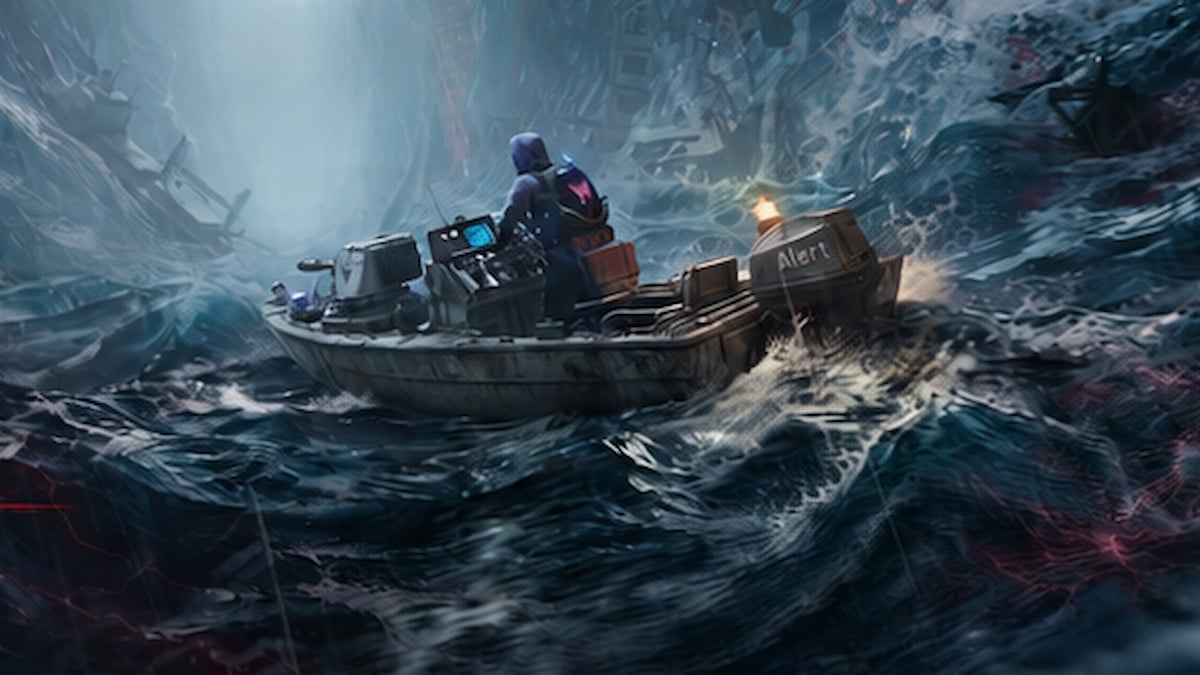
Movement changed because, for the first time, players own a home they can take with them: a ship. It is a base, workshop, artillery platform, and exploration tool at the same time. In two years of Once Human, there has never been an anchor like this. For the first time, a player’s base can simply sail away.
The space and environment also changed. The sea’s surface, islands, and seabed create a three-layer structure built around an ocean-and-island gameplay loop rather than simply extending the land map.
The goal structure has changed through a 21-day, two-phase system built around server-wide collaboration. Everyone pushing toward the same objective becomes the gateway to the endgame.
Finally, the threat logic has changed. It used to be about beating monsters on the map and finding clues and secrets. This time, the entire ocean is hunting you. The lighthouses are watching, the ghost ships known as The Voyagers patrol the waters, and The Sunken Lord is the terrain itself.
There is also a very simple reason for this direction: the ocean has always been the one missing, unfinished part of Once Human’s map. It was in our plans from the very beginning. We wanted to shape it into a strange ocean that belongs to this world and nowhere else, allowing players to experience a genuinely different world and a new form of strange-world survival on the open ocean.
The Nerd Stash: Survival games are more popular than ever, but several have featured major water-themed updates this year. Is there one feature you’re especially proud of that sets Isles of the Abyss apart?
Vincent Tao: We are more focused on the breakthroughs we make against ourselves and on keeping the Once Human world rich and evolving.
If I had to pick the richest and most distinctive feature of Isles of the Abyss, I would say shipbuilding.
We are not giving players a ship in the traditional sense. We are giving them components and a parallel naval technology tree. Players receive four categories of parts: infrastructure, propulsion, production, and combat.
Infrastructure includes the anchor, wind vane, and helm. Propulsion includes small, medium, and large sails, along with fuel and electric propellers. Production covers fishing nets, tidal cages, furnaces, generators, crafting benches, and cooking stations. Combat includes copper, iron, and steel cannons alongside harpoon turrets.
Players then decide what their deck will look like. A ship is not simply a means of transportation; it is the answer a player gives to this ocean.
What we are proudest of is how this freedom connects with the threats players face. The five ocean regions each present different survival challenges, yet “light and fast” and “heavy and fortified” are both valid solutions on the same water. Players must own their design. That is what we mean when we say there is “no standard answer.”
A high-freedom ship is also a form of self-expression, even when creations made under those free-form building rules barely look like ships anymore. We have seen players turn their ships into fighter jets, glowing blue moons on the sea, floating steampunk mechs, Chinese-style tower ships, fully integrated fishing-and-farming bases, and builds that chase pure performance.
Every time we see that kind of imagination, it moves us and strengthens our conviction to place both the freedom and the answer in the players’ hands.
Isles of the Abyss is also deeply integrated with Once Human’s multiplayer systems. Players can team up and conquer the strange ocean together.
The Nerd Stash: Building and operating a boat fortress is one of the expansion’s most distinctive features. How difficult was it to balance player creativity against technical and gameplay limitations?
Vincent Tao: This was arguably the hardest part of the entire project. The difficulty wasn’t in letting players build a ship but in making it run smoothly without sacrificing freedom.
The first requirement we set for ourselves was ensuring that shipbuilding freedom was absolute. The choices players make on their decks directly dictate their tactics when facing the ocean. Freedom isn’t simply an added selling point; it is the core gameplay.
This level of freedom is supported entirely by the component system. For a ship to evolve into vastly different forms, there needs to be an extensive variety of components and structural combinations. However, when you multiply the number of components by the possible structural combinations and then by the number of fleets on screen, the performance strain increases exponentially.
Because of this, we invested heavily in performance optimization. A ship is a mobile, swaying building platform. Every structure, production facility, and cannon must move in sync with the hull while remaining stable when multiple fleets share the same screen.
We had to completely rework everything from physics and load-bearing systems to hull meshes and performance budgets. Our investment here far exceeded what we did for land-based building.
Optimizing across multiple platforms multiplied the difficulty. PC, console, and mobile all have completely different hardware baselines, and each platform had to hit its own targets. We refused to adopt a “build for the lowest specification and let the rest make do” approach.
Ultimately, our guiding principle was simple: never compromise on gameplay features. If freedom gives way to performance, players’ ships will eventually converge into a single optimal build, rendering the entire system meaningless. Our choice was clear. We would rather spend more time optimizing than cut gameplay mechanics.
On the gameplay side, we deliberately maintained tension surrounding deck space. Production, propulsion, and combat components all compete for the same real estate, forcing players to make difficult trade-offs between running fast, hitting hard, and surviving for a long time. This isn’t a compromise; it is where the gameplay’s depth lies.
The Nerd Stash: How did the island setting influence the expansion’s new content and story, or did the story lead the team toward water-based adventuring in the first place?
Vincent Tao: The story came first, and it came very concretely: a lighthouse standing where it had no right to be.
Our first creative seed was a lighthouse inspired by H.P. Lovecraft’s The Shadow Over Innsmouth. On land, a lighthouse represents safety and guidance. However, if one appears somewhere there should never be a lighthouse, it changes from “guiding” into “watching.”
The image then started growing on its own. The lighthouse became the eye of some vast oceanic life form, and the eye needed a body. That body, combining deep-sea biology with a sunken city, is what we now call The Sunken Lord.
It represents “sinking,” which became the central motif of the entire ocean scenario. The order was first “sinking,” then the sea, and finally the content and gameplay.
The ghost ships exist because they sank into oblivion and can no longer find a heading. They are not ordinary enemies; they are what this sea has collected.
Each of the five regions has its own crisis, and every crisis represents another form of loss or sinking. Players must redesign how they survive within these extreme environments, but those crises also provide new resources and opportunities.
The islands are the breathing points within this structure. Players awaken on the starting island, but they can explore the remaining four regions in whichever order they choose. As a result, everyone’s growth path can be different.
Everything in this world is shaped around one characteristic: a vast, lost ocean. A lighthouse that shouldn’t exist is what made us build the sea, while “sinking” determines what everything in that sea looks like.
The Nerd Stash: What feedback or player behavior will determine whether future Once Human updates continue experimenting with dramatically different settings and traversal systems?
Vincent Tao: We are really looking at one thing: whether players genuinely have fun out there and whether they create different forms of self-expression.
We want to see whether players actually move into the new system. Does it become part of their everyday play rather than a one-off experience? Are new and returning players willing to start over for it?
We also want to see whether players build things we never anticipated. That is our core metric. We are looking for unexpected ship builds, fleet tactics, community guides, and even wild tricks that players invent themselves.
If those things keep appearing, the system has genuinely handed the initiative over to players. If everyone converges on a single optimal answer, then our freedom is fake, and we need to go back and fix it.
As for the future, we will no longer casually add or remove whole categories of experiences. We will decide where to go based on real community feedback while continuing to push the boundaries of what the game can offer. We want to create more gameplay that belongs to Once Human and nowhere else.
The Nerd Stash: Thank you for taking the time to speak with us. I’m a big Once Human fan, so this final question is close to my heart. The music and radio stations are incredible and catchy enough that I’ve added tracks from the game to my personal playlists. Is there any chance we’ll hear new music or stations in the future? Maybe even a sea shanty or two?
Vincent Tao: Thank you. That is the best compliment our audio team could possibly receive.
Music and the radio stations have always been something we care deeply about. Music is one of the most effective ways to make this world feel alive. Whether players are sorting their backpacks at their base or sailing between islands, we want the radio to provide genuine company.
As for new music and stations, we are always working on new content, and we have always listened to the community. For exactly when that content arrives and what form it takes, please keep an eye on our official channels.