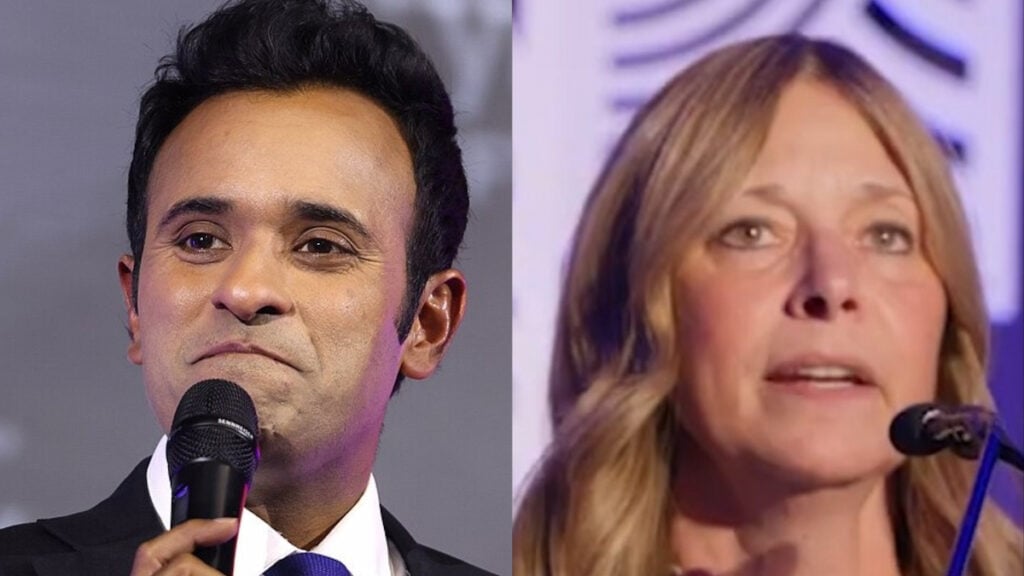
An Ohio restaurant that welcomed Republican gubernatorial candidate Vivek Ramaswamy for a campaign stop found itself at the center of an ugly political backlash, and some furious locals are showing little sympathy.
P.J. Marley’s, a popular burger restaurant in Medina, hosted Ramaswamy and other Republican candidates on October 31 after owners Patty and Jon Stahl had already agreed to the event.
The problem was what happened before Ramaswamy arrived. His campaign released a controversial attack ad featuring the estranged mother of Democratic opponent Amy Acton calling her a liar. What the ad did not explain was that Acton was 12 when her stepfather was charged with raping her, and that her mother sided with him.
The New York Times reported that the Stahls considered the ad to be in poor taste but went ahead with the event anyway. They said they viewed the appearance as an opportunity for their business and insisted they would have hosted Democrats too.
That explanation has not impressed critics. In a heavily left-leaning r/Ohio discussion about the controversy, one commenter offered a brutal summary: “Like all conservatives, they only thought of themselves and it came back to bite them.”
Others were equally unsparing, framing the backlash not as political persecution but as the predictable cost of making a very public choice.
Ohio Critics Say This Was About Consequences
Before the event, longtime customer Stacey Bene privately contacted Patty Stahl and revealed that she had been raped at 14, urging the restaurant to reconsider hosting Ramaswamy.
The Stahls did not cancel. Around 200 protesters eventually gathered in Medina’s town square while some demonstrators moved closer to the restaurant and shouted at customers and employees. Workers were caught in the middle, including bartender Anthony Buchanan, who told the Times he was simply working a second job alongside his role as a third-grade teacher.
That human cost has done little to soften reaction online. One Reddit commenter wrote simply: “I’m ok with there being consequences for actions.”
Another argued: “They should’ve pulled support when that attack ad aired. Now is too late.”
The owners, meanwhile, told the Times their business did not appear to have suffered and that they did not regret honoring their commitment.

But that may be the real dividing line. To the Stahls, sticking with the event represented principle. To angry critics, particularly those already hostile toward the GOP, it looked like a business choosing its own political and financial interests despite being warned exactly what that choice represented to customers.
The campaign has ended. The argument over P.J. Marley’s has not.