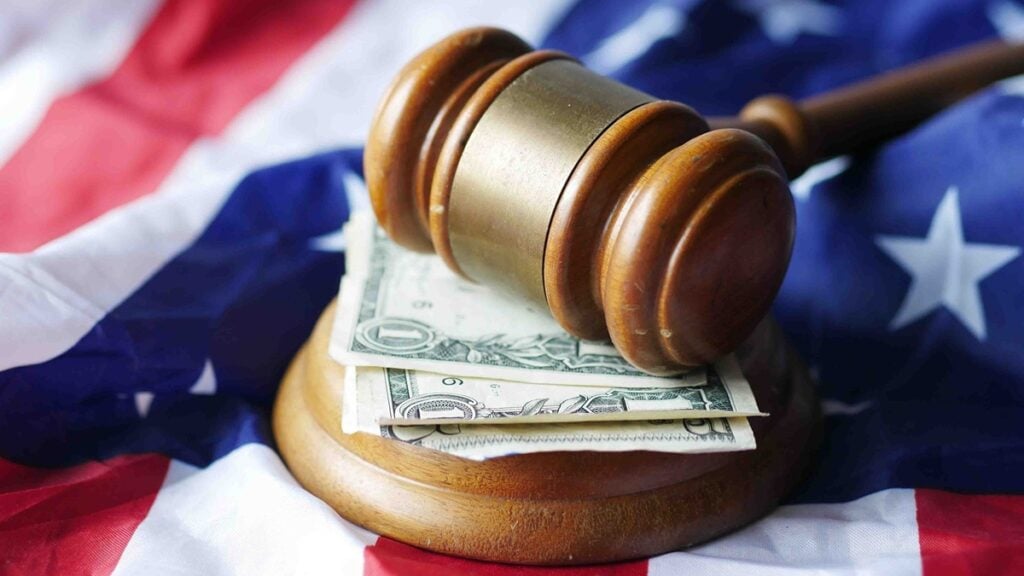
The Republicans of North Carolina are currently facing questions about their financial future after a costly legal battle over the 2024 state Supreme Court election left the state party with less than $3,000 in cash and approximately $530,000 in outstanding legal debt.
The debt stems from the party’s support for Republican Judge Jefferson Griffin, who challenged his narrow election defeat to incumbent Justice Allison Riggs. Griffin sought to invalidate roughly 60,000 ballots over alleged voter registration irregularities, but courts ultimately rejected the broader challenge.
Conservative commentator Andrew Dunn, writing in his Long Leaf Politics newsletter on November 24, said he had opposed the lawsuit because of the potential damage to the judiciary and the Republican Party’s reputation. However, he admitted he had not anticipated the financial consequences. According to Dunn, the state GOP still owes $530,000 to a law firm involved in the litigation more than two years after the election.
The party reportedly used a separate Building Fund committee to cover substantial legal expenses. Unlike the state party’s regular political committee, the fund can accept unlimited donations, but its money is supposed to go toward specific property-related expenses, including purchasing and maintaining party headquarters.
Campaign finance reports show that the fund paid $92,564.98 to Chalmers, Adams, Backer & Kaufman LLC, $114,336 to Lehotsky Keller Cohn LLP, and $136,562.18 to Dowling PLLC for Griffin’s appeals in 2025.
Dunn said repayment has been painfully slow, raising concerns among party insiders about whether the organization can meet its obligations. He also said the state GOP did not respond when asked about the growing debt and its repayment plans. The financial problems arrive after a difficult 2026 election cycle for North Carolina Republicans, who lost seven U.S. House seats and a U.S. Senate seat to Democrats, along with 17 state legislative districts.
Legal Bills Pile Up as Republicans Face Questions
The financial problems arose further after a difficult 2026 election cycle for North Carolina Republicans, who lost seven U.S. House seats and a U.S. Senate seat to Democrats, along with 17 state legislative districts. The situation has thus prompted sharp reactions online. One social media user joked about the party’s financial predicament, writing, “The party of financial responsibility people.”
Another commenter took aim at the original lawsuit, saying, “Another one who couldn’t let it go when they lost.” Others were less sympathetic. “They are already morally bankrupt. Let the legal version come soon,” one user wrote. Lee K. Womack, president of the North Carolina Election Integrity Team, also criticized the party’s leadership, describing the financial situation as one example of years of mismanagement.

Dunn warned that Republicans could spend the next several years trying to rebuild their state organization while raising money to pay legal bills from the previous election. Although bankruptcy remains a concern rather than a confirmed outcome, the outstanding debt has left the party facing an uncomfortable financial reckoning.