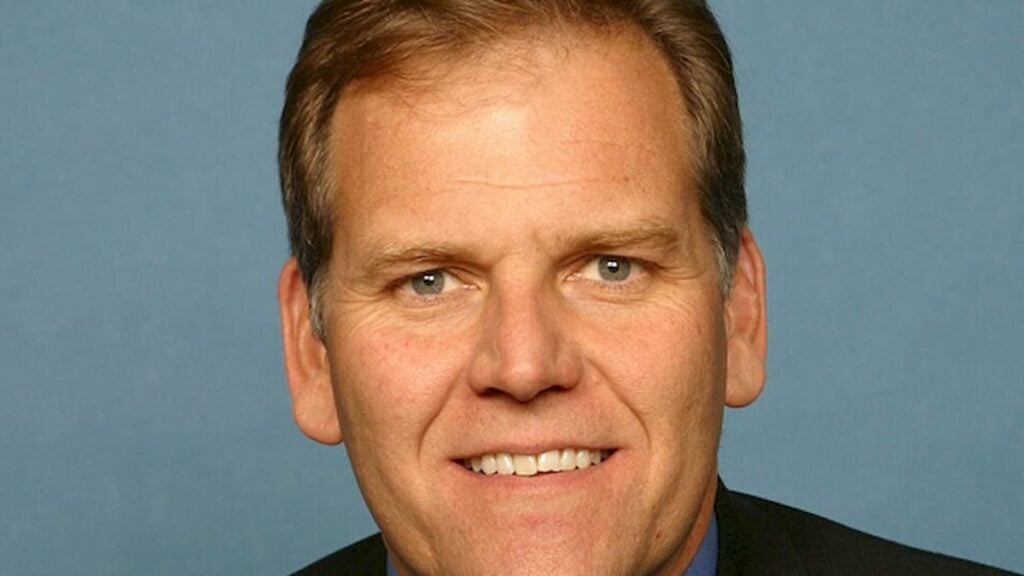
Michigan Senate candidate Mike Rogers attacked Democratic rival Abdul El-Sayed over Mackinac Island and gasoline-powered cars. Rogers claimed El-Sayed opposed the popular tourist destination and wanted gasoline cars banned. He tied the criticism to Michigan’s auto industry while portraying his opponent as too radical for the state.
The remarks appeared in a video shared online as Rogers discussed the Michigan Senate race.
Rogers called Mackinac Island an “iconic tourist attraction” popular across the state. He then claimed El-Sayed opposed the island and wanted gasoline cars banned.
Rogers connected that accusation directly to Michigan manufacturing. “I don’t know if he checked but we build gasoline cars in Michigan,” Rogers said.
He described El-Sayed as “so wrong and so radical for our state.” Rogers then shifted toward the November election and the Democratic Party.
He said Democrats were “circling the wagons” around a candidate aligned with socialist policies. Rogers also accused El-Sayed of wanting violent offenders and sex offenders released.
Mike Rogers’ Mackinac Island Attack Draws Michigan Backlash
The Mackinac Island remark quickly became a focal point of the response, while others challenged Rogers’ broader campaign approach.
One X user asked, “Aren’t gasoline cars already banned from Mackinac Island?”
Another drew on personal experience, writing, “I’ve been to Mackinac Island several times. The first time was when i was an extra on a movie set in the 80’s. Been back a few times including for my honeymoon over twenty years ago. Gasoline cars do not belong on Mackinac Island!”
A separate response turned toward Rogers’ campaign strategy: “I wish politicians would talk about what they want to do for the people they want to represent rather than continually trashing their opposition. Fine to call out flaws in their opponents but I am sick and tired the use of fear to get elected.”
Rogers’ broader criticism of El-Sayed remains part of the Michigan Senate fight. The Mackinac Island claim has added another point of contention to that campaign dispute.