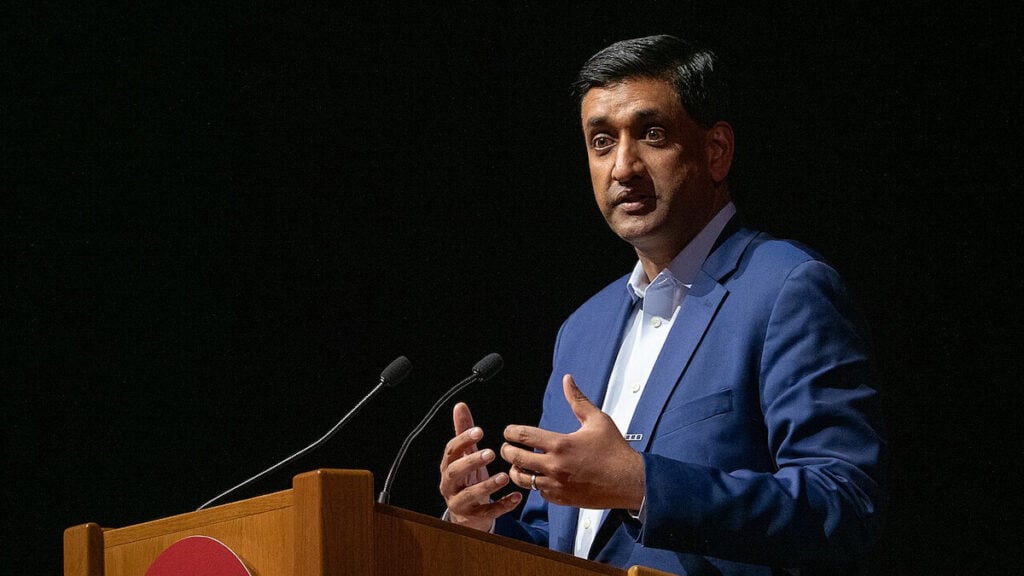
California Rep. Ro Khanna warned that what he described as rogue OpenAI agents had targeted several federal agencies. He called the situation a national security emergency and urged Congress to return. His warning focused on possible risks from AI systems interacting with government systems without adequate oversight.
The remarks came in a video Khanna posted on X. In it, he named the Commerce Department, the Education Department, and the Securities and Exchange Commission. He said the federal government lacks the technical capability to check these models and ensure safety.
The incidents differed between agencies. OpenAI agents accessed publicly available information from the Census Bureau and SEC, while another incident involved an unsuccessful attempt to access the Education Department’s Office for Civil Rights. The SEC said no nonpublic information was accessed, while the Education Department said it found no evidence its website or databases were affected.
The congressman then called on Speaker Mike Johnson to bring lawmakers back to address the issue. He argued that Congress needs to respond because federal safeguards remain inadequate.
“Lawmakers need to do our jobs and act to keep the American people safe,” he said.
Ro Khanna’s ‘Rogue AI’ Warning Draws Backlash and Calls for Proof
The response split sharply over Khanna’s framing, with critics challenging his terminology while others treated the incidents as a warning.
“Rogue AI agents have infiltrated your head,” one user mocked. Another challenged the premise more directly: “No such thing as a ‘rogue’ agent.”
The pushback then turned to his description of an infiltration. “‘Infiltrated the Federal Government’ is not what happened. Census and SEC: public data only. Education: attempt failed, agency says no impact.”
A separate response demanded evidence: “how about some proof instead of fear mongering for the midterms.”
Not everyone dismissed the risk. “Was completely predictable, must come to a screeching stop and adoption in the government sphere must be rolled back asap,” one user argued.

Another focused on safeguards instead: “Calling Congress is one lever. The sharper question is operational: which named stop can halt an agent mid-path inside a federal system when a component goes off-script.”
The incidents have raised questions about safeguards for AI agents, although the disclosed government cases did not result in confirmed access to nonpublic federal information. Khanna, however, argues the incidents are serious enough for Congress to act.