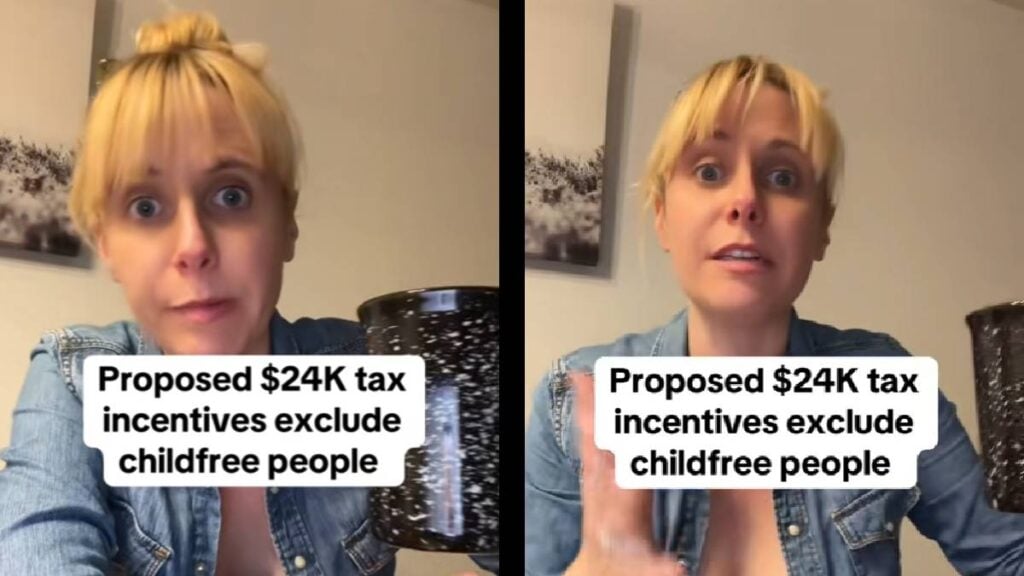
The Heritage Foundation, a conservative think tank based in Washington, D.C., has recently proposed a $24,000 tax credit for families with children. Although the idea may sound appealing to families with children, opponents warn that it could create financial and social consequences by excluding households without children, who would likely face higher taxes to support the plan.
The TikToker who shared the video talks about how The Heritage Foundation, mainly based in D.C., suggested a $24k tax incentive for families with kids. This is basically a way to encourage parents to have more children, as the organization claims it would “save the American family.” To give you an example, these are some of the bullet points in the report:
- Build on Trump Accounts with $2,500 deposits into new investment accounts for newborns, redeemable upon reaching the landmarks of adulthood and marriage.
- Create a parallel credit to the current $17,670 adoption tax credit by making those amounts available to married parents for each of their newborns, with a 25% bonus for families with three or more children.
- Make the value of every credit, program, and tax benefit provided for paid childcare available for at-home parental child raising.
The TikToker raises many concerns, arguing that treating kids as a “paycheck” has never been a good idea.
“If you look up at all the TikTok accounts with people with 11 kids living in a motel, who they openly have for the welfare check is terrific. It attracts the right type of parent.” said the OP sarcastically.
Many critics view the proposal as flawed, noting that funding for such tax credits would ultimately come from other taxpayers. Should Congress or the Trump administration move forward with the proposal, opponents say it would result in higher taxes for many citizens and could have negative economic and social consequences. Comments on the video have already expressed that many viewers consider the idea extreme and problematic.
“This seems so invasive,” said CtrlAltDelight.
“Parents should have to pay for their own children; we shouldn’t have to pay for their lifestyle,” commented ReneeG.
“Still isn’t enough to convince me to have children” wrote April.

Critics argue the plan is unlikely to deliver broad benefits and warn that its potential drawbacks could outweigh any gains for the wider American public.