
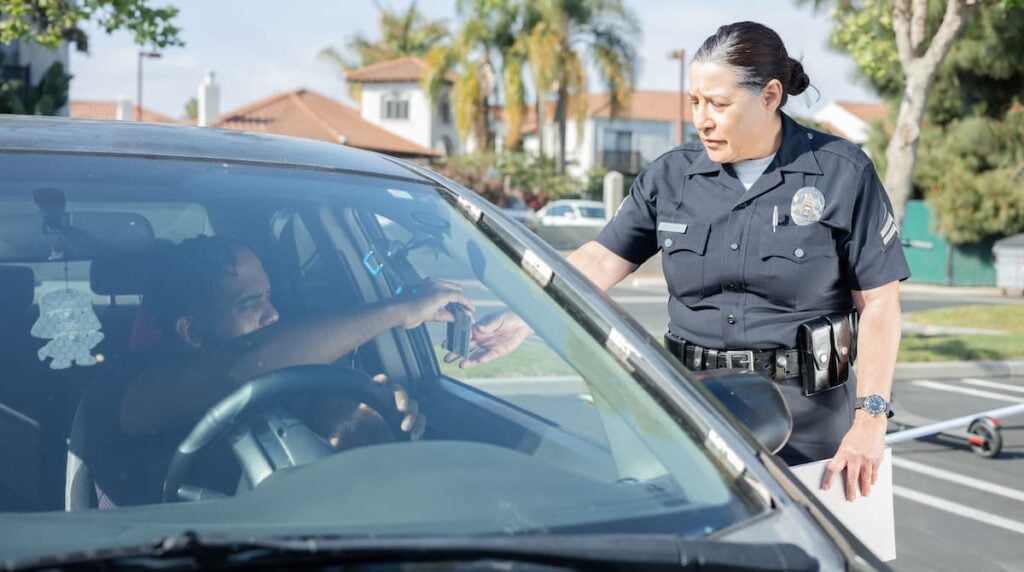
North Carolina’s decision to quietly end a decades-old police traffic-stop reporting requirement has triggered an explosive backlash online, with furious locals blaming Republican lawmakers for what they describe as a dangerous slide toward unchecked policing and mass surveillance.
The repealed law required agencies to record details about traffic stops, including who was pulled over, whether a search or arrest followed, whether property was seized, and whether force was used. Supporters said the statewide database helped expose patterns that individual complaints, body-camera footage and court cases could not reveal on their own.
But the requirement disappeared inside Senate Bill 257 after being preserved in an earlier version of the legislation. The final bill repealed G.S. 143B-903 while allowing neighboring reporting laws, including rules covering deadly force, to survive.
That contrast lit a fire under users in the North Carolina subreddit discussing the report.
One commenter declared, “North Carolina Republicans have ruined everything in their plot to become a surveillance state.” Another wrote, “Our state has so much potential and so many Republicans eager to destroy it.”
The anger intensified because the same legislation expanded the use of automatic license plate readers on state-maintained roads. To many commenters, the message was unmistakable: police would face less public scrutiny while residents would face more government tracking.
“The Police State Has Begun”
“The police state has begun,” one user warned, predicting roadblocks, stop-and-frisk tactics and random knocks at people’s homes. Another summed up the political mood more bluntly: “The conservatives yearn for the boot.”
Others accused right-wing voters of celebrating authority until they personally became its target. The thread repeatedly invoked the image of conservatives “licking the boot,” a phrase used online to describe unquestioning support for police power.
Some users began sharing practical advice instead of political slogans. They recommended dashcams, audio-recording apps, cloud backups and emergency phone-lock features. One commenter responded, “Problem is I shouldn’t even need all this stuff.”
That frustration captured the heart of the reaction. The concern was not simply that one form had vanished. It was that residents now felt responsible for creating their own evidence during encounters with armed public officials.

Not every commenter agreed that the old system worked. One detailed response argued that the data was self-reported, difficult to verify, and too limited to expose deliberate discrimination. That user still said lawmakers should have replaced it with a stronger system rather than scrapping it.
For critics, that is the central scandal. A flawed accountability tool could have been repaired. Instead, it was removed behind closed doors, with no public amendment and no clear author taking responsibility.
The local verdict is brutal; North Carolina Republicans demanded more power to watch the public while making it harder for the public to watch police.