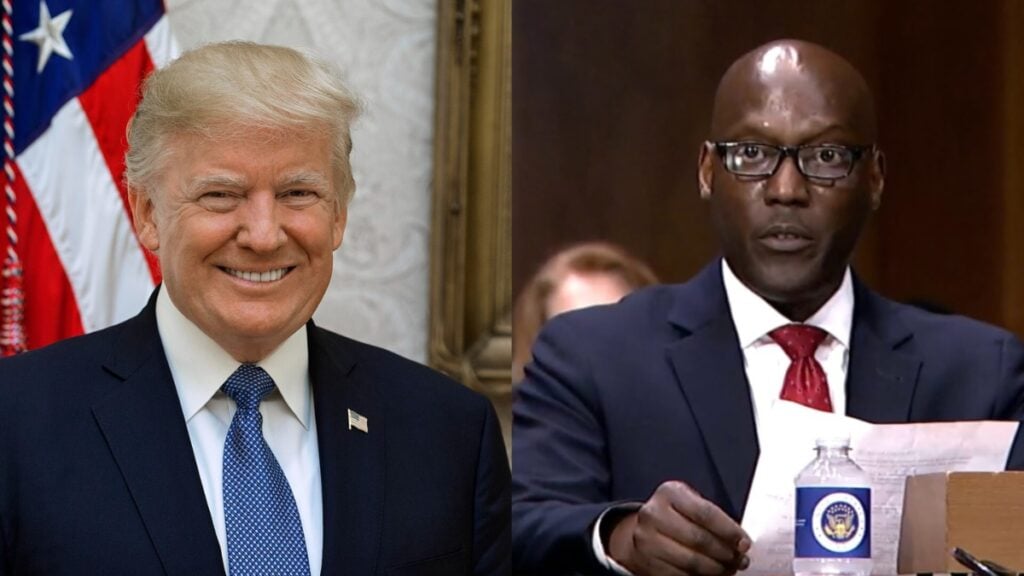
A federal judge in Connecticut blocked enforcement of key parts of a 2026 state law that barred ICE agents from wearing masks and required them to wear name tags. U.S. District Judge Vernon Oliver, a Biden appointee, found the provisions likely violate the Supremacy Clause, as states cannot control how federal officers perform their duties. Online users reacted after the ruling, with many noting that the Biden-appointed judge sided against the Democratic-led state’s restrictions and that Attorney General William Tong was dismissed from the case.
According to the post, U.S. District Judge Vernon Oliver blocked enforcement of key sections of Connecticut’s SB 397, which sought to ban federal agents from wearing masks while interacting with the public and to require them to wear name tags. The judge wrote that the provisions “likely violate[s] the Supremacy Clause” because states cannot regulate how federal officers carry out their duties.
The post also notes that the ruling blocked the state’s attempt to subject ICE agents to its own use-of-force rules under threat of state prosecution and dismissed Attorney General William Tong from the case. Court records confirm Tong was removed because he lacks prosecutorial authority over the criminal provisions, while the case continues as a preliminary injunction.
Mixed Responses to the Federal Judge’s Ruling in Connecticut
Some users praised the decision, with one writing, “Finally, a judge with knowledge of the law.”
Another commented, “The fact that a Biden’s judge sided with the Trump’s administration just shows how wacky the Connecticut democrats have become.”
A third stated, “States don’t get to write their own rulebook for federal agents. Force an ICE officer to wear a name tag, and you’ve just handed activists a way to find his house and his family. The Supremacy Clause exists for exactly this.”
State officials offered differing views. A spokesperson for Governor Ned Lamont said, “We are disappointed by today’s ruling and condemn ICE’s treatment of Connecticut residents,” adding that the law was meant to hold federal officers to the same standards as local police.
State Senator Bob Duff said, “We disagree. Obviously, we respect the ruling of the judge; it is temporary, not permanent. We will continue to argue in court.”
Republican state senators said in a statement, “We warned that the law violates the Constitution’s Supremacy Clause by attempting to regulate federal officers while they carry out their official duties.”

Representative Steven Stafstrom said, “I respect the court, but I fear today’s ruling leaves Connecticut less safe.”
The ruling adds another moment to the ongoing debate over how far states can go in regulating federal immigration officers. Whether Connecticut’s remaining provisions hold or face further challenges remains to be seen as the case continues.