Skip To...
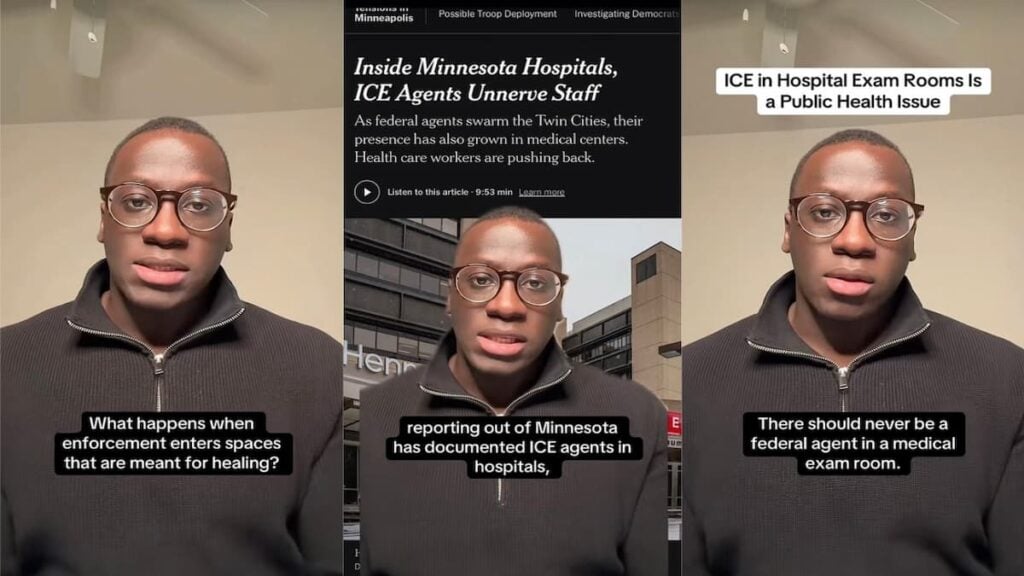
ICE agents, in yet another horrific display of the power dynamics at play, are entering the hospital rooms of patients in their custody – listening, taking notes, and even interjecting their own thoughts about patients and care. In a video uploaded to TikTok, Dr. Joel Bervell describes his recent experiences with ICE agents within his patient care rooms- raising concerns about medical privacy, the lack of legal clarity for patients in ICE custody – both in Minnesota and nationwide, and the precedent of conditional care.
ICE Agents in Patient Care Areas
Dr. Bervell describes his experience over the past few months treating multiple patients transferred from ICE detention. Agents do not wait outside the hospital or even in the hall by the patient rooms. Agents are present in patient care areas, listening in on confidential discussions between medical staff and patients.
‘Patients have to be safe enough to feel like they can literally divulge some of the most vulnerable information of their life. When enforcement enters that space, it fundamentally changes that interaction.’
He then notes the flood of reports from Minnesota hospitals. ICE agents are regularly interjecting themselves into patient care areas, despite pushback from medical staff, and creating an environment in which patients are delaying care or abandoning it altogether for fear of ICE involvement.
‘Doctors and nurses are describing an environment where patients are delaying care, rationing medications, or avoiding the hospital altogether to avoid immegration enforcement.’

A Lack of Legal Clarity
‘This doesn’t just impact undocumented patients. It impacts everyone when we start to have to wonder whether care comes with consequences… It’s about whether healthcare remains a place of care, or whether it becomes another site of surveillance.’
Dr. Bervell says his concerns led him to look deeper into medical privacy laws. HIPAA offers clear protections for patient privacy, but those protections become unclear for patients in federal custody, opening the door to further harm. Bervell says that hospitals rely on trust, and that trust is eroding. This is no longer a political debate, he states, but a public health issue that impacts everyone.