
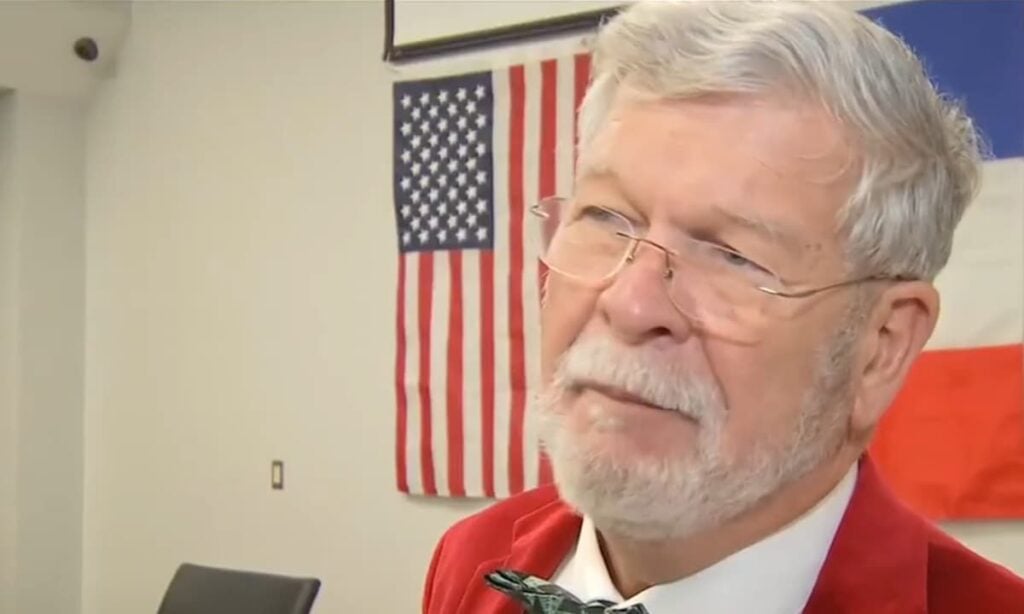
North Carolina Rep. Mike Clampitt’s death at 71 prompted the expected responses from colleagues and state officials: statements of service, reflections on his career, and condolences to his family. Clampitt, a Republican who represented parts of Western North Carolina, spent years in public service, from his time as a fire captain to his tenure in the General Assembly. But outside official channels, the reaction was less uniform and far less restrained.
In a Reddit thread discussing the news, responses ranged from criticism of Clampitt’s political record to open hostility toward the man himself. Some users focused on his decision to run for reelection while battling cancer, with one writing that politicians in similar positions “care more about their legacy than the responsibilities of the office.”
Others dispensed with nuance entirely. “Death is the only thing that can pry these [people] from office,” one comment read. Another was more blunt: “Nothing of value was lost.” A handful went further still, celebrating the circumstances of his death or expressing satisfaction that his political voice had been removed.
Not all responses followed that tone. Some users pushed back, calling the rhetoric excessive. “Nobody deserves to endure or suffer from cancer,” one commenter wrote, while another described the more celebratory reactions as “legitimately horrible.”
It would be easy to dismiss this as “Reddit being Reddit.” The platform represents a narrow, often anonymous slice of public opinion, one that tends to reward sharper, more performative reactions. It is not a clean reflection of North Carolina voters, nor the broader American public. And yet, the tenor of the discussion feels familiar.
In recent years, political identity in the United States has taken on a sharper edge. Disagreement over policy has increasingly been framed in moral terms, where opponents are not simply wrong but actively harmful. Within that framework, empathy becomes conditional. If a public figure is viewed primarily through the damage their policies are believed to cause, then even their death can be reframed as a kind of resolution.
That doesn’t make reactions like these inevitable or inconsequential.
What stands out in the Clampitt thread is not just the presence of hostility, but the normalization of it. Comments celebrating his death were not isolated outliers; they were part of the conversation’s mainstream current, often met with agreement or amplification rather than rejection.
At the same time, the pushback in North Carolina, though quieter, remains significant. It reflects an ongoing, unresolved question about where the boundaries of political discourse should lie. For some, those boundaries still hold firm, even in moments of deep disagreement. For others, they have shifted or disappeared entirely.

Clampitt’s record, like that of any elected official, is open to scrutiny and debate. That scrutiny is a fundamental part of public service. But the speed at which some reactions moved past criticism and into dehumanization points to something broader than one man or one thread.
A shared event (a public servant’s death) no longer produces anything close to a shared response. Instead, it becomes another arena for the same entrenched divides that shape nearly every aspect of American political life. Even in death, the lines hold.