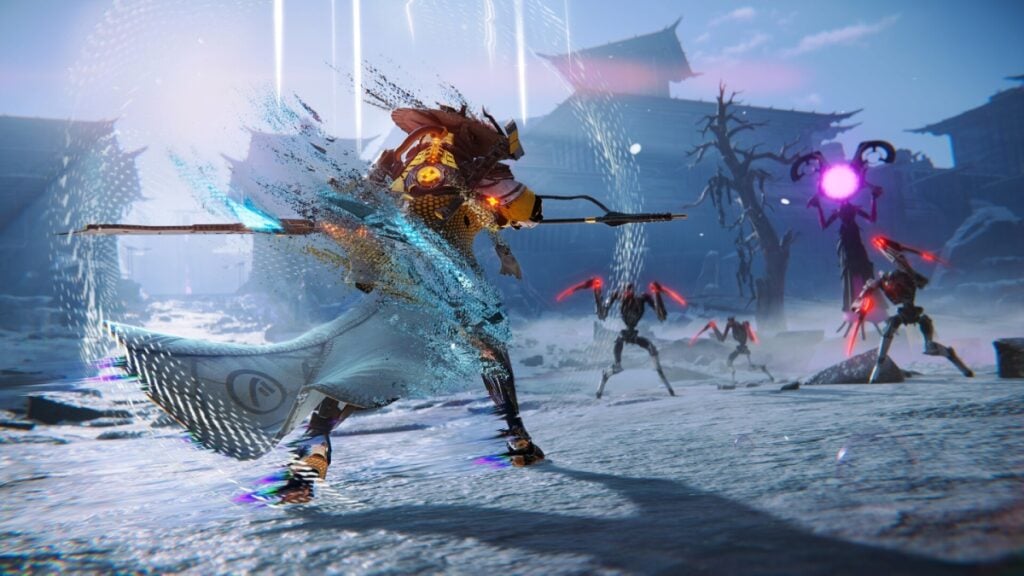
One genre I never tire of is the roguelike, and for good reason. Few games capture that same addictive loop, constantly pulling you back in for just one more run. While deck-builders and top-down entries have dominated the space, I’ve always wanted something that leans harder into fast-paced, hack-and-slash action. That’s exactly where Morbid Metal steps in, and it feels like the answer I’ve been waiting for. This effort by Germany-based developer Screen Juice feels like Devil May Cry, Warframe, and Hades at times, yet remains unique through its strong art style, captivating combat mechanics, and engaging gameplay features.
Slashing Your Way Through the Loop
Lately, most roguelikes have leaned toward a top-down perspective, often giving them an ARPG-like feel, while others stick to a 2D approach, and both work well. As a fan of the genre, I enjoy seeing how studios shape these systems around distinct art styles, but a fresh perspective is always a welcome surprise.
Enter Morbid Metal, which embraces the roots of the hack-and-slash genre and adds several roguelike systems, creating a fascinating gameplay medley that is easy to get into but extremely challenging to master and punishing at times.
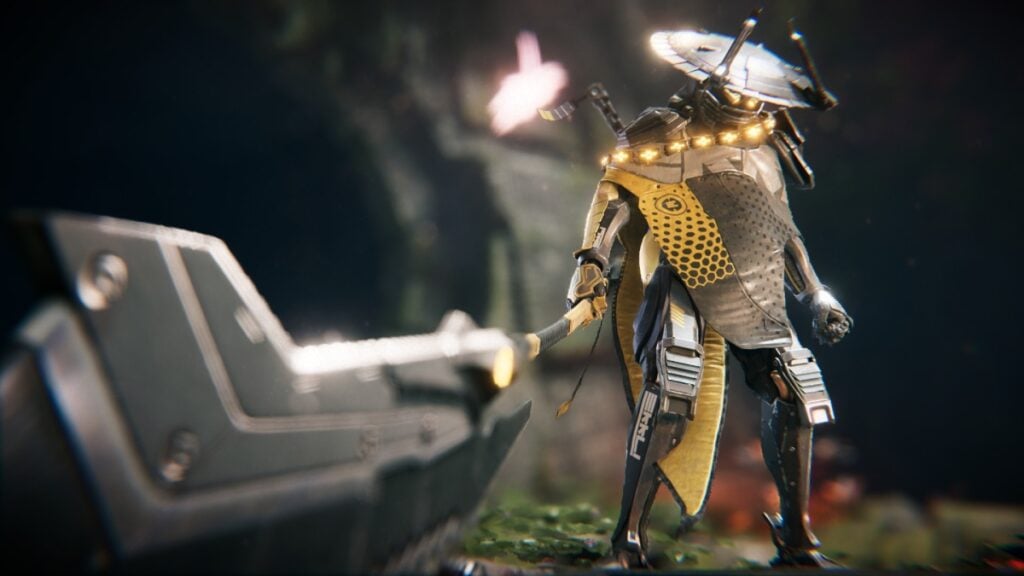
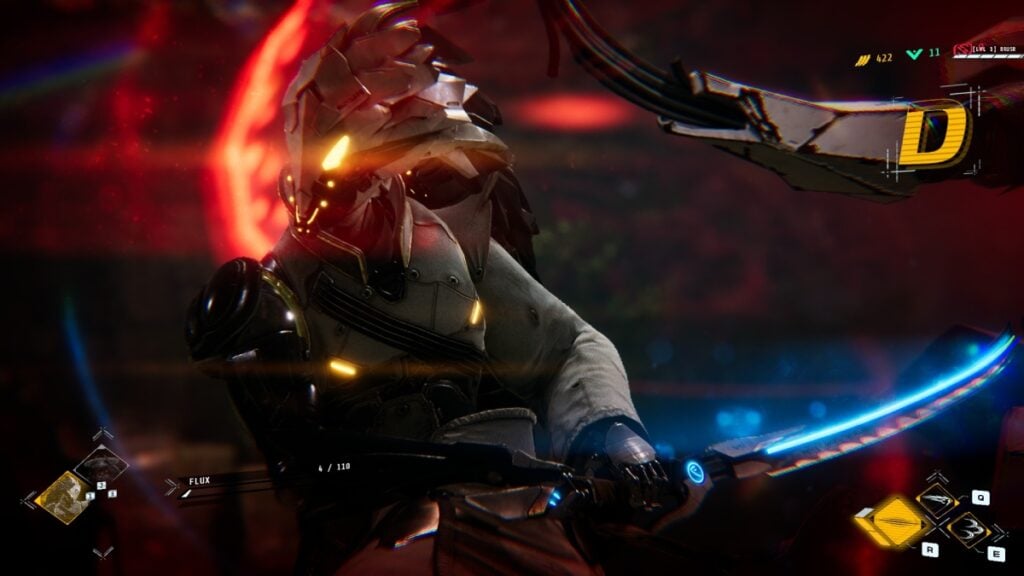
You start as Flux, one of the three characters you can unlock during the early access period, who focuses on quick sword attacks, ranged sword slashes, and other abilities tailored toward doing serious single-target damage. Combat, at first, might seem simple. Each character has three different skills, two of them tied to a cooldown, while one, which could be considered your “ultimate,” is tied to a resource bar you fill up as you fight.
Another big part of Morbid Metal, and one of its biggest differentiators compared to other roguelikes, is character-switching. After completing certain objectives, you’ll unlock the other two characters, Ekku, focused on slower yet more powerful AoE attacks, and Vekta, focused on ranged moves. You can swap between them at any moment, and the game encourages you to do so, as there’s a combo meter that increases with each skill you perform, but rewards you if you mix and match different abilities.
At first, I struggled to grasp the switching mechanics, but they began to click once I realized how powerful the combinations could be by swapping characters and choosing the right upgrades. For instance, Flux can apply a DoT effect on enemies, and Ekky can deal more damage to enemies with debuffs or damage-over-time. While upgrades on a run are random, I was always looking for effects that would benefit all my characters and would allow me to create some wild combinations to increase everyone’s damage, which ended up being my favorite part of my early access runs.
For the roguelike aspects, they feel extremely accessible, yet highly customizable, which I appreciated. When exploring, you’ll encounter Protocols and Corpora. The former are skills, and the latter are effects for specific skills. You can start your run with Flux being able to dash to an enemy and hit them, but then swap that skill for one that turns into a backstab ability. In Ekku’s case, who ended up becoming my favorite, I’d often swap the AoE skill in favor of one that implanted a bomb in an enemy that would detonate after a while.
Effects make the whole experience even smoother, as some completely change how a skill works. Taking that bomb skill from Ekku as an example, you can find a Corpora that passes the bomb to other enemies when exploding. There are also universal Corpora that affect all characters, meaning that there’s a lot of room for build options during one run.
However, the roguelike loop isn’t exclusive to your actual run, as the hub also plays a huge role. You can unlock permanent upgrades, such as starting the run with a Protocol next to you or increasing your health. If you defeat bosses, you can improve a character’s skills. And if you’re tired of the same abilities, you can unlock more, so they eventually appear during your run.
So far, I love this system, but I feel the hub needs an easier way to identify which upgrade is which. Don’t get me wrong, I loved the style, but in roguelikes, it’s important to have precise visual feedback to let players grab upgrades and get back into a run quickly.
Lastly, performance is an issue, though I’m confident the developers will address it as early access progresses. While I was able to hit 100 FPS in most areas, I saw several frame dips, especially in combat against several foes. It’s not a major issue, as the game will likely receive further updates, but it’s still worth noting.
Hack-and-Slash Is Back on the Menu
In the end, Morbid Metal combines two absolutely amazing genres into one hack-and-slash roguelike that works flawlessly. What’s surprising is that, despite launching with only two biomes, there’s a plethora of content for players to discover, and dozens of options to craft wild builds to help you in your next run. While I know some players are always on the fence when it comes to supporting early access titles, Morbid Metal is one of a kind, as it offers smooth gameplay, gorgeous visuals, and an excellent roguelike loop that will quickly allure fans of this genre.