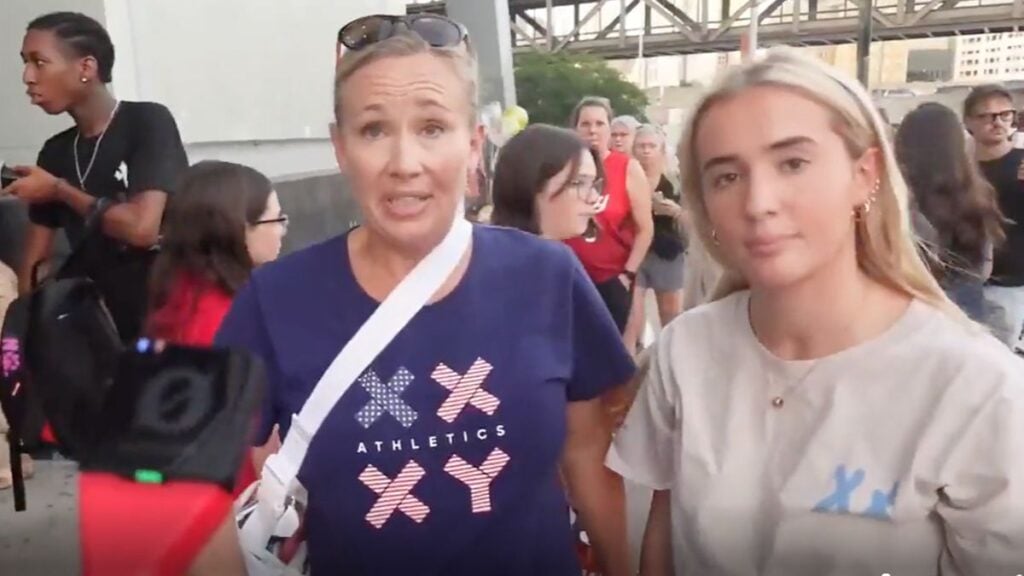
A video shared on Reddit has drawn attention to an incident involving a mother and daughter at the Indiana Fever vs. Atlanta Dream WNBA game in Georgia, after they claimed someone asked them to cover up the messages on their shirts. In the clip, the mother-daughter duo responds to questions from the person behind the camera. They said they were asked to put on another T-shirt over their clothing because of the messages on their shirts. The mother’s shirt read “XX/XY,” while her daughter’s featured the words “For the girls.”
The pair insisted they had done nothing wrong, arguing that they were simply wearing T-shirts and had already paid for their tickets. They appeared frustrated that they were being asked to cover the messages despite having purchased admission to the game. “They told us we had to leave or cover our shirts up,” the mom lamented.
The person recording the video then referenced an image displayed on the screen during the game showing another woman wearing a shirt that read “protect trans rights.” According to the conversation, the woman had also reportedly been asked to zip up her jacket. The mother and daughter said they attended the game specifically to support Sophie Cunningham, whom they said they admired for her support of women’s sports.
Cunningham has previously attracted controversy over her views on transgender athletes in women’s sports. The Fever Guard expressed the idea that athletes should compete in sports based on the sex they were assigned at birth rather than the gender they transition to. She later addressed the backlash she received, particularly accusations that she hated transgender people.
“I got a lot of negative feedback about me hating trans. And I’m like, ‘I never once said that,’ … I think that I am here to extend love. But I also think with that love is truth, being honest. And I want to protect young girls in a locker room, or young girls in sport who shouldn’t have to go against biological men,” Cunningham said per USA Today.
Internet Reacts To ‘Spoiled’ Mother And Daughter
Several commenters criticized their decision to wear the shirts to the game. “Rich spoiled bigots,” one user wrote bluntly.
Another commenter offered a lengthy interpretation of the messages, arguing that the shirts were not simply expressions of support for women’s sports but could be perceived as targeting transgender people.
“We wore a shirt with a political message targeting minorities and making them feel unwelcome, otherized, and wrong, and are stunned that they wanted us to cover it up. I mean, all we said is we were pro segregation!” the commenter wrote. The same user also pointed out that the daughter’s shirt contained additional messaging beyond the words “For the girls,” arguing that its broader message suggested transgender women were not included in the category of women.
Others believed the mother and daughter had received the attention they were seeking. Another user argued that they could not simply impose their views on a private venue, suggesting that the establishment had the authority to regulate what messages were displayed inside its premises.
“I think the word they used to throw around was ‘snowflakes,’ but it seems pretty appropriate for them now,” another commenter added.
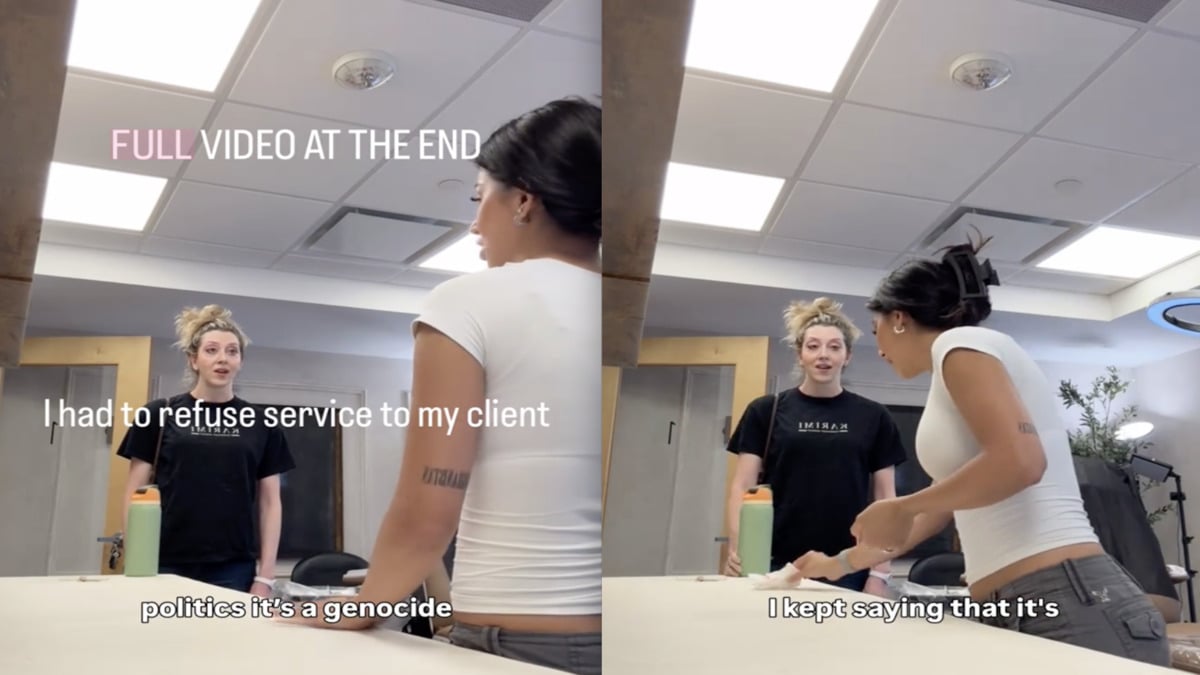
In the end, the controversy highlights how clothing can communicate strong political or social messages and how those messages can carry different meanings depending on the environment in which they are displayed.