Everybody wants to give every dog the benefit of the doubt, and for good reason. They’re truly man’s best friend and a great addition to many families. One dog who is spending his days in an Ohio shelter captivated the hearts of many local pet owners. They saw his friendly face in an ad from the shelter and actually saved him from being euthanized. But is this the way to go with all shelter dogs? One Ohio therapy dog owner explains why it’s not possible to save all dogs and how these instances can be prevented.
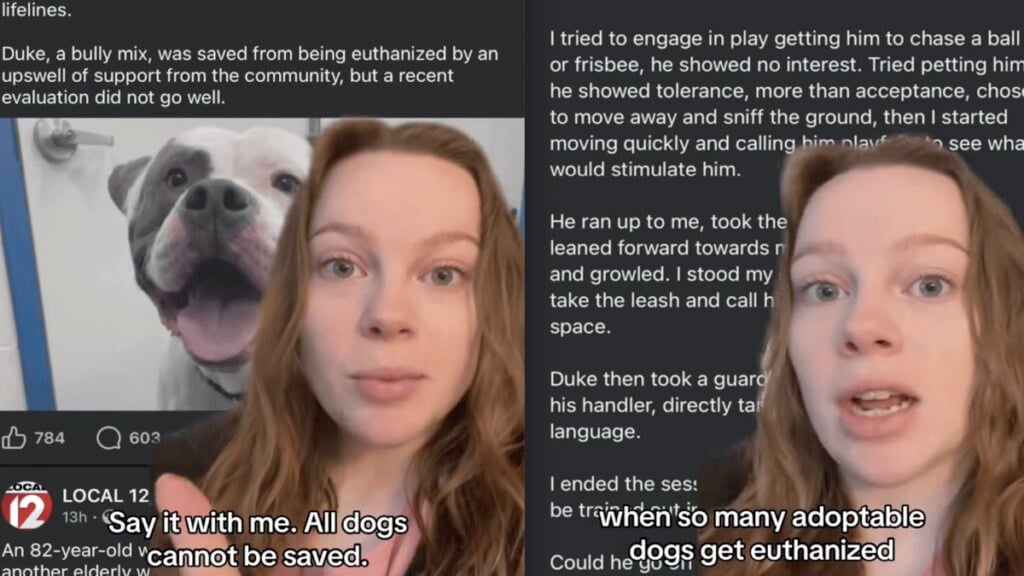
Maddie, a therapy dog trainer on TikTok (@social_work_therapy_dog), shared a video about a dog who is currently living in an Ohio animal shelter. The adorable bully mix, Duke, went viral when his friendly photos were shared on social media. The internet reacted by coming together and halting him from being euthanized. However, after a recent evaluation to try to find him a foster home, things didn’t go well.
As Maddie explains, “All dogs cannot be saved,” a statement that many animal lovers struggle to accept. She describes Duke as “a classic case of a dog that should not be adopted because it’s dangerous,” pushing back against growing online calls to spare him from euthanasia.
While supporters continue advocating for Duke after photos of him circulated on social media, Maddie argues that appearance alone doesn’t tell the full story. According to her breakdown of the shelter’s evaluation, Duke was labeled “unpredictable” and in need of a highly structured environment. The report states that he only “tolerated” being pet rather than actively seeking affection, and that he showed his teeth and growled at a trainer while taking a treat.
The case has sparked debate. Some believe every dog deserves another chance, while others agree with Maddie’s position that safety must come first. She also pointed to what she sees as a larger systemic issue, saying resources are often directed toward saving highly publicized cases while “so many adoptable dogs get euthanized” each year.
Maddie argues that ethical breeding practices, including genetic screening, researching lineage, and early socialization, could help reduce the number of dogs entering shelters in the first place. By contrast, she says irresponsible breeding operations and puppy mills often produce dogs without proper care or socialization, increasing the likelihood of behavioral challenges later in life.
As the conversation continues online, Duke’s situation has become part of a broader debate about public safety, shelter policies, and how best to address overcrowding in animal rescues.

One commenter agreed, “Typically people who disagree have never worked in a shelter and have never worked with aggressive animals. I worked as a volunteer in a shelter and not all animals can be saved.” Another commenter stated, “Not a single foster home has stepped forward either. Most people are unable to handle a dangerous, unpredictable dog like this.” They go on to say, “People need to stop pushing for rescues and shelters to do all the work and not stepping up to do the work themselves.” It really does start with where you decide to purchase a pet from. It’s important to do your research and avoid these puppy mill breeders, where the adoption tends to end in disaster.