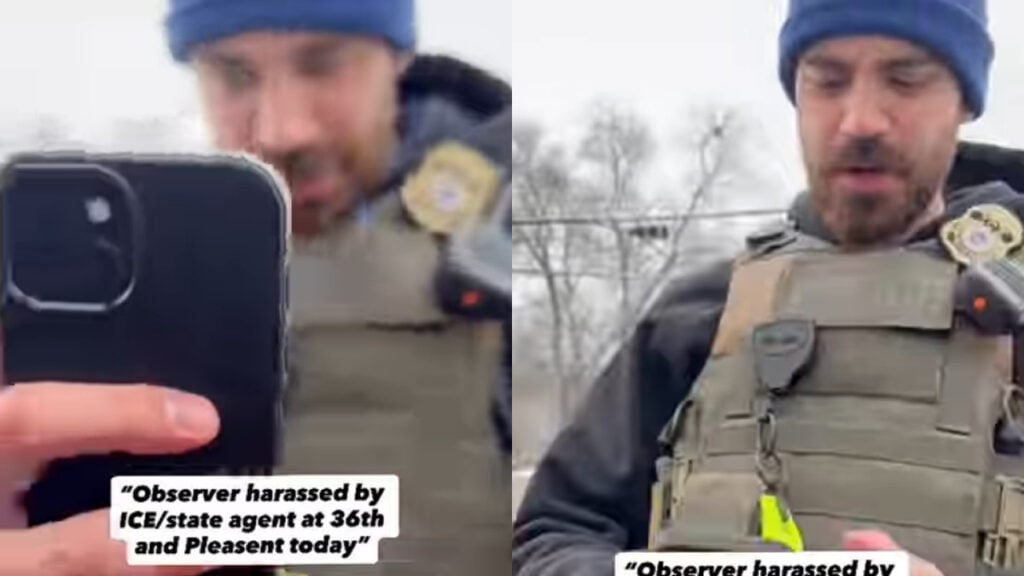
The actions of ICE agents during arrests have drawn widespread criticism across the country. Reports continue to surface of agents targeting individuals they suspect might be undocumented, often using aggressive tactics and questionable technology. One of the tools frequently employed in these operations is facial recognition software, which at best is debatable in accuracy and at worst is prone to errors and false positives. A recent encounter in Minneapolis, Minnesota, highlights some of these concerns. A local woman reported that while she was driving, an ICE agent suddenly approached and shoved his phone up to her face as if attempting to photograph her.
The Minneapolis woman said the agent’s behavior was entirely unprofessional. He seemed focused solely on capturing her facial data, offering no explanation for his actions. After obtaining whatever result his software provided, he walked away without even a basic clarification, leaving the woman frustrated and upset. “No wonder people hate them,” she said later, reflecting on how the agent treated her during the encounter. The agent reportedly responded dismissively, telling her she was free to leave, demonstrating a shocking lack of decorum for someone representing a government agency.
The incident in Minneapolis quickly gained attention online, where users expressed anger and concern over ICE’s behavior. Many agreed that the agent had likely photographed her to determine whether she could be targeted for detention. “He probably just ran her face through their Palantir database and labeled her as an insurrectionist, marking her for later detention once they run out of non-white people,” one user remarked.
Other online commentators stressed the importance of protecting one’s identity, suggesting that civilians take measures to avoid unwanted surveillance. “Do not let them collect your photo! You are going into a database. Their software focuses on your eyes. Your eyes are unique and cannot be changed. Wear sunglasses, a mask, or obscure your eyes in some way,” one user wrote.
They added that it is especially important during COVID season to protect oneself while also limiting exposure to potentially aggressive agents. Users pointed out that ICE agents often invade personal space to capture images, then retreat without any explanation, leaving civilians confused and violated.

Many observers warned that incidents like this may only be the beginning. Some feared that if ICE begins to run low on people of color, they might start targeting white individuals as well, widening the scope of their controversial operations. For now, this Minneapolis encounter stands as a stark example of the tension between law enforcement practices and civil liberties, raising serious questions about how technology is being used to monitor, intimidate, and control civilians.