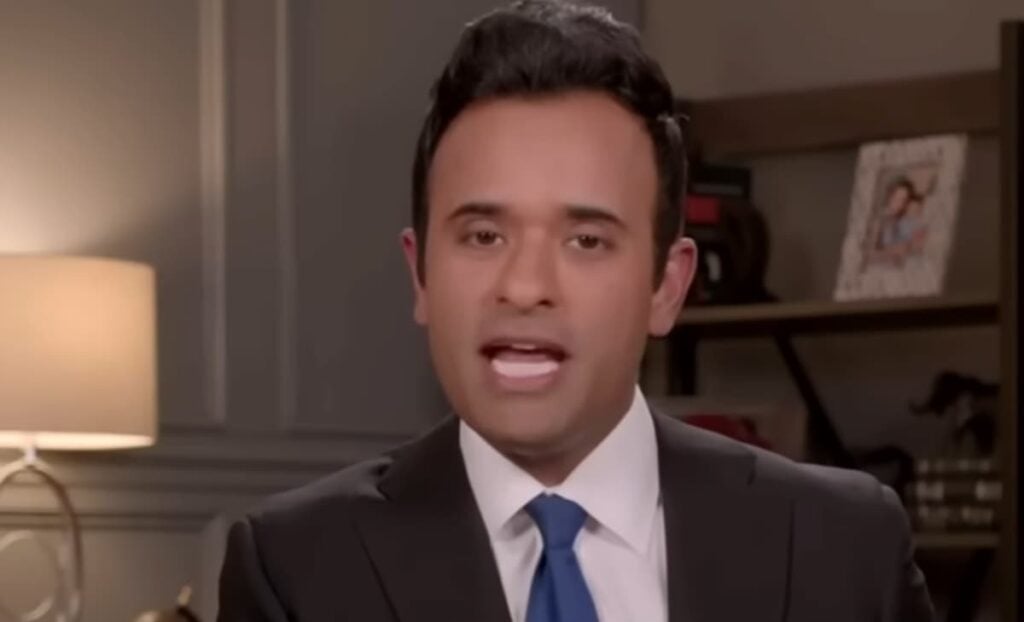
Vivek Ramaswamy’s once commanding position in the Ohio governor’s race is slipping, with prediction markets now pointing toward a narrow Democratic edge in a contest that is rapidly tightening ahead of the 2026 election.
Recent trading on Kalshi shows Democrats with roughly a 55 percent chance of winning the governorship, compared to about 44 percent for Republicans. That marks a sharp reversal from early March, when the GOP held a clear advantage. A similar trend has emerged on Polymarket, where pricing mirrors the same shift toward Democrat Dr. Amy Acton.
The movement reflects more than speculation. Over $200,000 in trading volume on Kalshi alone suggests sustained interest and confidence in the shift, rather than a short-term fluctuation. Prediction markets function as real-time indicators, adjusting as new polling, fundraising data, and political developments emerge.
Polling has reinforced that trend. A recent Quantus Insights survey shows Acton narrowly ahead at 46 percent to 45 percent, while an earlier EMC Research poll gave her a wider 10 point lead. Major forecasters have also adjusted their ratings, moving the race away from a safe Republican hold toward a more competitive battleground.
Ohio Voters Push Back on Complacency
Despite the changing numbers, reaction among Ohio residents over on the Ohio subreddit suggests little appetite for treating the race as settled.
Skepticism runs deep. “Until the next one is sworn in I believe nothing I read,” one commenter wrote, capturing a broader distrust of early projections. Others echoed that sentiment, warning that Ramaswamy remains a viable contender as long as he is still in the race. “As long as he’s still running, he’s still a threat,” another user added.
More striking is the repeated emphasis on turnout. Across the discussion, one message surfaces again and again. “Don’t care, we still have to vote,” wrote one user, a sentiment reinforced by others urging participation regardless of polling or market trends. “Polling doesn’t mean anything anymore. Vote,” another commenter said.
Beyond skepticism, policy concerns and candidate appeal also surfaced, particularly around Ramaswamy’s proposals and broader electability. Still, even among critics, the focus repeatedly returned to civic action rather than assumptions about the outcome.
With primaries approaching on May 5 and months of campaigning ahead, both the data and the discourse point to the same conclusion. Ohio’s governor race is far from decided, and for many voters, the only number that matters will be turnout on election day.