An Ohio teacher’s lawsuit over a removed classroom poster is quickly becoming a major talking point, as critics accuse a local school board of pushing political ideology into what had long been a routine display.
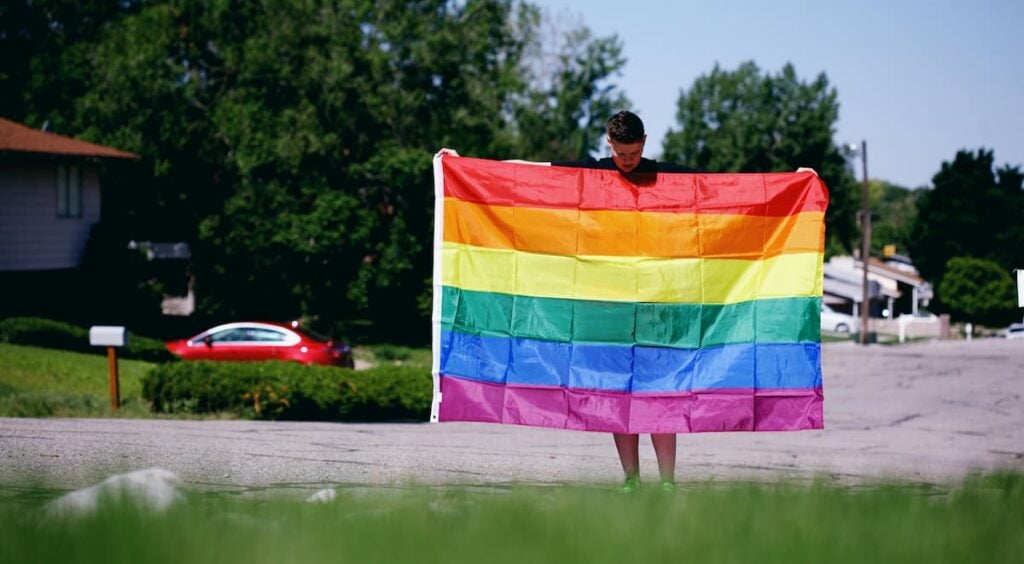
John Doe (obviously a redacted name), a history teacher in Little Miami Schools, filed suit after being ordered to remove a “Hate Has No Home Here” poster that had been displayed in his classroom since 2022. The sign included heart-shaped symbols such as the American flag, a peace sign, and LGBTQ+ Pride flags.
The conflict came to a head in February 2026, when the Little Miami School Board voted to remove the poster, arguing that the inclusion of Pride flags qualified it as “sexuality content.” That decision came despite a memo from the district superintendent stating that a reasonable person would not interpret the poster as promoting sexual concepts or gender ideology.
Facing possible disciplinary action, Doe ultimately took the poster down. His lawsuit argues the move violated his First and 14th Amendment rights, framing the dispute as a broader issue of free speech in the classroom.
Backlash Frames Decision as Politically Driven
His attorney said the district had turned “a simple message of kindness into a fight about free speech.” But online, critics have gone further, casting the decision as part of a wider political shift in local school governance.
In Ohio’s local subreddit, an article from Advocate reporting the situation was discussed extensively. Commenters repeatedly linked the board’s actions to conservative political movements and the growing influence of culture war issues in education. One of the most upvoted responses bluntly called the reasoning behind the removal “INSANE,” while others argued similar decisions are becoming more common across Ohio.
A lot of school boards in Ohio are like this, one user wrote, pointing to what they see as an organized push to reshape school policies.
Those claims echo elements within the lawsuit itself, which alleges a pattern of anti-LGBTQ+ actions in the district. Among them are the removal of “Safe Space” stickers from classrooms and scrutiny of books featuring queer characters, including Heartstopper.
Commenters also seized on the controversy surrounding a former board member who resigned after offensive social media posts surfaced. For some, that incident reinforced concerns about the motivations behind the poster ban. “Supporting that kind of behavior looks fairly hateful to me,” one user wrote.
At the same time, not all reactions were uniform. A smaller number of voices cautioned against painting all religious or conservative groups with the same brush, arguing the issue reflects a specific subset of political activism rather than a universal stance.

Still, the dominant response frames the board’s decision as more than a local policy call. As one commenter put it, “If a message about respect is treated like a problem, what does that say?”
With the case now moving through the courts, the outcome could extend beyond a single Ohio classroom, shaping how schools navigate the increasingly blurred line between personal expression and political interpretation.