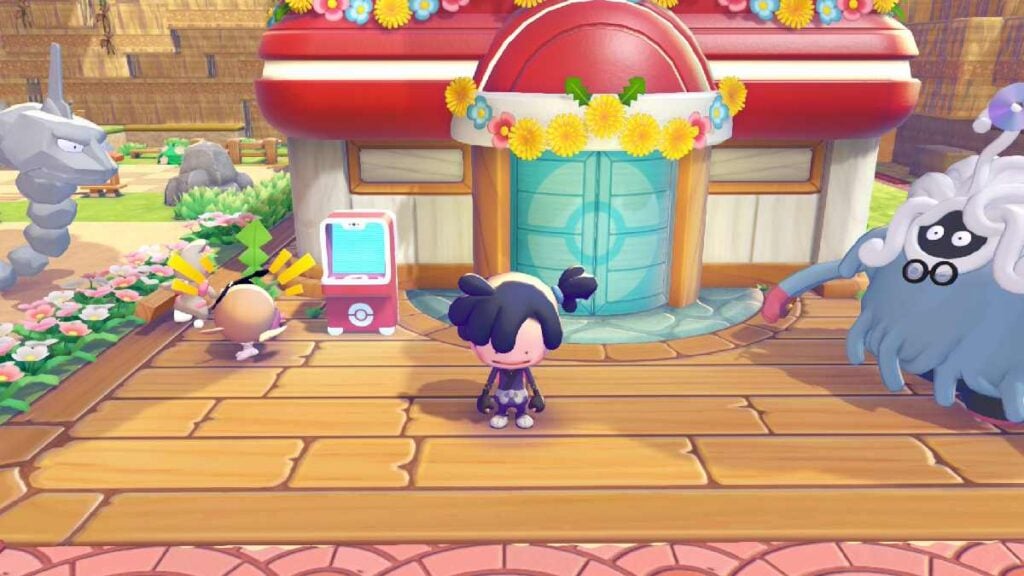
We’ve already seen that Game Freak is capable of completely breaking away from its original formula of living alongside pocket creatures. And while Nintendo has tried to be innovative, it just struggles to take that leap of faith into something completely different. But even though Pokopia still relies heavily on our beloved Pokemon, the truth is that this new recipe has stolen the hearts of thousands. At first, I thought it would be a compilation of other great games, but after several hours, I discovered a unique world that has reignited my love for Pokémon video games.
A Heartbreaking Tale
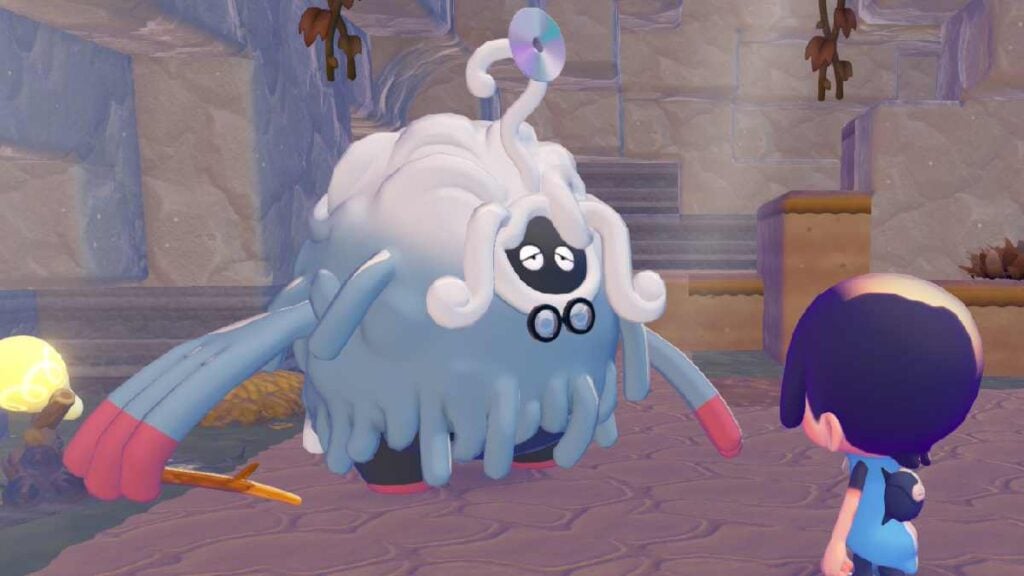
Pokemon Pokopia has a much deeper and sadder story that goes beyond a “cute” world. This post-apocalyptic world without Pokémon, at least at the beginning, unfolds its story much like many Souls-like games do. I know they have nothing in common and aren’t as difficult, but hear me out. Like the Ditto that players will take on, you’ll emerge from your Poké Ball with no idea what the heck happened to the world. The only thing we’ll know is that you were with your Trainer, then stored in our Poké Ball, and the next thing you will know is basically, all life on the planet has disappeared. And you only learn that because Tangrowth explains it to us in broad strokes.
The real kicker in the story is what you learn from the other Pokémon and from notes—some almost illegible, weathered by time and erosion; others from screen devices that miraculously still work—all scattered across the world. It is in these lost fragments that you discover beautiful, preserved memories of humans and Pokémon living together, along with notes from scientists or reporters recounting what actually happened to the world. The most heartbreaking part is that many Pokémon miss humans; some, like us, had trainers and cling to the hope that they’ll see them again.
However, it often seems that only Ditto—and, to a lesser extent, Tangrowth—truly understand the world and what it entails. It’s a harsh reality in which the “innocent” Pokémon either live in blissful ignorance, which gives them hope, or are doomed by their knowledge.
The truth is, I was not expecting a modern video game Pokémon story to hit this hard, but it really had me in tears at times, and at other moments, I was pondering what had happened to some locations I grew familiar with ages ago. Strangely, a spin-off manages to deliver a better narrative than those we’ve seen in recent generations, and I can only hope Nintendo and Game Freak take note, because Pokopia excels in its storytelling.
Shape Your World
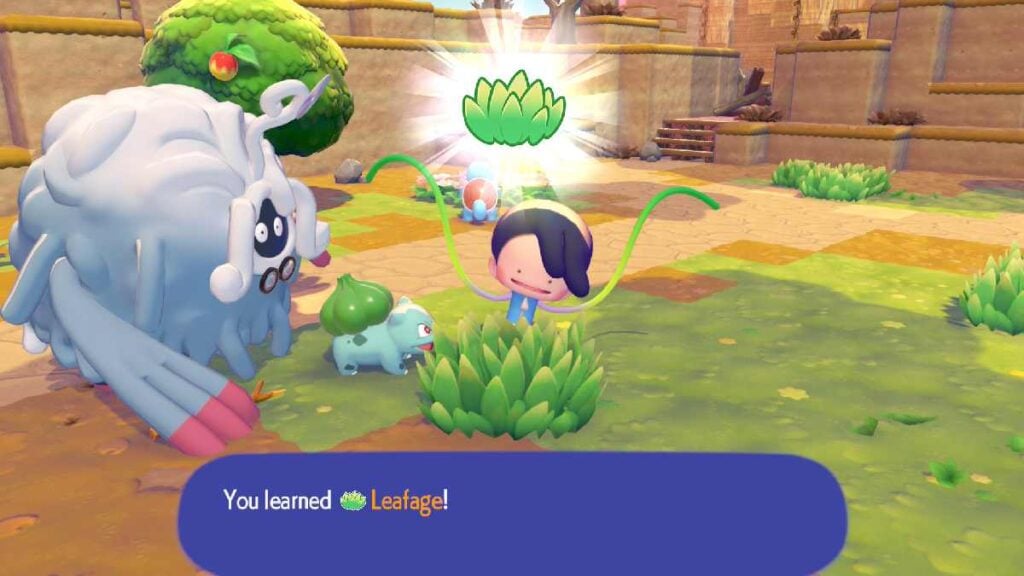
Overall, this game blends various systems from other games, but they’ve adapted them perfectly to a Pokémon world. One of the main highlights is the ability to terraform and restore habitats, something that will make those who spend the most time crafting aesthetically pleasing worlds very happy. Pokopia doesn’t have the scope of Minecraft, but it does give players quite a bit of freedom to modify the terrain. To a certain extent, it also reminds me of Animal Crossing and Happy Home Designer, at least in terms of the houses we build, which makes up for the dens being too small to fit much furniture.
Setting aside similarities to other games, one feature successfully carried over from Pokémon RPGs to Pokopia is the Pokedex. Keep in mind that in this world, there are no battles or captures, so the way to get information about each species is to restore the environment and befriend other Pokémon. This way, Ditto will copy attacks from its neighbors and use them to water plants, create gardens, and farm.
Doing this will also help you discover more habitats and encounter new wild Pokémon in the tall grass. That said, just like in the main series, you won’t find a Water-type Pokémon in the meadow—you’ll have to travel to other “cities” or zones. However, you won’t be able to travel to new environments unless you’ve “caught enough Pokémon” and improved your Trainer Rank to pass the toll booths.
For me, the biggest draw of Pokopia is that it’s a cozy game, so I enjoy that the gameplay is pretty simple and lets you roam around for hours. When the game gets a bit more “demanding,” it’s just a few Tangrowth missions to upgrade the Pokémon centers or a puzzle you need to solve, like restoring power to a town. The rest is about improving your house, creating a big garden, and continuing to search for more Pokémon.
The Coziest Side of Pokemon
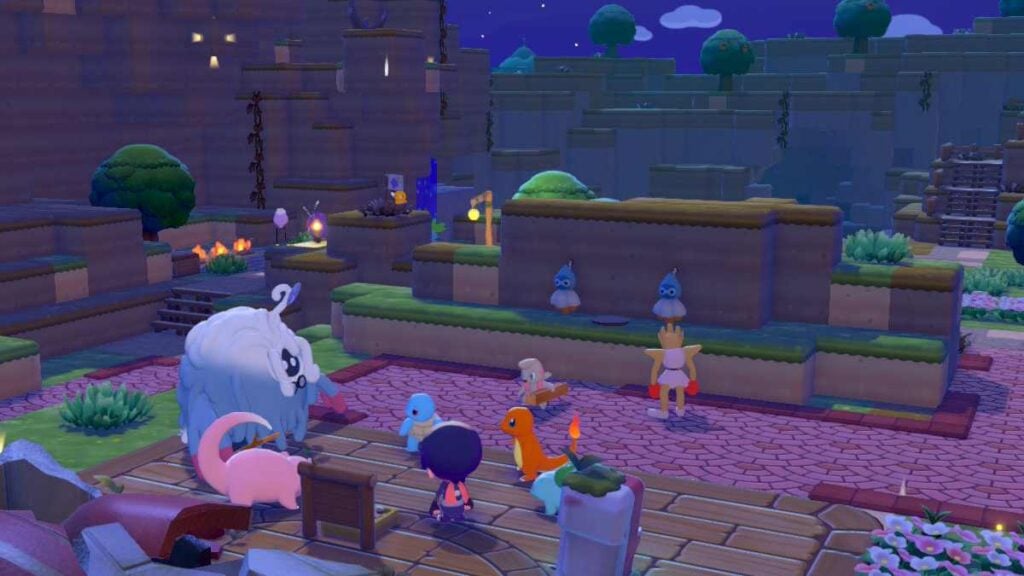

It’s interesting to see Nintendo experimenting with Pokémon to bring us more innovative ideas that could be huge hits, such as Pokémon Go. Now with Pokopia, there’s a new haven for those who prefer to enjoy a deeper story and spend hours exploring the environment, rather than the classic sim, might find themselves lost for hours trying to complete the Pokedex.
After seeing Pokémon fall into a somewhat stale formula lately, with only a couple of stand-outs, and some being remakes, I’m excited that Pokopia has set a new standard for the series and shown us that moving away from our creature-collecting ways is good. My only hope is that this game receives further updates because I can’t wait to befriend more of these creatures I grew up alongside in this colorful and mysterious utopia in the making.
Pokemon Pokopia (Nintendo Switch 2 Reviewed)
Pokopia offers an incredible experience, and as a longtime Pokemon fan, I think the team did a great job of bringing the original game to life in this new adventure full of emotional ups and downs.
Pros
- An incredible story with heart-breaking twists
- A fantastic translation of the original games into a completely different genre
Cons
- The game starts slowly