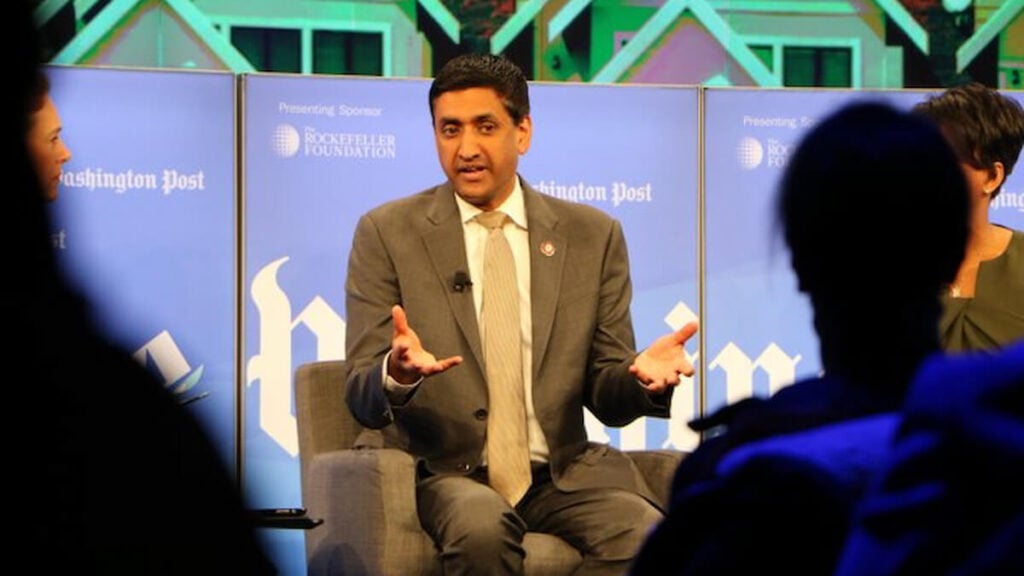
California Rep. Ro Khanna is facing backlash after calling for ICE to be abolished following a visit to a California detention center. The Democratic lawmaker claimed he witnessed detainees living in inhumane conditions, including allegations of inadequate medical care, and argued the agency should be replaced. His comments quickly spread across social media, where critics challenged his claims and demanded evidence.
Khanna shared the video on social media, where it generated extensive discussion. Much of the reaction challenged his claims about ICE and human rights.
Khanna said ICE increased daily detentions from 1,000 to 2,000. He said the agency recorded more than 10,000 detentions during the previous week. Khanna said, “We need to abolish ICE and replace it.”
Khanna said he visited the California City Detention Center. He said he saw “someone with blood in his urine who was denied medical care.” He also said he saw “rocks in the food” and people “shivering because they didn’t have clothes.” He said ICE was “violating human rights.”
Public Reactions to Ro Khanna’s Call to Abolish ICE
Khanna’s remarks quickly sparked debate online, with many users disputing his claims about ICE and opposing his call to abolish the agency.
Several users challenged Khanna’s allegations. One wrote, “Show us proof of human rights violations. It’s not time to abolish ICE, it’s time to send all the illegal aliens back to their home country.” Another response asked, “Explain why arresting 10k illegal immigrants is a violation of human rights?”
A separate user questioned, “Replace it with what? Something that doesn’t enforce the law?” Another added, “it’s a violation of the citizen’s rights to continue to let people break immigration law”

One response stated, “I voted for the arrests and deportations of murderers, drug dealers and rapists in the country illegally.” Another added, “No we’re not abolishing ICE.”
The exchange highlights how deeply divided public opinion remains over ICE and the nation’s immigration system. As lawmakers continue to debate the agency’s future, questions surrounding detention conditions, oversight, and potential reform are likely to remain at the center of the conversation.