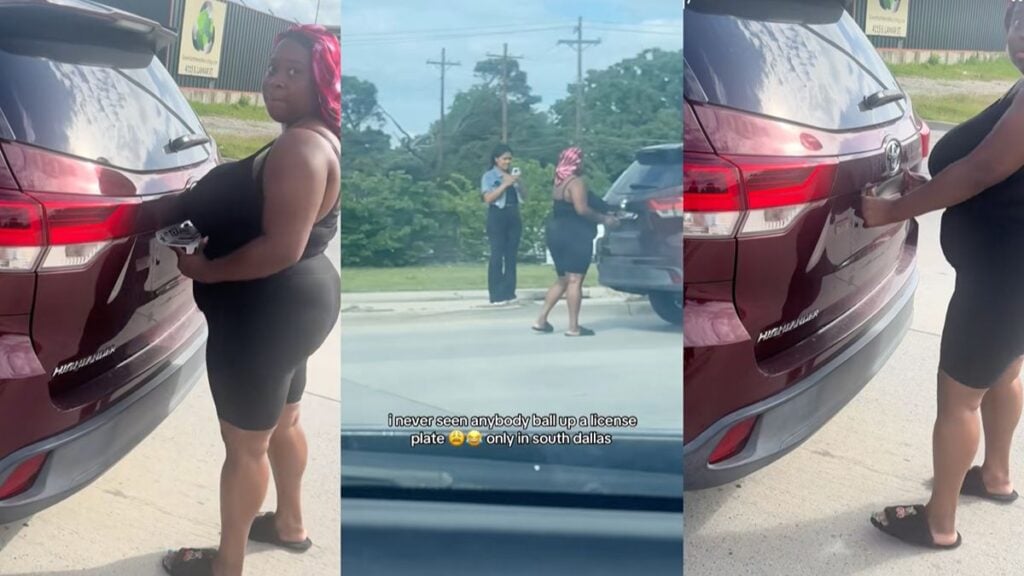
A hit-and-run driver in Dallas, Texas, found the oddest way to avoid handing over her insurance details in a clip that has since gone viral. A TikTok video was posted by the alleged victim in the fender bender, urging people to help her locate the hit-and-run driver. The clip showed the woman getting out of her vehicle to bend her license plate, so that the other driver couldn’t record it. While folding the license plate, she argued that nothing had happened and that they did not need to get her details.
The woman behind the camera said the incident would be considered a hit-and-run if she didn’t allow her to get the license plate number, but the driver argued that her car was not damaged and that she was just trying to “claim.” Another road user captured the incident from their own car across the street. From the different angle posted on TikTok, the onlooker was shocked at the driver’s action of bending her plates, writing, “I’ve never seen anybody ball up a license plate…only in South Dallas.“
The clip showed the exchange between the two drivers and a view of both cars involved. However, no noticeable damage was seen on either vehicle. After the hit-and-run driver bent her license plate, she got into her car and drove off.
Netizens Rally Behind The Hit-And-Run Driver For Quick Thinking
In a surprising turn of sentiment, the woman received an unlikely wave of support from internet users.
One TikToker echoed her sentiment, alleging that some people are merely looking for a reason to file an insurance claim even when it was not warranted, “Folks do just be tryna claim though.” Another wrote, “Say you don’t have insurance without saying you don’t have insurance.” A commenter suggested that the driver’s show of resilience should be enough reason to drop the matter. “She’s as strong as hell, I think you should let it go,” they advised. One viewer provided a more analytical perspective, saying, “I looked at the other angles in the other videos; it doesn’t look like your car was damaged at all severely. So I understand her saying ‘you’re just trying to claim.’”
Someone questioned the confrontation itself, writing, “I don’t get it. If nothing is wrong with either car, why would you file a claim? So both of you pay more money.” Another user shared the sentiment stating, “If there was no damage, then there’s no need to exchange information.“
While the typical reaction to hit-and-runs is condemnation, the lack of visible damage to either car shifted the narrative in the driver’s favor. Many did not view the driver’s actions as a criminal escape but a calculated defense against unnecessary insurance disputes.