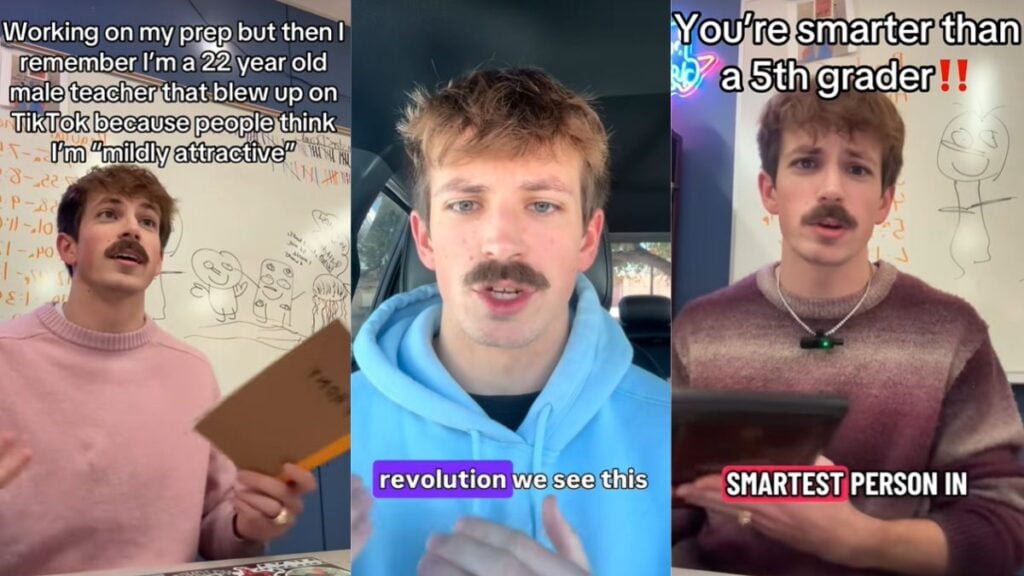
A 22-year-old Texas AP history teacher is sparking conversation online after posting a video examining the growing shortage of male teachers in U.S. schools — and how historical shifts following World War II helped shape today’s classrooms.
The educator, known on TikTok as Mr. Jahn, shared the video to explain why men make up a shrinking portion of the teaching workforce, particularly at the elementary level. He emphasized that he was not complaining about being a male teacher or about visibility on social media, but instead offering historical context for a trend that has impacted generations of students.
According to Jahn, men make up about 23% of teachers nationwide. That number rises in secondary education but drops to roughly 11% at the elementary level. He traced the disparity back to the late 19th and early 20th centuries, when teaching was considered a prestigious, white-collar profession and was largely male-dominated.
That began to change as compulsory education expanded, women gained greater access to higher education, and men left teaching roles to serve in World War I and World War II. When those men returned, Jahn explained, many did not reenter the profession, which had become increasingly feminized. Historically, he noted, careers that undergo feminization often see declining pay and fewer men entering the field over time.
The video prompted viewers to reflect on their own school experiences, with many connecting Jahn’s explanation to what they saw in their classrooms as they grew up.
“I had very few male teachers,” one commenter wrote. “I found them more engaging. They made class interesting.”
Another viewer echoed that sentiment, writing, “This lowkey makes sense, like all my teachers this year have been women but two.”
Some said the video helped them recognize a pattern they had never fully noticed before. “I never realized how few teachers were male until recently,” one commenter wrote. “This explains so much.”
Others reflected on the broader impact of the trend. “I don’t think I’ve ever heard a boy my age say he plans to go into teaching,” one viewer commented, adding that most of the men in their school were young and had not thought beyond their own education.
Jahn also addressed why male teachers may seem more visible on platforms like TikTok despite being underrepresented in schools. Because there are fewer male teachers overall, he explained, there are also fewer sharing classroom content online, creating a supply-and-demand effect that makes them stand out.
While Jahn said he loves teaching and feels grateful that people connect with stories from his classroom, he does not view himself as an influencer. Instead, he described himself as a content creator focused on education and on encouraging broader conversations about representation, mentorship, and the future of the profession.