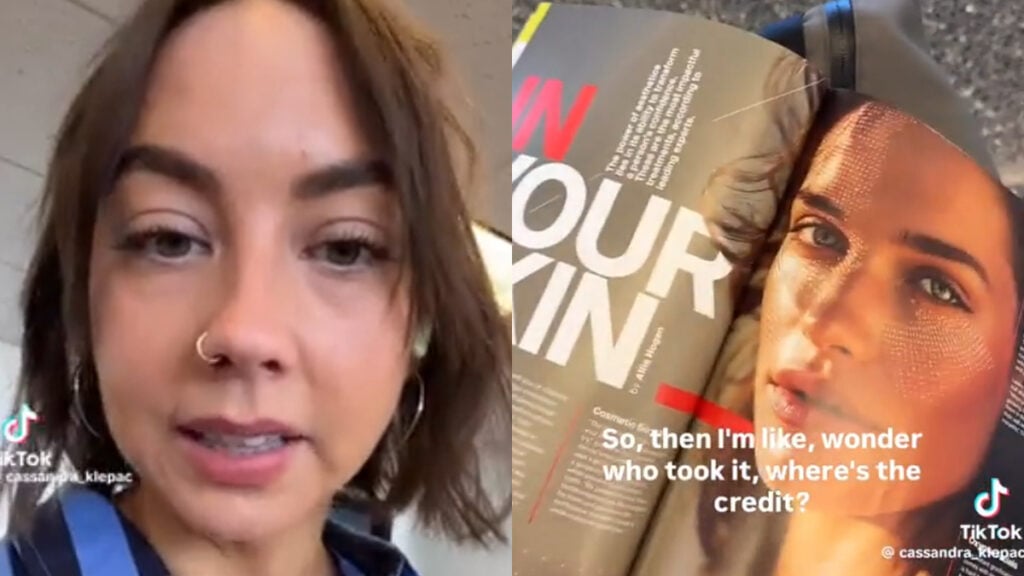
Unrealistic beauty standards have followed women from the past to the present, constantly shifting but always demanding the impossible. For generations, women have sacrificed time, money, confidence, and self-worth in pursuit of an ideal that never truly existed. Now, with the rise of AI, this problem is poised to grow even larger. Artificially generated images can portray perfection in a way that no real person ever could, and that makes the pressure even more intense. One woman in Texas recently learned this firsthand when she opened a beauty magazine called The Beauty Authority.
As the Texas woman flipped through its glossy pages, she saw beautiful women featured in various articles and spreads. Out of curiosity, she looked for the name of the photographer, wondering who had shot such polished images. But after scanning the pages, she found no credits at all. When she looked more closely, she noticed tiny printed words revealing the truth. The images she had been admiring were AI generated.
The Texas woman said she felt infuriated, especially because the magazine was filled with articles about beauty procedures and self-improvement. To her, using AI generated images to represent beauty felt dishonest. She explained that she is a photographer who has worked with many women, and this issue went far beyond AI taking jobs.
In her view, AI was erasing the real stories and real lives of real people. She also found it ironic that the magazine promoted confidence for women while simultaneously relying on artificial images that no human could ever match. She warned readers not to trust health or beauty advice presented alongside AI generated examples that had no basis in real life.
Online, internet users were quick to express frustration. Many criticized the magazine for promoting beauty procedures while using fake images designed to make readers feel insecure. One user wrote, “If we thought we had problems now with self-image and unattainable perfection, it’s going to get ultra worse.”
Others wondered whether more magazines and publications were quietly using AI generated content without disclosure. One person said, “She brought up some great points. I wonder how widespread this stuff is in publication. I wouldve never thought to check the photo description, she probably did because she is a photographer, but I wouldve been completely fooled. Horrifying.”
Many people noted that unrealistic beauty standards existed long before AI, and that modern technology was simply intensifying a problem that had already been harming women for decades. One former fashion and beauty retoucher explained that the issue goes much deeper than AI. In their experience, beauty media had always relied on heavily edited, retouched, and carefully curated images designed to convince people that their lives would be better if they were thinner, more beautiful, or more perfectly styled. They said these images were created to prey on insecurities and push people to spend money chasing an ideal that never truly existed.