
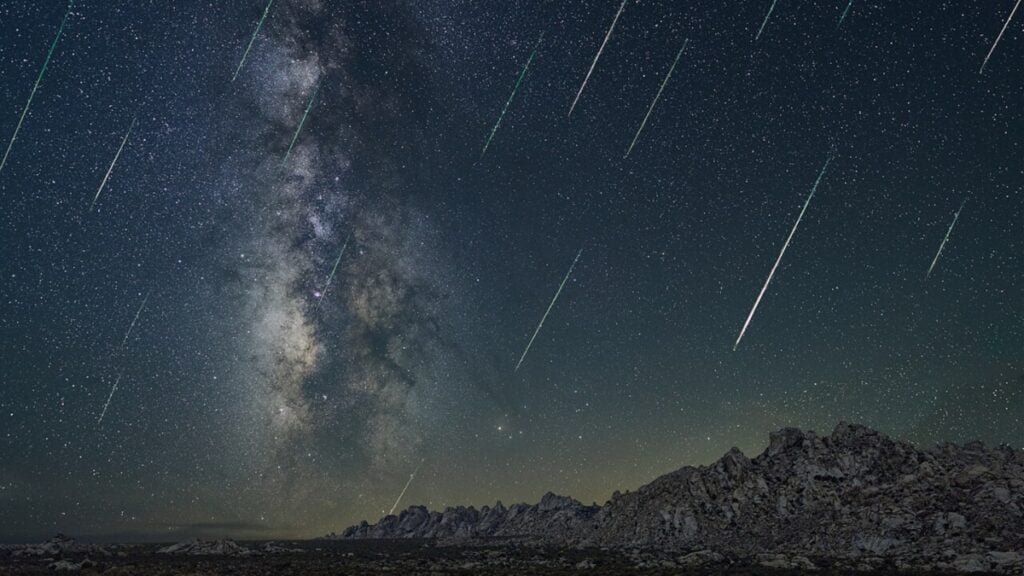
Skywatchers get a rare twist this year, the best show arrives before the peak, not during it.
Stargazers across the US are in for a double feature this weekend as two overlapping meteor showers streak through the summer sky, and skywatching experts say the next few nights, not the official peak, offer the best viewing of the entire stretch.
The Southern Delta Aquariids, active from mid July through late August, are building toward a predicted peak on July 30. They are joined by the Alpha Capricornids, a slower shower famous for producing bright, dramatic fireballs, along with the first early arrivals of August’s beloved Perseids. Together, the overlapping showers can send a steady stream of shooting stars across the sky from late evening until dawn.
But there is a catch this year, and it is a big one. A full moon arrives on July 29, just hours before the Delta Aquariids hit maximum, leaving the moon roughly 98 percent full on peak night. The Delta Aquariids are already on the faint side as meteor showers go, and that much moonlight will wash most of them out completely.
That flips the usual advice on its head. Skywatching guides such as EarthSky and the American Meteor Society recommend taking advantage of the darker, moon-free morning hours this week, after midnight and before dawn, while the show is ramping up and the sky is still dark enough to see it.
In plain terms, Friday night into Saturday morning and Saturday night into Sunday morning are prime time.
No Telescope Needed, Here Is How To Watch
The good news is this show requires zero equipment. Find a spot away from city lights, bring a blanket or lawn chair, and give your eyes 20 to 30 minutes to adjust to the dark. The best window runs from after midnight until the first hint of dawn, when the radiant point in the constellation Aquarius climbs highest, near the bright, lonely star Fomalhaut in the southern sky.
Under ideal dark skies, the Delta Aquariids can produce 15 to 20 meteors per hour, and viewers in the southern half of the US get the best angle since the radiant rises higher there. Keep an eye out for the Alpha Capricornids too. Their numbers are lower, but they are known for slow, brilliant fireballs that can appear anywhere overhead.
And consider this weekend a warmup. The Perseids, the most popular meteor shower of the year, peak on August 12 and 13 under a new moon in 2026, which sets up nearly perfect viewing conditions. Anything you catch now is a preview of an even bigger show.

So will you be setting an alarm this weekend? And what is the best meteor shower you have ever seen? Sound off in the comments below.