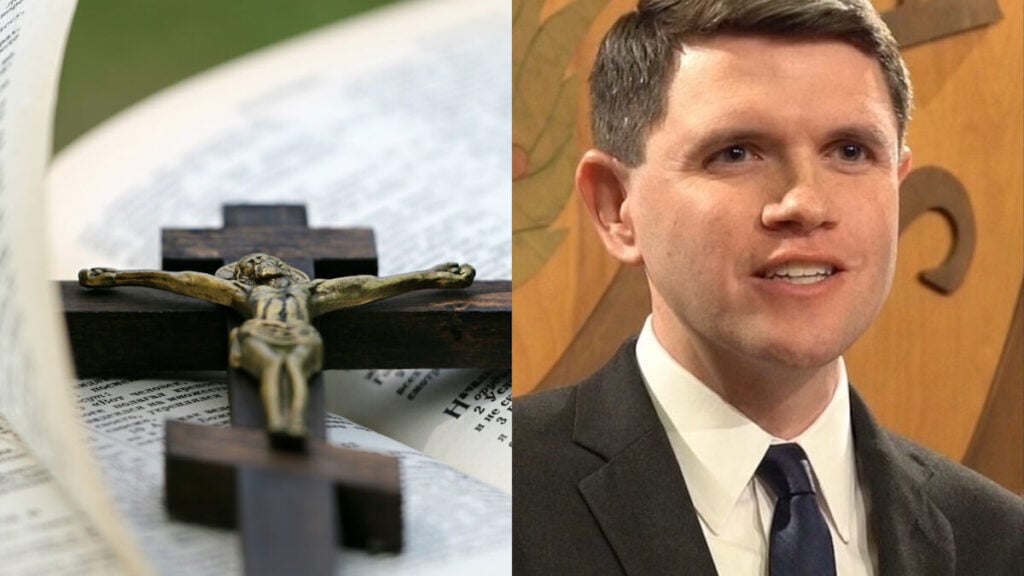
Texas Democrat James Talarico invoked Christian teachings to defend universal health care and other policy priorities in a video. He argued that his positions on health care, hunger and political corruption rest on biblical grounds. The remarks drew attention after he linked those policy positions to examples from Jesus and the Hebrew prophets.
In the video, Talarico opened by connecting health care costs with Jesus healing the sick. “When Jesus healed the sick, he didn’t ask for a deductible,” he said. He then tied that example to his support for universal health care.
“So, when I fight for universal health care, I’m doing it on biblical grounds,” Talarico said. The argument then extended beyond health care. He said Jesus fed hungry people without “price gouge” and connected that lesson to child hunger in Texas.
Talarico said no child in the state should go to bed hungry. He also invoked the Hebrew prophets while discussing political corruption. He said they “spoke truth to power” when confronting corruption in high places.
He then connected that example to politicians he accused of serving themselves instead of the public.
James Talarico Faces Criticism Over Biblical Case for Universal Health Care
The religious framing quickly became the center of the response, with critics challenging Talarico’s interpretation of Christian teachings.
One response pushed back on linking Christian charity to government policy. “Christian charity is a moral obligation, not an endorsement of any particular tax or healthcare policy. You’re confusing the teachings of Christ with your own political agenda.”
Another argued that responsibility rested with individual believers instead. “Jesus did not ask for government to do it. He called on followers to do it. This is an illogical argument.”
A separate user objected to Talarico’s use of Jesus in his political argument. “Jesus wasn’t a mascot for your political agenda. Don’t twist His name to sanctify your politics.”
Another response directly rejected his claim of biblical grounding. “No you’re not on Biblical grounds. You’re twisting and using the Holy Word of God for your own self promotion.”
The debate leaves unresolved whether Christian teachings support government-backed universal health care. Talarico’s religious framing remains central to that disagreement.