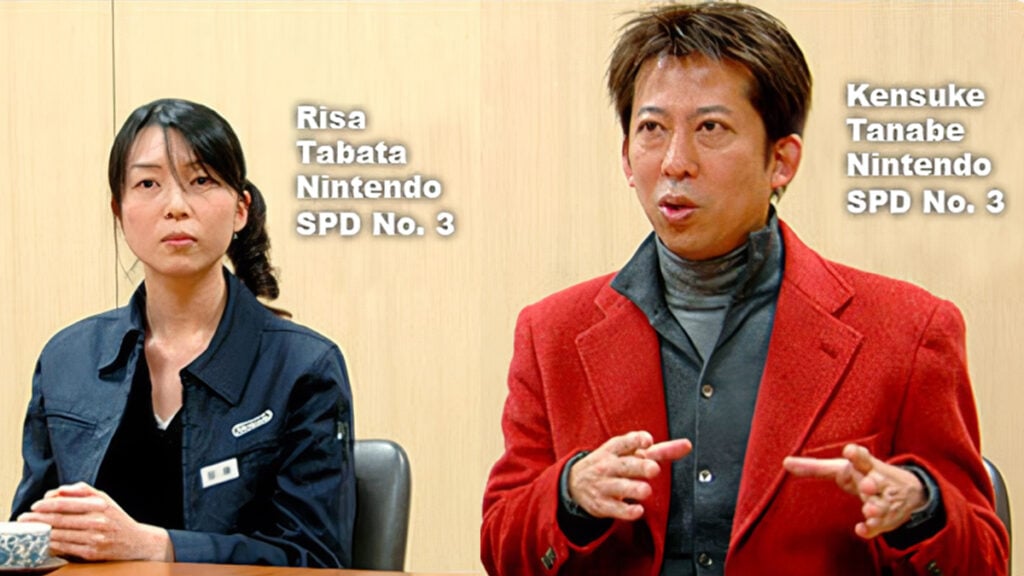
Kensuke Tanabe, one of Nintendo‘s longest-serving producers and a key creative force behind the Metroid Prime series, has announced his retirement. The news comes from an interview with Japanese magazine Nintendo Dream (via Chinese forum Weibo and Google Translate), where Tanabe confirmed that Metroid Prime 4: Beyond was the final game he worked on. He also named Risa Tabata, who has been Tanabe’s assistant producer and the producer of Paper Mario: The Thousand-Year Door remake, as his successor for the series.
Tanabe explained that Metroid Prime 4 was conceived as what he called ‘the first installment’ of the Sylux Arc. At 62 years old, Tanabe said this project felt like his final chance to properly tell a story where Sylux became the central antagonist and driving force of a conflict.
However, what may come as a blow to longtime Metroid Prime fans is Tanabe’s acknowledgment that the game took far longer than expected to complete. And thanks to that, his involvement with the series will end here. Worse, he added that even a future beyond Metroid Prime 4 — and if Sylux will ultimately be beaten — remains ‘uncertain.’
[…] I will no longer be able to participate in the production of the series going forward. Whether a sequel will be made is still uncertain, but I sincerely hope that someday Ms. Tabata and Retro Studios will be able to tell this story in full and bring it to a proper conclusion.
Beyond the lore, Sylux’s deep resentment toward the Galactic Federation and Samus also influenced Metroid Prime 4‘s new companion system. The intent was to gradually build an emotional bond between Samus and her new Federation allies as the story progressed. Kensuke Tanabe revealed that several planned Camp events meant to further deepen those relationships were ultimately cut due to time constraints, something he openly regrets.
Tanabe also pointed to Breath of the Wild as a major influence on Metroid Prime 4‘s more open environments. Online comments clamoring for an ‘open-world Metroid‘ pushed the team to experiment with wider areas. That same thinking led to the inclusion of Samus’ motorcycle, Viola, a decision Tanabe briefly hesitated on after seeing Link’s motorbike in Breath of the Wild‘s DLC.
Despite the cuts and uncertainties, Tanabe insists Metroid Prime 4 wasn’t designed as a grand farewell. At least not intentionally.
Metroid Prime 4 will be the last game I work on at Nintendo. However, we didn’t deliberately try to do anything ‘special.’ Just like previous Nintendo titles, we completed this game by working closely together with Retro Studios, hoping to deliver a fun and unique experience for players of all ages and play styles.
If this game becomes something that leaves a lasting impression in the memories of those who play it, I would be very happy.
With the producer’s farewell, Metroid Prime 4 carries added emotional weight for longtime fans. It’s not just the long-awaited return of a beloved series after two decades of waiting. It’s the final chapter made by one of Nintendo’s most enduring creatives, and a handoff to an unknown future yet again.