
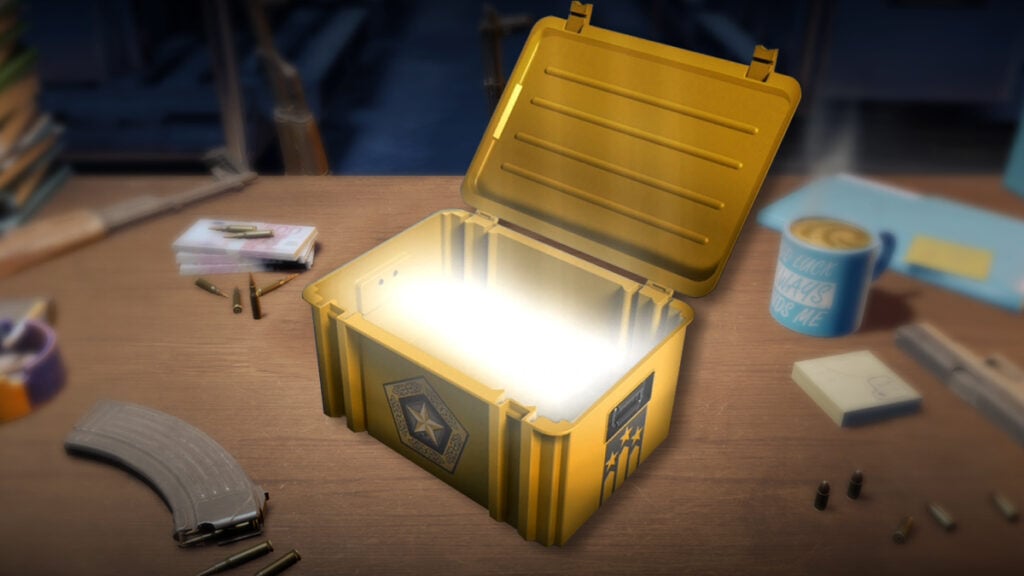
Valve has been sued, yet again, this time by the state of New York. It accuses the company of running what it calls illegal gambling through loot boxes in Counter-Strike 2, DOTA 2, and Team Fortress 2. The lawsuit was filed by New York Attorney General Letitia James, who argues that Valve’s loot box system amounts to ‘quintessential gambling.’ Allegedly violating the state’s constitution and penal law.
According to Reuters, the filing claims Valve generated ‘billions of dollars’ selling keys to open randomized cases, complete with a presentation that mirrors a slot machine. Right down to the fancy animation that builds psychological tension. If you’ve ever opened a TF2 or CS2 case, you definitely already know the feeling.
This doesn’t come as a shock. In 2023 alone, reports suggest Valve likely pulled in around $980 million from CS2 case key sales. It’s predicted that in 2025, its total earnings from cases and 15% marketplace fees could even exceed $1.1 billion.
James said key sales fuel Valve’s ‘unusual business model,’ where players can resell the items they win on the Steam Marketplace and across third-party marketplaces. She is seeking restitution for players, as well as a fine equal to three times the company’s alleged illegal gains.

The complaint also leans heavily on the child-protection angle. Citing the Massachusetts Department of Public Health, children introduced to gambling by age 12 are four times more likely to become problem gamblers as adults.
“Valve’s loot boxes are particularly pernicious because they are popular among children and adolescents,” James said.
James has previously pursued heavyweight, multi-billion-dollar companies such as the Trump Organization and PepsiCo. Valve, for its part, is no stranger to similar legal scrutiny either. The company has faced investigations over CSGO skin gambling in Washington state and multiple US class-action attempts targeting its loot box system.
On the other hand, Valve likely already has its usual defense lined up. After all, Steam Wallet funds can’t officially be cashed out into real money, and third-party skin sites aren’t run by the Half-Life maker itself. Such arguments have helped companies sidestep gambling issues before.
Still, if New York succeeds in framing Valve’s loot box ecosystem as gambling, it could have ripple effects far beyond CS2 and DOTA 2. Potentially forcing changes across the wider gaming industry.