I’ve always been a fan of the epicness behind a D&D campaign, but sadly, my lack of friends interested in this field forced me to shelve some of these adventures. That was until Solasta: Crown of the Magister arrived and brought the magic of D&D to the video game landscape, and it did so spectacularly. Yet, as marvelous as it was due to its community support, constant updates, and DLC, I always felt it lacked that modern touch. Well, after finally playing the early access build of Solasta II, I believe we might have the ultimate strategy RPG on our hands, and the good thing is that it’s just starting.
Meet the Colwalls
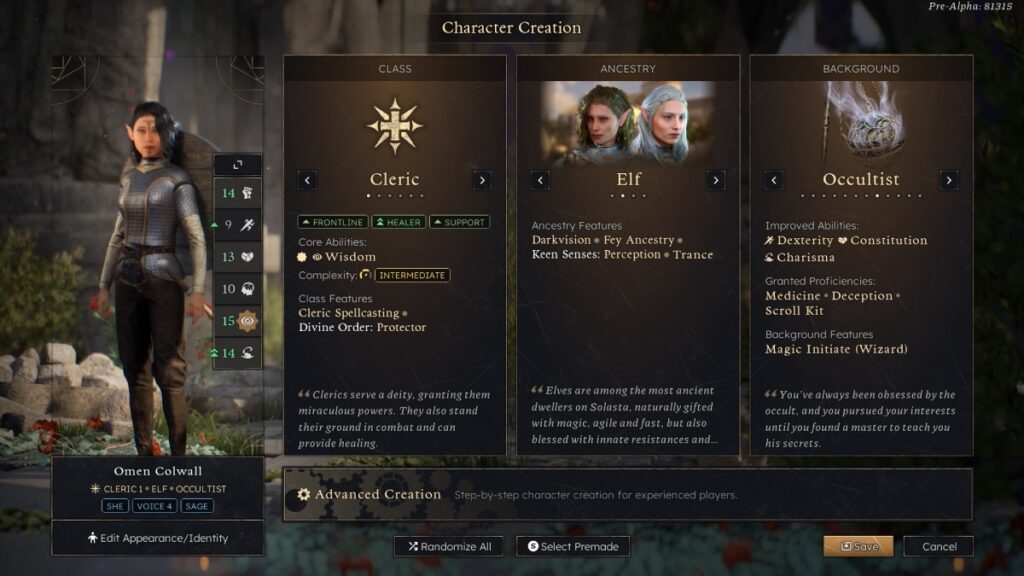
Previously, and like many of you, my only hands-on time with Solasta II was with the demo, which was more than enough to convince me that this sequel was more than just a graphical update with added gameplay systems; it was a full-on overhaul of everything we saw in its predecessor. But now, I finally got to play the early access build, and for once, I’m glad it only had the first act available, or else I would have lost myself in Neokos.
While the demo focused on four pre-made characters, this time I had the opportunity to create my party of four orphaned siblings, and I must say that if you’re someone who enjoys playing around with a game’s character creator, start telling everyone you’ll be quite busy, because the options to make your party are plenty.
You begin with four empty slots and can pick from four ancestries and six classes. I went with my party of Paladin, Rogue, Wizard, and Cleric, and brought two humans and two elves along for the ride. After almost an hour of fine-tuning the hair and face details of my adventurers, I dived into the class options, and here’s where Solasta II convinced me that it’s aiming to bring back everyone who played Crown of the Magister, but also a plethora of new players due to how accessible it is.
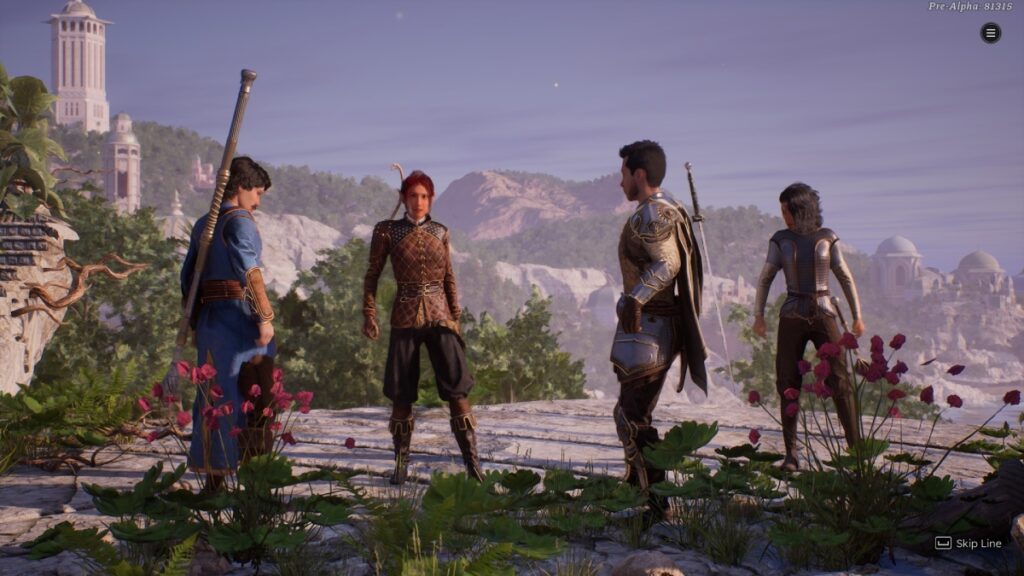
When creating your group, you get to either do an advanced character creation to pick every detail of a character, pick a pre-made adventurer, or go for the quick creation, which is the one I picked. In the latter, you pick a class with some recommended skills and your background, which I found extremely helpful for those who want to jump into the action or for someone who suffers from being a chronically indecisive person like myself. Yet, the advanced character creator is also amazing, and veterans will love all the options they will get to bring their orphans to life.
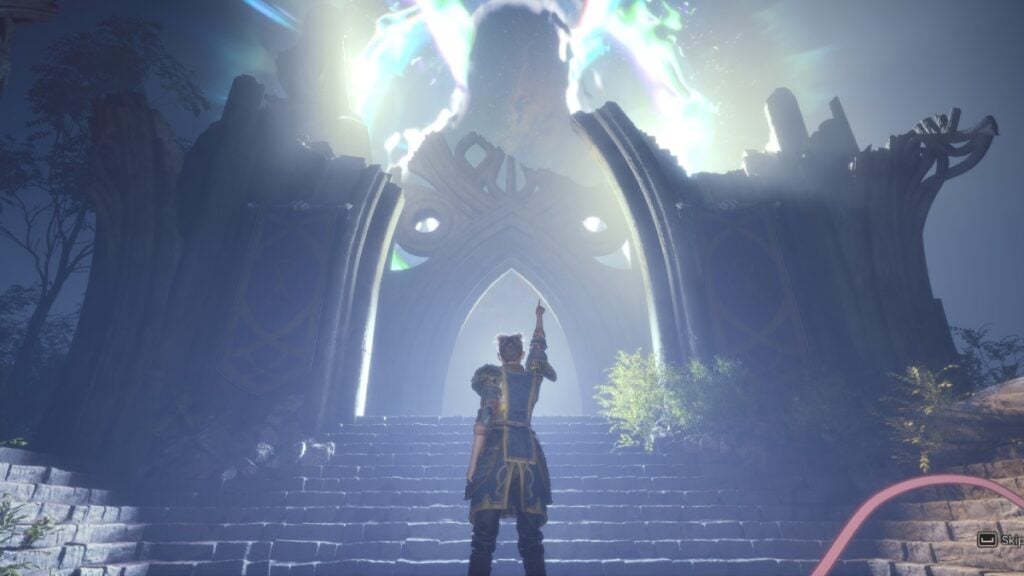
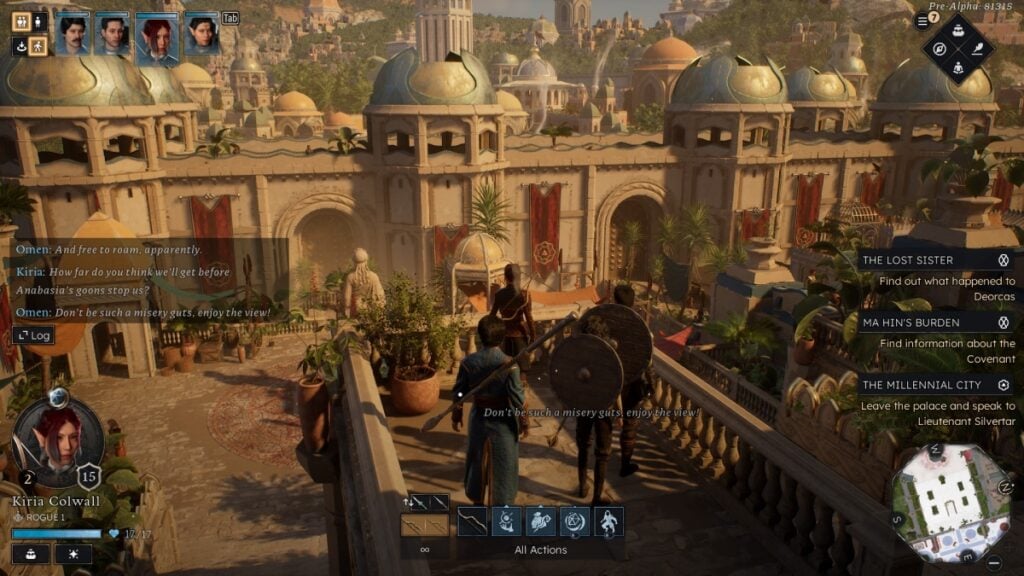
So, with my four Colwall siblings ready, I started my adventure, and the game instantly shocked me with its improved visuals and cinematic potential that not only enhance the beauty of Neokos but also elevate the immersion and epic feel of an actual tabletop adventure.
Story-wise, your player-created siblings arrive at their mother’s funeral, where two other siblings, Rickard and Deorcas, are waiting. The latter’s grief turns out to be too big to handle, and quickly brings mayhem to the funeral, sending our party of heroes, Rickard included, to the city of Caer Mar. Here, it’s up to you to discover why you ended up there, find Deorcas, and maybe help a couple of citizens along the way.
Frankly, I fell in love with this part of the story, not just for its stellar narrative, but also for how involved I felt through my characters. While I have nothing against games that feature pre-established companions, I will always prefer creating my own and seeing them interact with the plot, which is what happens in Solasta II. Every sibling has their own personality, and they interact with the story depending on the situation. The fact that all of them have a unique voice is the cherry on top of it all.
Overall, in terms of narrative and player agency around it, Solasta II is already leagues ahead of any other strategy RPG, and that’s coming from the first early access build. I really can’t wait to see what awaits my group of dysfunctional siblings, but I’ll have to wait a bit more for the next major update to come, so I can grab my orphans and take them on another journey.
Adventuring at Its Finest
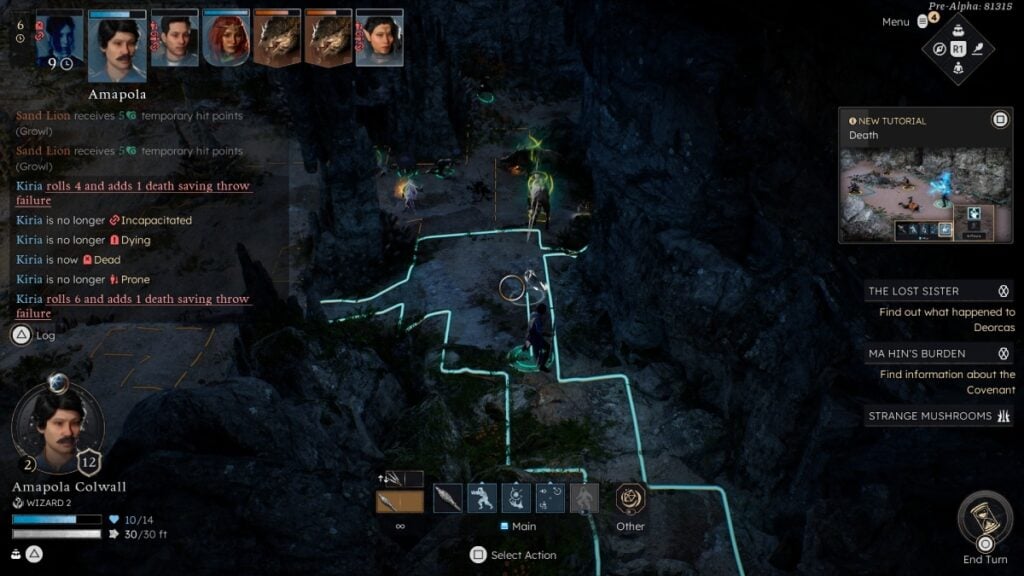
Siblings aside, let’s talk about the other meaty part of Solasta II, which is the combat and the adventuring side. Now, before I delve deeper, you all might know that this sequel uses the SRD system, which, if it sounds foreign for newcomers, is just the ruleset it uses for the combat mechanics and some rolls. And while I know some of the tabletop terminology might sound a bit daunting to some of you, worry not, as Solasta II is among the most accessible strategy RPGs I’ve played.
First, let’s break down combat, of which there was plenty in this build. Much like its predecessor, it’s turn-based and brings several features that some TTRPG veterans might recognize, albeit perfectly adapted to the game. Without getting too technical, this ruleset is extremely easy to get into, but as difficulty ramps up, you’ll want to tune every detail of your party and skills to give you a slim chance to survive. And, speaking of difficulty, even the easiest option can be challenging for some, but I liked it because it strikes the perfect balance between dangerous encounters and being accessible enough for players to dip their toes in.
In terms of the actual hands-on combat experience, the UI is miles better than that of its predecessor, with clear descriptions and even the option to hide the walls of text, in case you only want a short description of everything. Also, I loved just how neatly organized all the tabs were, such as Paladin Powers being in its own tab that you can open at any time to show all the spells, and then hide it to focus on all the other things happening during an encounter.
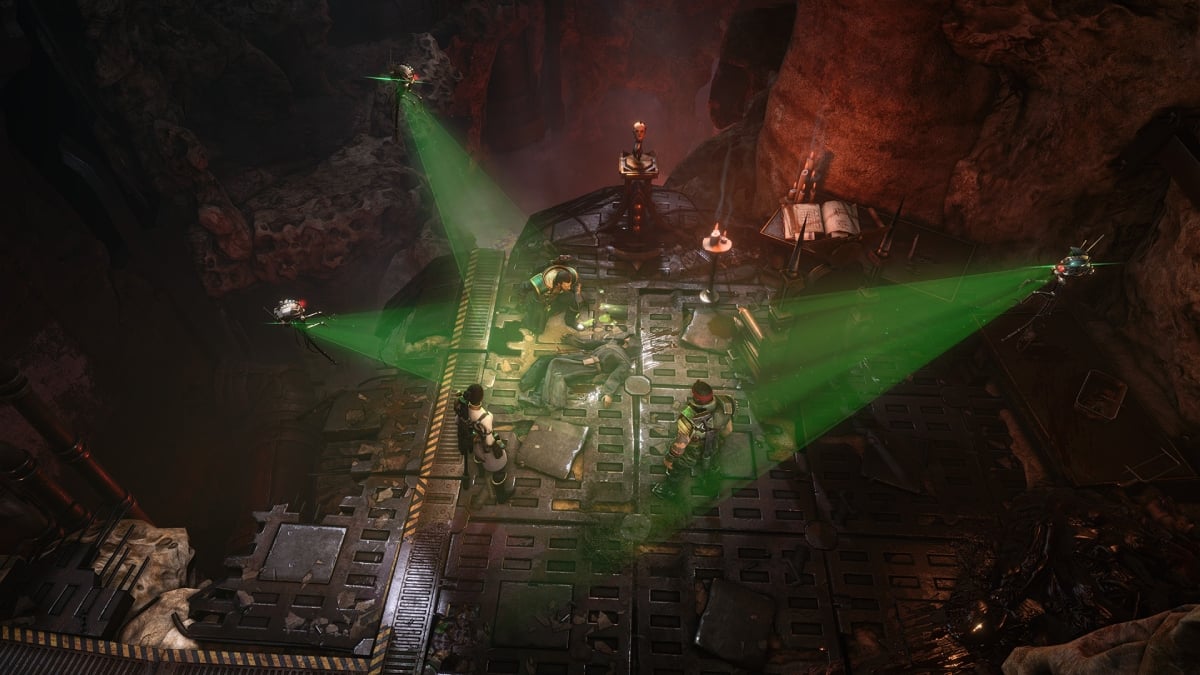
When it comes to skills, I only tried those of Cleric, Paladin, Rogue, and Wizard, and some of their subclasses, of course, and I must say that the spellcasters are among the best and most fun to use, with Cleric and Paladin being my favorites so far. There’s just a lot of utility and damage potential in the two of them, which I see as a must-have for every party.
Outside of combat, you also have your short and long rests, and while they play a straightforward role when exploring the city, everything becomes more interesting once you reach the world map, which does one of my favorite things in any game: adds strategy to the exploration aspect.
When moving through the fog-covered map full of hexagonal places, you have Move Points, or MPs, which dictate just how far you can go to reach your next objective or explore points of interest. Restoring these points requires you to do a long rest, and for that, you need rations, meaning that you actually need to prepare for your trip, just like in a proper adventure.
It was also a surprise to find several mysteries across the map, such as a cave full of deadly beasts or some more picturesque situations where the siblings would interact with each other or give their opinions about the scene. Instead of just being tethered to a couple of areas, you have a whole map to traverse, and it is up to you to choose just how much you want to uncover. And yes, some areas have a turn counter, meaning that you also need to manage your time when it comes to reaching a specific place.
The Long Road to Greatness
Strategy RPGs have always been among my favorite video games, and Solasta II is quickly positioning itself among the most memorable ones, which is almost wild to say, as this is just the first early access build. The truth is, this sequel has a lot of potential, not only in its storytelling and player freedom, but also in its combat depth and accessibility.
Usually, I wait a bit before jumping into an early access title, as I often prefer to experience something more meaty and with several things to do, but Solasta II is one of those few exceptions where I want to be along for the ride as I watch this long-awaited sequel grow and evolve. If you’ve played Crown of the Magister, you should know that Solasta II is everything fans have hoped for. But if you’re a newcomer to this wonderful world, you’re in for a grand adventure that is yours to shape.