Once every few years, there is always a game that becomes the “too good to be true” among the rest. We’ve grown used to many studios underdelivering promise after promise, so we’ve become numb to the excitement of something that might actually stand out. But Pearl Abyss might have broken that curse. After dozens of hours in Pywell, Crimson Desert is certainly everything we were hoping for and a bit more. And even if I have gripes with some of its systems, design choices, and narrative, no other recent game matches the scope, depth, and freedom that Crimson Desert delivers, making it one of the most unique, enthralling, and unforgettable gaming experiences in recent times.
Wolves, Bears, and a Magical Conundrum
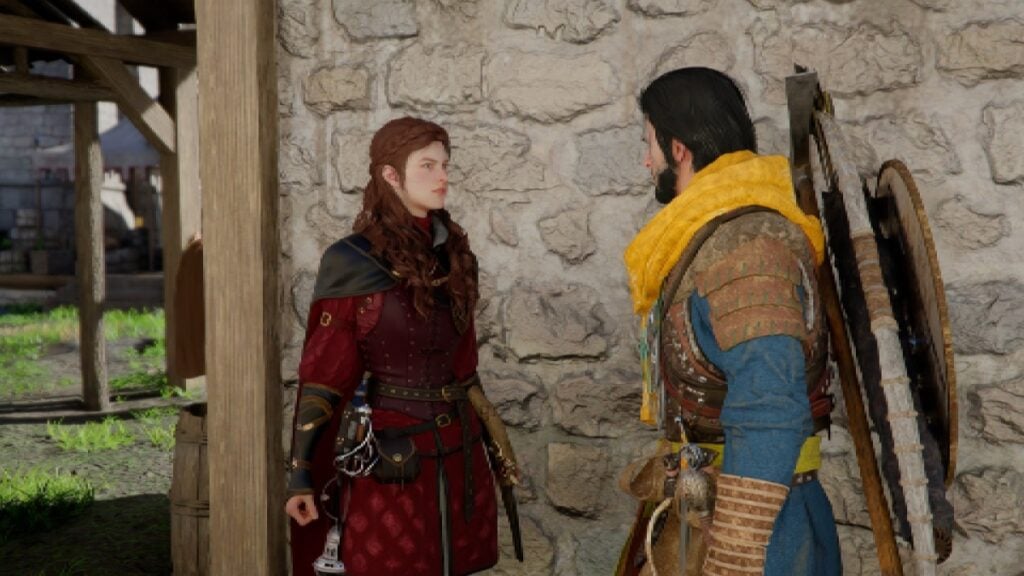
A curse that has befallen many open-world games is that of a flimsy narrative. While I don’t mind the trade-off sometimes, especially when the core sandbox experience is top-notch, which, in this case, it definitely is, I was expecting something to be at least memorable, especially with the playable cast of characters, but sadly, they bring the whole plot down.
As you may already know, due to the dozens of promotional materials, Crimson Desert follows the story of Kliff and the Greymanes. One unfaithful day, they receive news that one of their members has perished, and then the evil Black Bears invade them, scattering the clan and leaving our stoic Kliff wandering on his own for a while.
This is where my first issue with the story began, and it continued snowballing as I moved from chapter to chapter: there’s almost no logic to what Kliff does in the overarching narrative. To give you an example, within the first hour, you receive a horse from a man who appears in two scenes alongside Kliff, then get into an arm-wrestling contest, give money to a beggar, and are deemed such a humble and heroic being that you’re summoned to the realm in the sky known as the Abyss. We then cut to a gorgeous white witch giving you your wings, and you’re off to bring the Greymanes back together.
From here, the same lack of logic or cohesive thread persists as Kliff moves from scene to scene, grunting, nodding, and watching other characters have meaningful interactions, while everything else is left without proper justification. Even the introduction to Damiane, the character I was most eager to play, felt flat and out of nowhere, making the three playable characters often feel like cardboard cutouts, there to adorn the background while everyone else is doing something meaningful.
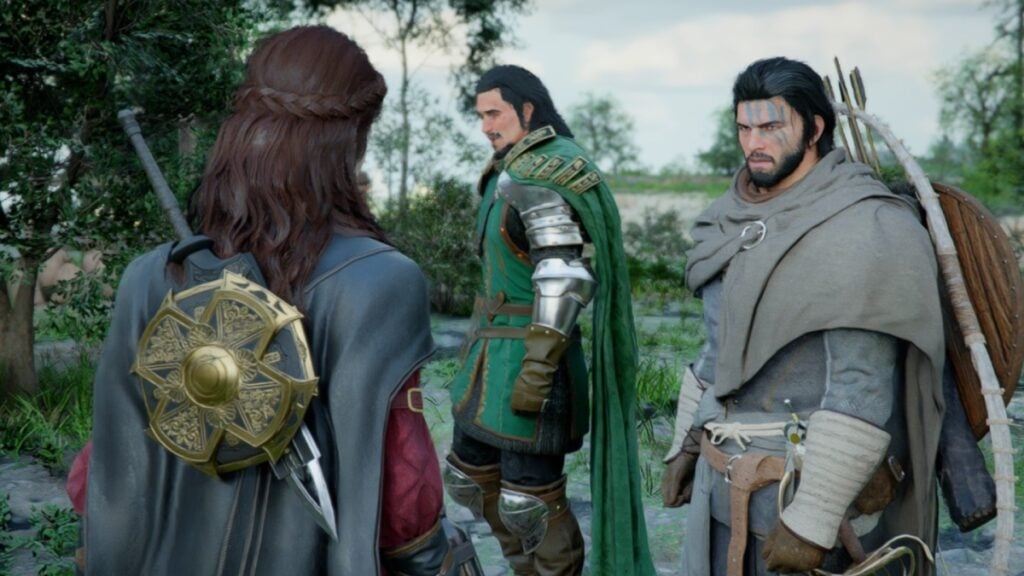
On the other hand, the non-playable Greymanes are extremely memorable. As soon as you start this questline and start looking for other members of your clan, you discover their personalities, struggles, and even their flaws as people, and that was something I would have preferred to be in the main story, rather than a faction quest that a few might set aside for a while.
Take Andrew and Naira, for instance. These two have an almost sibling-like relationship, with the former being a bit hotheaded and careless and the other more emotional. My favorite quest involved watching these two have a conversation about why they shouldn’t adopt a dog, showing clear, cohesive development for both characters, putting Naira’s thoughts under the spotlight, and eventually leading you to learn how to adopt animals that help you while you explore.
At times, it felt as if Crimson Desert, when it transitioned from MMO to single-player, left that MMO DNA in its quest design and main character interactions. The truth is, I would have preferred to create my own Greymane, especially given the gorgeous visuals we know Pearl Abyss is well-known for. The studio has the power of the Black Desert Online character creator, and it missed a huge opportunity here, because I would have rather spent time with my own character than with Kliff, Oongka, or Damiane, who rarely bring anything to the table.
Fortunately, this is one of the few complaints about Crimson Desert, because once I came to terms with the fact that the plot would never truly shine, I started enjoying it even more. Despite its narrative weaknesses, Crimson Desert dazzles you with bombastic action sequences, perfectly choreographed fighting scenes, and some of the most epic setpieces in an open-world game, and that is something that I ended up valuing more than the story itself.
Combat of Epic Proportions
And now, let’s move on to the main feast: combat. As soon as Crimson Desert started showcasing its combat mechanics, many of us started spiraling in ways that ended up with the same thought: “How far can I take it?” Well, the answer is as far as you can.
In terms of fighting however you want, Crimson Desert is the perfect example of making combat feel like a sandbox, too, where it rewards experimentation over mindless button-mashing.
Each character can equip different weapons, with Kliff being the most dangerous walking arsenal of the three. He starts with his sword and shield, but can equip spears, greatswords, and even dual-wield. At first, you only have your normal combo, but then you start getting these Abyss Artifacts, which are essentially skill points, and can start unlocking wrestling moves, jumping attacks, and even a few moves that involve using your traversal gadgets to deliver some powerful blows.
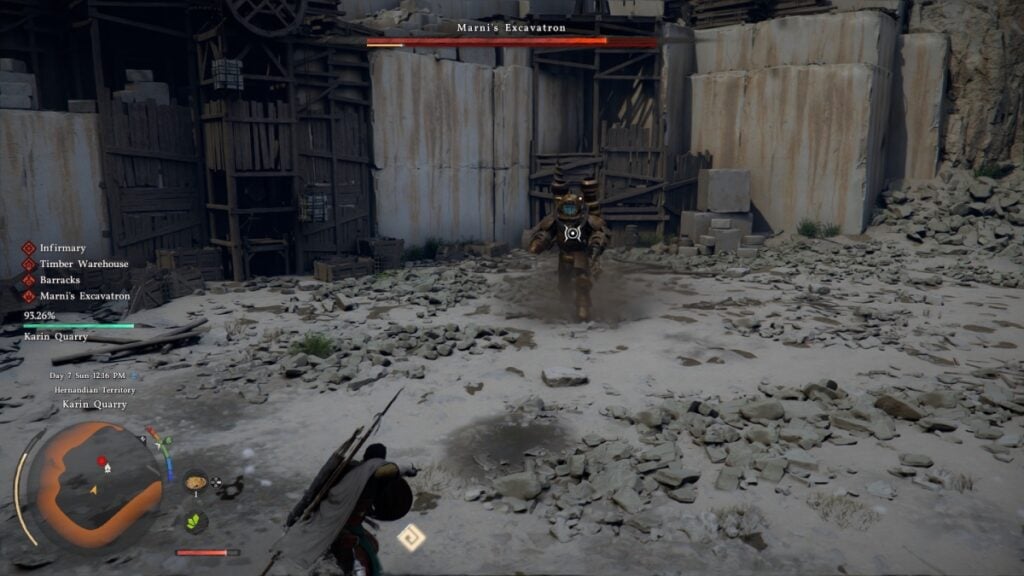
And while Crimson Desert gives you every option you can imagine, it all falls to a trial-and-error gameplay loop, which I thoroughly enjoyed. For instance, there is a boss that’s essentially a cloud of smoke, that you just can’t beat with wrestling combos or your normal sword attacks. I got stuck in that fight for two hours, up to the point that I decided to reset my skill tree, which, at the time, focused on melee moves and some gadget upgrades, and moved it to the other tree that is more “magic-oriented.” Lo and behold, I unlocked one ability there that let me stun this boss and kill it in less than two minutes.
That’s just one situation, but I assure you there are many more that always reward thinking outside the box, or even benching one character and bringing another, as they might perform better in a fight. For me, this is the essence of sandbox brought to combat, and it blew me away in every encounter. Now, you can definitely complete everything without moving away from your regular combos, but you’ll be missing out on one of the best combat mechanics in any recent modern action game.
On top of combos, progression also plays a huge part in the sense that it is a purely horizontal system, where the sword you began the game with can take you to the final chapter if that’s what you want.
As you have seen, there are life skills, including fishing, mining, and cutting down trees, each of which allows you to gather materials to upgrade your gear or cook meals. If you want to beat that pesky boss or the hordes of 20 enemies coming at you at the same time more easily, you’ll want to invest a bit in these side activities until you fully enhance a weapon, which can take a while, as some materials will require you to head to a faraway region.
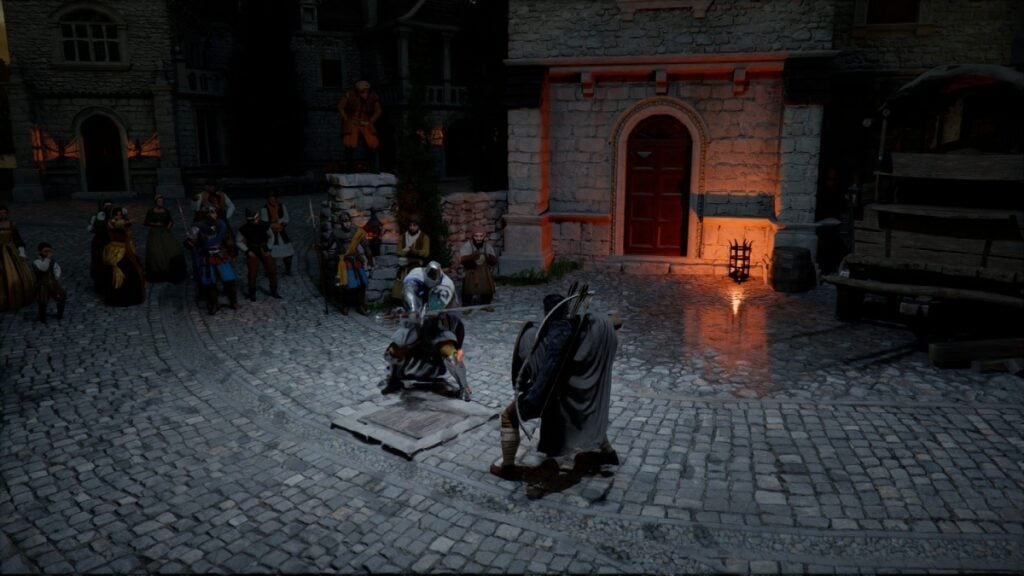
While I enjoyed this progression system, which moves away from the verticality RPGs have established lately to the point that every game is flooded with RPG-lite elements, there are still some flaws. Life skills never really progress. You can upgrade your axe, pickaxe, and rods, but you don’t really get a lot of benefit from anything. I would have liked to see this system in a deeper, more meaningful way, but it didn’t ruin my experience whatsoever.
You also have a few other systems, such as Abyss Cores, that let you add passive or active modifiers to your weapons, further improving their combat capabilities. It was pretty fun to upgrade some of the weapons I would normally ditch in other games. While I didn’t dive deep into this system, I bet a couple of players will come up with some wild combinations.
As with the previous systems, some small details didn’t resonate with me, mainly the healing. Overall, I’m not a big fan of how healing works, which is basically eating mid-fight. I get that it is a way of encouraging the player to try the cooking system, but it gets extremely tedious. You can mitigate some of the time you spend cooking and creating healing items by working on your camp, but I still feel the game needs an easier, less monotonous healing mechanic.
Another thing that wasn’t too bad for me, but I can see several players struggling with it at launch, is the button mapping. The game has so many combos that are thankfully shared between characters, albeit with different effects, that remembering can be difficult. Yet, I’d say the real difficulty lies in executing them, as some button combinations seem odd. I’ve never been a fan of jumping with Square or of an action system that maps light and heavy attacks to R1 and R2, respectively. I hope Pearl Abyss adds button mapping soon because this could be a deal-breaker for some.
In the end, the combat of Crimson Desert is nearly flawless, and the flaws it does have are minor and easy to look past. After a couple of hours, the convoluted button combinations stopped feeling clunky, and healing became less of a chore once I found a way to get my cooking provisions in order. Still, a few adjustments to these systems would make the game’s combat mechanics some of the best out there.
Free Rein to Explore
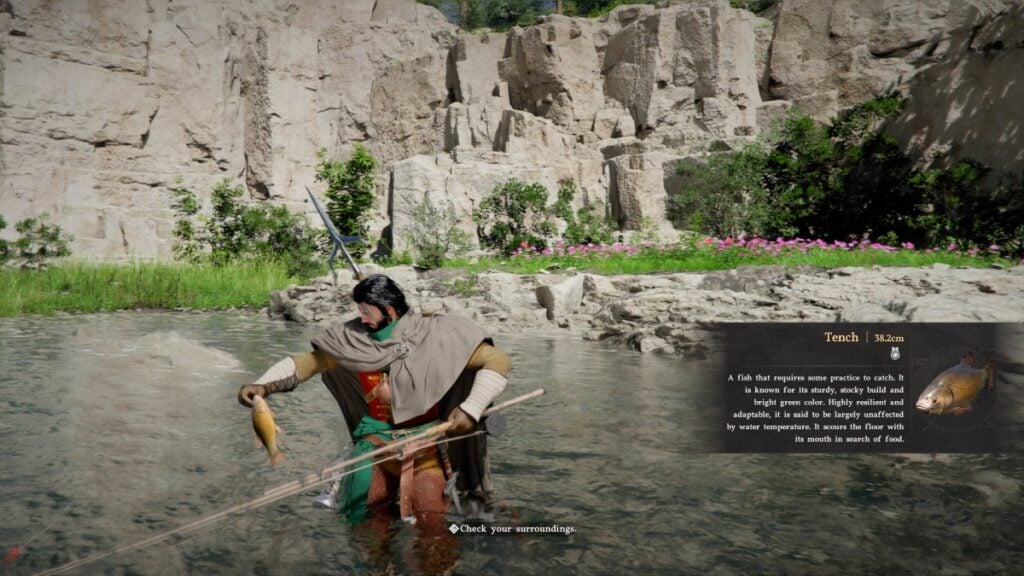
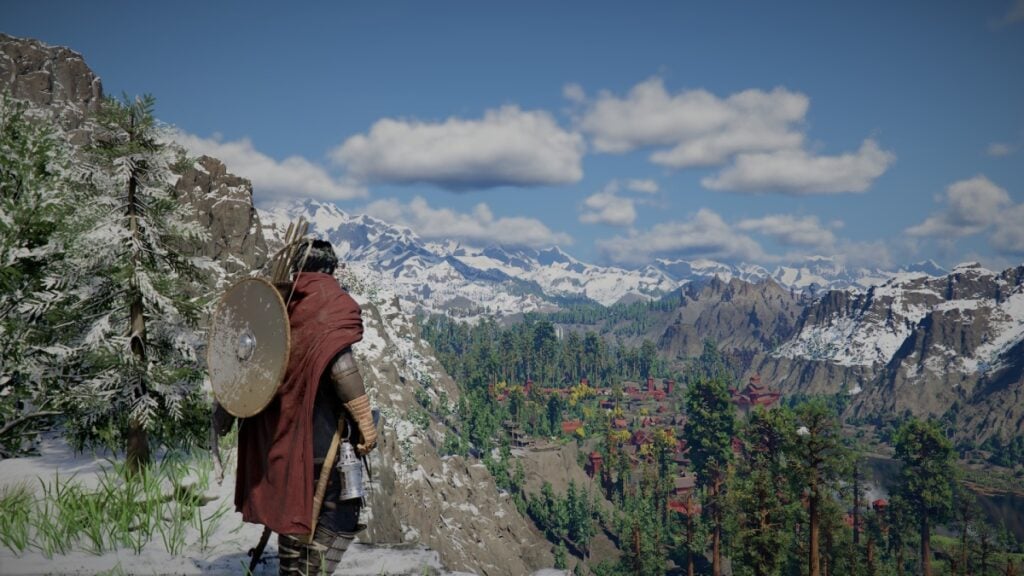
For the exploration part, let me tell you how much I spent on the first part of the map without discovering everything: 30 hours—and I’m not exaggerating. Pywell is massive, and when you thought you had seen everything, so many new things appear, but only for those who dare explore beyond the locations the game marks for you.
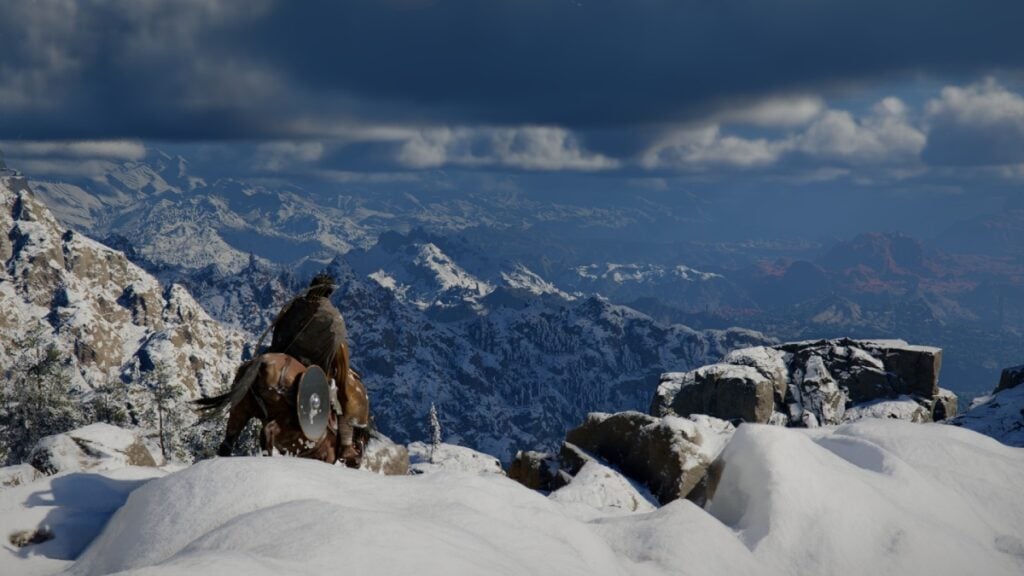
The beauty of this map not only relies on its breathtaking vistas, the hundreds of particles dancing on your screen, or the NPCs inhabiting the lands. The true allure of Pywell is everything that hides in its forests, cities, and at the end of every dangerous road you dare to walk.
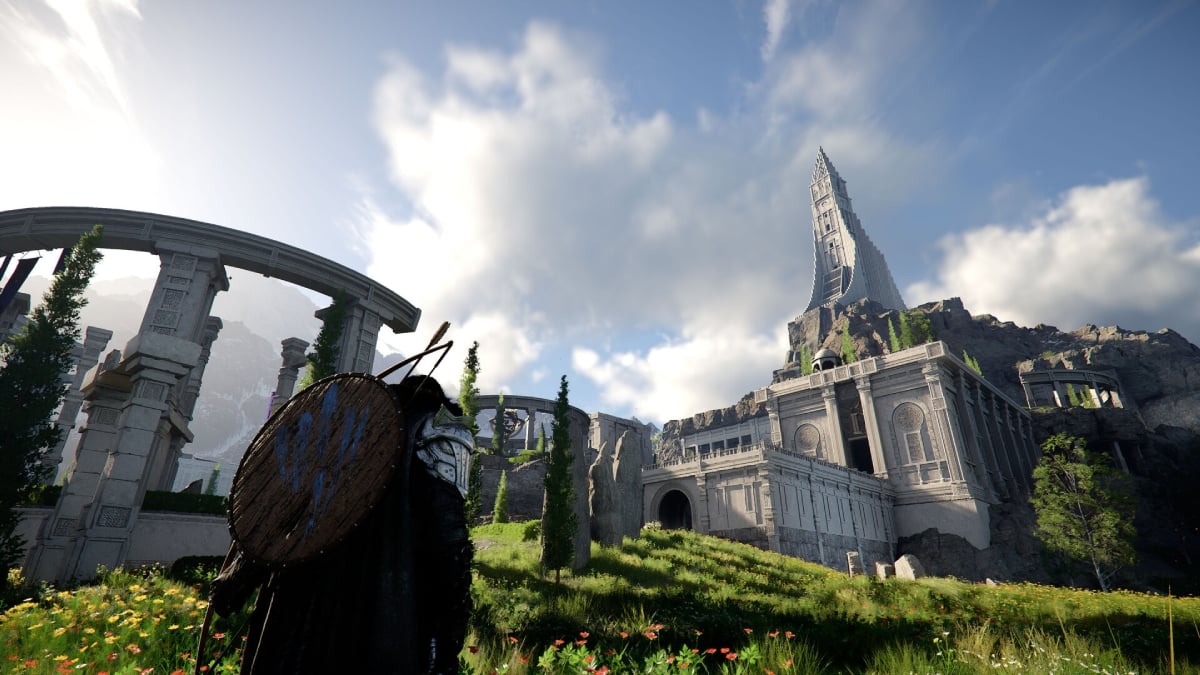
It’s been years since I felt this sense of discovery, this thirst to explore, and the drive to keep playing at 3 in the morning just to raise my sword once more and let the glint lead me to a new area—it is truly enthralling and the best part of Crimson Desert, hands down.
Yet, what makes it all much better is the fact that the game, aside from the main story, doesn’t really tell you what to do or where to go. Take fast travel points. Lately, we’re all used to being able to teleport everywhere at the press of a button in any game. We just nix the exploration aspect and prefer the speed of going from point A to point B. Crimson Desert makes you work for these fast travel points. Some are easy to find by following the glint of your sword a lá Shadow of the Colossus.
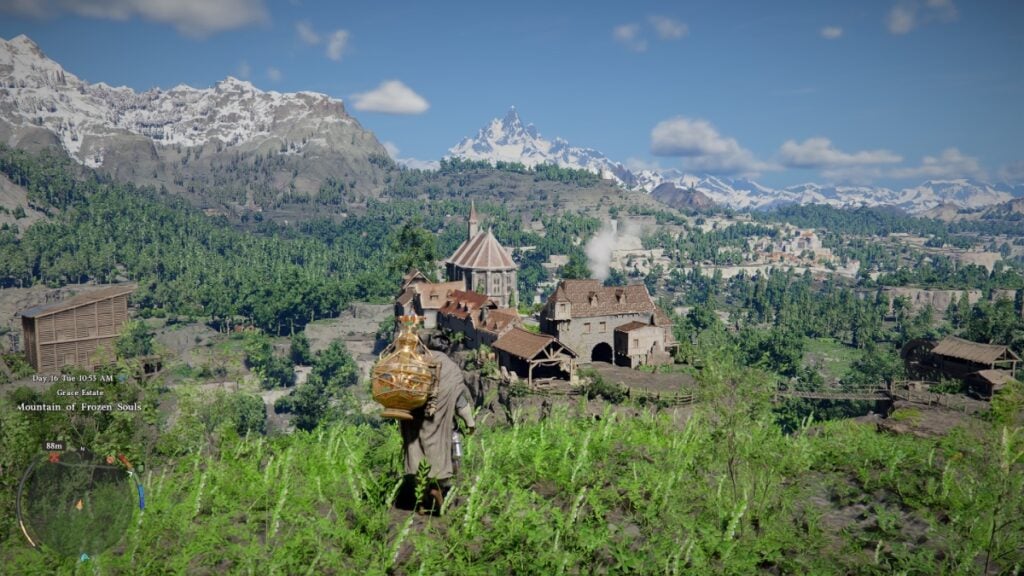
Others, however, have to be built. I kid you not, I found a deactivated fast travel point, and I was only able to restore it by grabbing an item from a place I’d only visited once because of a faction quest. It was pure luck, experimentation, but also the drive to satiate that hunger for discovery.
The best thing about going to every nook and cranny is that some great rewards are hiding behind these puzzles or challenges. Some just give you skill points, but a couple might give you a piece of armor or even a powerful accessory. You might even find breadcrumbs leading to a new faction quest or a side activity you were not expecting, such as a new gambling game.
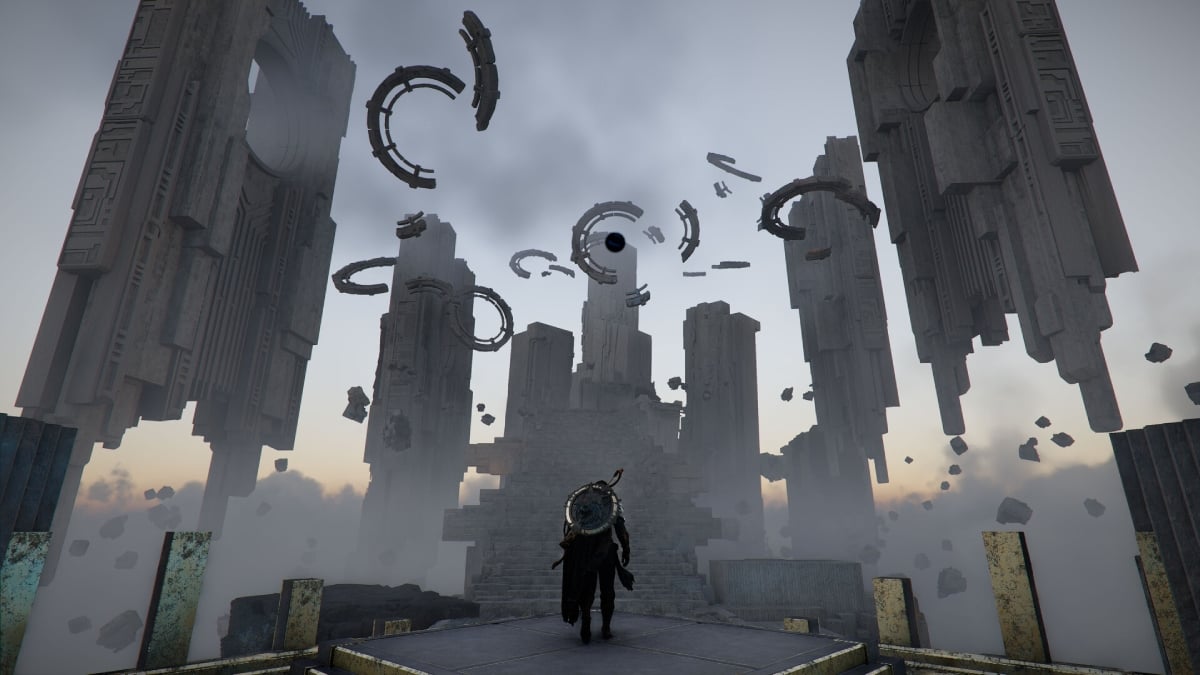
Also, this is just me talking about Pywell, but the Abyss is a whole different beast that you need to tame. It is all about connecting floating islands and completing puzzles as you traverse this area. I saw that some of these puzzles were tied to specific skills, but just like combat, I liked how these brain teasers encouraged me to use everything in my arsenal, not to beat an enemy, but to reach that new island that gives me more skill points and a new fast travel point up in the clouds.
Lastly, and since this has been the discourse surrounding the game ever since we saw its visuals, how good is the performance? Well, to put it simply: smooth. The game, at its highest settings and without frame generation, allowed me to push more than 100 FPS on my 5070 rig. In all my dozens of hours, I only saw an instance of frame drops, and that was during a boss fight full of particle effects. Other than that, it was a smooth ride without crashes, stutter, visual glitches, texture issues, or other technical hiccups we’ve sadly grown used to. It is truly one of the best-optimized games I’ve played, and it sets a new performance standard not only for open-world games but for gaming in general.
A Unique and Ambitious Experience
Ultimately, I admit that I was a bit of a non-believer when it came to the scope of Crimson Desert, but as I said in the beginning, that’s because we’ve grown used to many games that fail to deliver what they promised. Pearl Abyss’s latest installment is the complete opposite of that, as it just didn’t meet my expectations; it surpassed them and delivered one of the best games I’ve played in many years.
And despite some complaints I have with Crimson Desert, it is unmatched in more than one way. It’s been a while since a game delivered this sheer sense of exploration and, on top of that, one of the most experimental and highly rewarding combat systems. It is one of the few games that really understand and embrace that feeling of adventure, and one that will set a new standard for open-world experiences.
Crimson Desert (PC Reviewed)
Crimson Desert is a breath of fresh air for those looking for true ambition and adventure, as it delivers one of the most experimental combat systems and an open world on par with anything Rockstar has ever made.
Pros
- Superb combat mechanics
- A beautiful world full of things to do
- Top-notch performance
Cons
- Kliff isn't as interesting as others around him
- A weak main story