
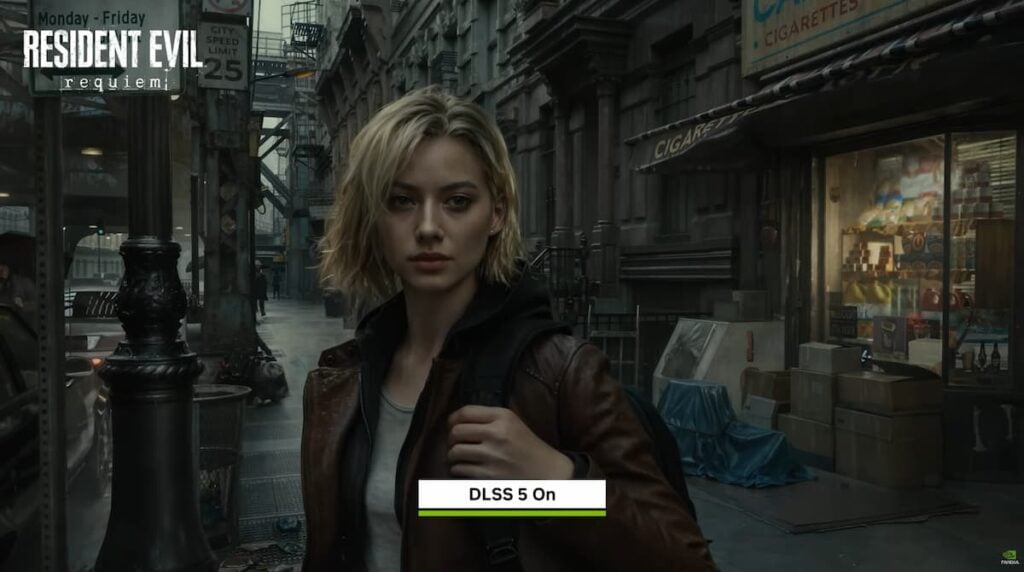
Revealed in a press release and accompanying video demonstrations last night, NVIDIA wants you to believe its new DLSS 5 technology is a turning point. In its own words, it’s the “GPT moment for graphics,” a leap that bridges the gap between real-time rendering and Hollywood-grade visuals. That’s a bold claim, and in some respects, not entirely unfounded. There is something undeniably impressive about what the technology can do to lighting, materials, and environmental depth. Scenes take on a richer, more grounded quality. Surfaces react more convincingly. Worlds feel heavier, more tactile.
But the moment characters enter the frame, the illusion starts to crack.
To me, and apparently everyone else on the internet with a brain and some foresight, what DLSS 5 actually represents is a shift in authorship. Traditional DLSS worked because it reconstructed what was already there. It filled in gaps, improved performance, and sharpened an image without fundamentally altering the artist’s intent. DLSS 5 crosses that line. It doesn’t just interpret a scene but reimagines it. And that’s where the problem begins.
In NVIDIA’s own demos, characters don’t look enhanced. They look replaced. Facial features are smoothed over, lighting is reinterpreted, and carefully crafted details are lost beneath a kind of AI-generated sheen. The result is technically “more realistic,” but artistically hollow. Characters begin to resemble the same generic template: airbrushed skin, softened imperfections, an uncanny uniformity that feels closer to AI-generated content than deliberate design.
I kept coming back to one thought while watching the footage: this is overriding art, not really improving it.
There’s a reason character design is so painstaking. Every wrinkle, every shadow, every slight imperfection is intentional. It communicates personality, age, mood — things that don’t survive being run through a system that prioritizes photorealism above all else. When DLSS 5 steps in, it doesn’t collaborate with that work; it flattens it into something more broadly “acceptable,” and in doing so, more forgettable.
To be clear, this isn’t a blanket condemnation of the technology. Even some of its critics have pointed out the potential on the environmental side. Lighting in particular benefits from this kind of AI-assisted reconstruction. There’s a version of DLSS 5 that could exist purely as an atmospheric enhancer, which is something that deepens a scene without intruding on the elements that define a game’s identity.
But that’s not the version being showcased.
Instead, NVIDIA is leaning into a vision of graphics where AI sits on top of everything, applying a generalized understanding of what looks “real” across an entire image. And while the company insists developers retain control through masking and intensity sliders, the underlying philosophy is hard to ignore: if AI can make it look better, why not let it?
Because “better” isn’t the same as “faithful.”
The reaction online has been telling. There’s a clear divide between those impressed by the raw technical leap and those unsettled by what it does to the art itself. Scroll through any discussion, and you’ll see the same sentiment repeated in different ways: this feels like overreach. Even long-time advocates for DLSS (myself included) are struggling to reconcile this with what made the technology appealing in the first place.
And yet, there’s an uncomfortable reality here. For many players, the equation is simple: more realistic graphics equals better graphics. If DLSS 5 can consistently produce images that look closer to real life at a glance, that may be enough. The nuance of artistic intent, of stylistic consistency, risks being lost in the process.
That’s what makes this moment feel less like a breakthrough and more like a warning.
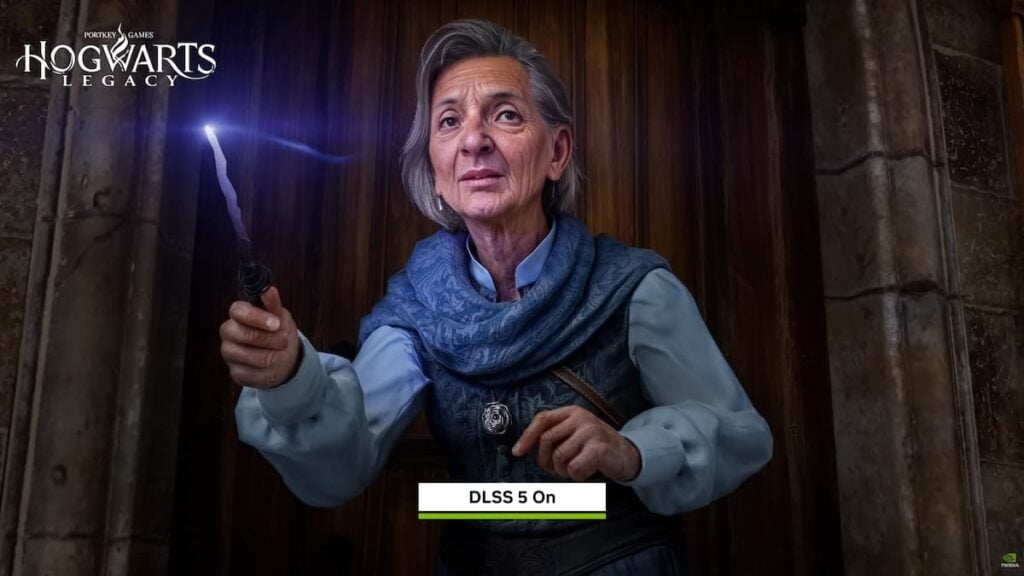
Because once this kind of technology becomes normalized, the incentives shift. Why spend years refining materials, lighting setups, or even character models if an AI layer can “fix” it after the fact? Why prioritize a distinct art style if it’s going to be filtered into something more generic anyway? These are the kinds of questions that shape production pipelines, budgets, and ultimately, jobs.
We’ve already seen how automation can erode certain roles in development. DLSS 5 doesn’t directly replace artists, but it does edge closer to a world where their work is treated as a baseline rather than a finished product — something to be interpreted, adjusted, and potentially overridden by a machine. That’s a dangerous precedent to set.
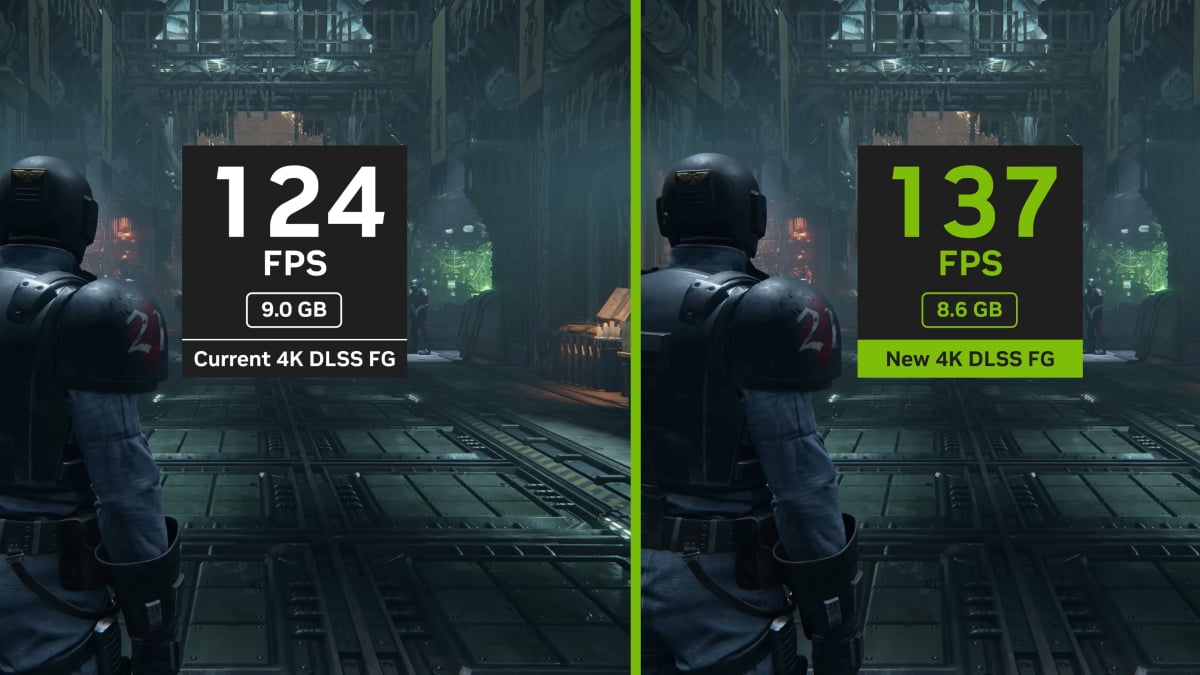
There is a path forward where AI plays a meaningful, respectful role in game development. DLSS, up to this point, has largely been a good example of that. It solved technical problems without stepping on creative toes. DLSS 5, at least in its current form, feels like a departure from that balance.
It’s not that the technology is without merit. It’s that it doesn’t seem to know where to stop. And if this really is the future of graphics, it raises a question the industry can’t afford to ignore: are we chasing realism at the cost of identity?