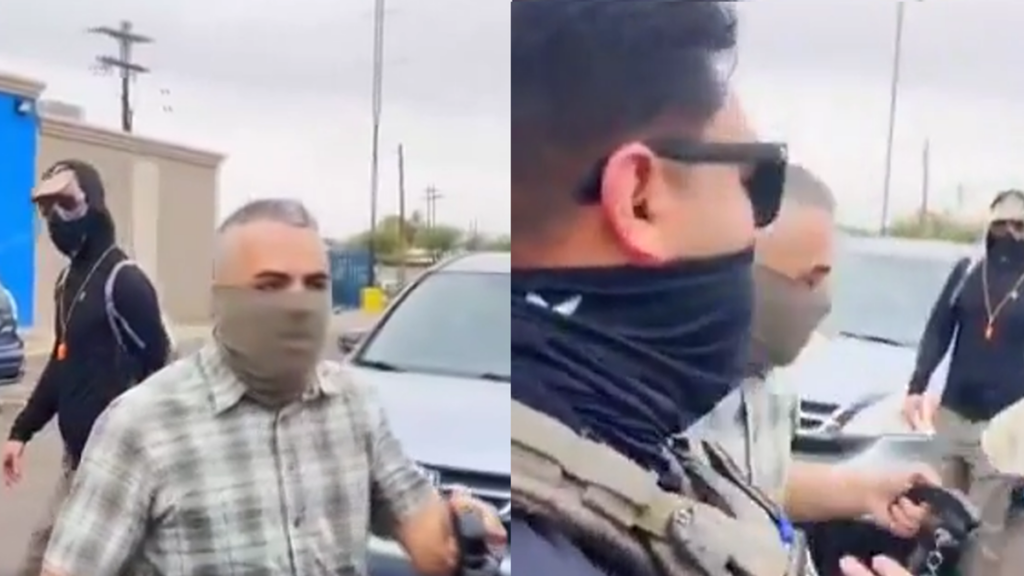
A volunteer was recently sprayed by an ICE agent in Tucson, Arizona. The incident was caught on camera and sparked outrage online, as many viewers considered the immigration agents’ approach overly violent.
The footage was recorded by Rapid Response volunteer Steven Davis, who was also the victim of the incident. The video quickly went viral on social media after being shared in anti-ICE communities, including subreddits such as r/EyesOnICE.
In the short clip, immigration agents can be seen taking a man away. The person recording keeps following the masked ICE agents during the operation, and one of them suddenly sprays him directly in the face.
According to local media reports, the incident occurred in a Walgreens parking lot in Tucson. Davis told reporters that he was completely caught off guard by the agent’s actions, saying the agent appeared angry that he was being recorded but gave no warning before spraying him. Davis described the pain as “excruciating. It’s like someone pouring fire on you.” At the time of this report, ICE had not officially responded to Davis’s accusations.
Internet Reacts to ICE’s Violence in Arizona
Viewers were angered by the video, which many saw as an abuse of authority by ICE. One person even called on Americans to “abolish ICE,” framing the agency as harmful to citizens.
Others focused on the agent’s behavior in the video, saying, “You could tell he couldn’t wait to spray someone.” Another user, seemingly angry, cracked a joke at the agent’s expense: “Couldn’t make it as a hall monitor in elementary school, so he’s out terrorizing people now.”
Some people, however, were appalled by how violence is normalized when carried out by the state. One user argued, “It’s crazy that if you did this to them, you would be charged with assault, even if you were defending yourself from an unprovoked attack.”
With many reported violent encounters involving ICE agents in 2026, it is no wonder the incident quickly went viral online. Many people appear tired of seeing immigration agents act violently, with civil society often feeling powerless to stop what they view as an ongoing injustice.