A recent video clip posted on X has put a spotlight on Michigan Gov. Gretchen Whitmer, who boasted her success in governance despite Michigan’s lowly rank in national per capita income. To onlookers, Whitmer’s assessment of herself as worthy of an “A” grade doesn’t quite align with the realities many citizens currently face.
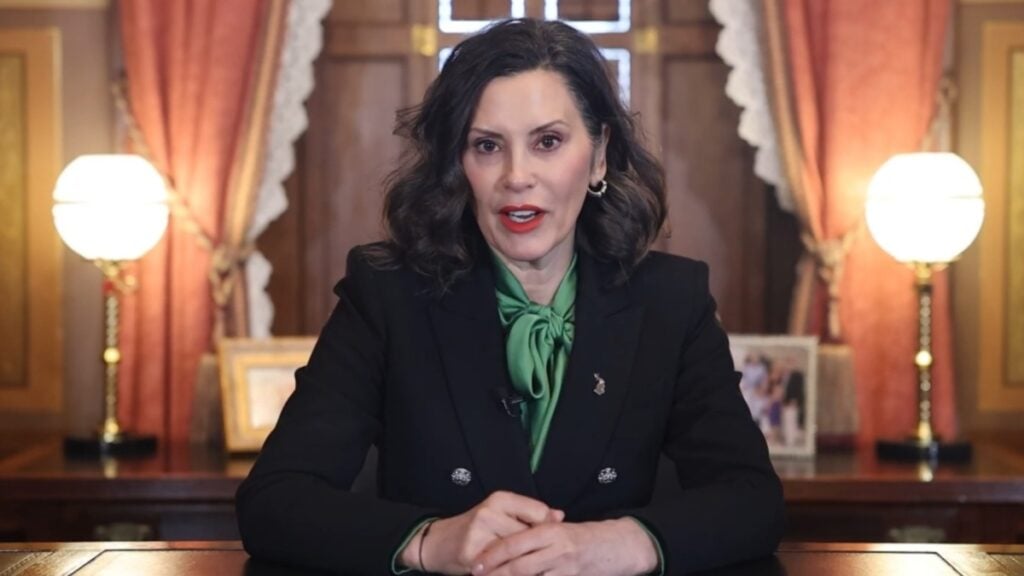
In the video, Gov. Gretchen Whitmer is seen speaking at a public event, where she gave herself an “A” grade for “making Michigan a place where people want to live, work, and play.”
The original post pairs this clip with economic data showing Michigan has fallen to 40th in national per capita income — its lowest ranking ever, down sharply from 18th place in 2000.
Online Reactions to Whitmer’s Self-Grading Video
Many commenters criticized the self-assessment as disconnected from reality. One wrote, “Gretchen has never been lacking in hubris. Like most Leftists, she creates her own reality…” Another added, “Blue State politicians always stay away from the most important statistical facts that show their true performance.” One joked, “I wondered if maybe she’s delusional. Now my suspicions are confirmed.”
Others focused on the economic data and leadership. One reply stated, “She didn’t do anything… The already existing industry is why people work here lol. Politicians are retarded and nobody buys this kind of garbage except other politicians.”
Additional comments included “LOL New math. She is talking about her finances and the fancy boat up north. The Michigan government is a joke, and of course, she gives herself an A. Liberals are the party of awarding failures.” One user wrote, “She should be in prison, for numerous reasons.”

The moment stands out not just for what was said, but for what it reveals. The governor’s self-assessment sits uneasily alongside years of data showing Michigan’s per capita income slipping, turning a routine exchange into a broader argument over economic reality and political accountability.
That tension has kept the clip alive well beyond its initial release. It continues to circulate online, feeding an ongoing debate about the state’s direction; a direction that, for many residents, is less about rhetoric and more about how policy decisions are felt in their daily lives.