With the rise of online-only live-service games over the past decade, ownership has become a messy gray area. Gamers are no longer buying a product; they’re buying access, one that can disappear the moment a publisher pulls the plug. That growing frustration fueled the Stop Killing Games movement, led by YouTuber Ross Scott. What started as a campaign pushing back against shutdowns like The Crew eventually snowballed into a full-blown European Citizens’ Initiative, gathering over 1.3 million signatures. That support is enough to make lawmakers bat an eye and force a formal hearing at the European Parliament.
During a hearing held on April 16, one of the central concerns raised was whether modern game purchases even count as ownership anymore. “We need a rule at European level which will clarify the fundamental question whether digital purchase only gives you a fleeting right of use, or whether it’s something more substantial,” asked German member of parliament Marion Wallsman through an interpreter.
EU representatives didn’t hold back during the hearing, with many offering outright support, with some saying they backed the initiative ‘100%.’ French member of parliament Leila Chaibi was among the most direct, accusing publishers of ‘chasing profits’ at the expense of both players and developers.
“The fact that destroying a video game is a disgrace for the consumers and players who pay about 80 Euros each time a video game comes out,” she added through an interpreter. “It’s a disgrace also for the developers who have worked for years and [have them] evaporates forever because of a purely accounting decision.”

She and other lawmakers floated some ideas, suggesting something like a public library system for video game preservation.
At the same time, representatives of Stop Killing Games pushed back on a common misconception. Daniel Ondruska clarified that the movement isn’t asking companies to retroactively fix older titles or ‘grandfather in’ games released years ago. Instead, the focus is on future-proofing, giving safety measures to newer games. Scott also added that AAA, with a massive €370 million development budget like Concord‘s, should have had an end-of-life plan.
The issue isn’t limited to Europe, however. In the United States, the Protect Our Games Act, or California’s AB-1921 bill, is already moving through the legislative process. If passed, it would require publishers to give 60 days’ notice before shutting down a game and then offer players either an offline version, a patch, or a full refund. It would also ban companies from selling games shortly before their end-of-life date.
Like most bills, it still needs to clear both legislative chambers and be signed by the governor before becoming law. But it shows that regulators are taking this consumer rights issue seriously.
Not everyone supports Stop Killing Games and other movements for game preservation, however. Or at least, not openly. In an unrelated concern, Japanese developer Itchie Tatsumi, who has worked on the likes of Square Enix and SNK, pushed back on the common demand for offline versions after shutdowns.
He explained on X that converting an online game isn’t just a matter of flipping a switch. “The challenge lies in deciding where to shift the responsibilities that the server previously handled. […] Moving these to a local machine introduces other problems, such as save data tampering, synchronization issues […]” he wrote. “Furthermore, games designed for multiplayer often […] structured with online play in mind.”
As he put it, it’s not just removing online features. It’s rebuilding the whole conditions ‘that made the game function in the first place.’ Basically, making a game on top of a game.
Still, there are workarounds. We previously pointed out that live-service game preservation can be done in different directions. Mobile games Destiny Child and Grimoire Magic Academy, for example, released ‘memorial apps’ that allow players to browse art, voice lines, and revisit past events. Online games with built-in LAN capabilities should also be playable even when their servers are down or no longer active.

The European Commission confirmed it is reviewing the issue and will consider potential rules under the upcoming Digital Fairness Act, expected by the end of the year. “We’re looking at it in-depth and considering different options,” one member said. Another added that the Commission is also reviewing its Digital Single Market copyright policy, which could open the door for games to be recognized as preservable cultural heritage, with results expected in July.
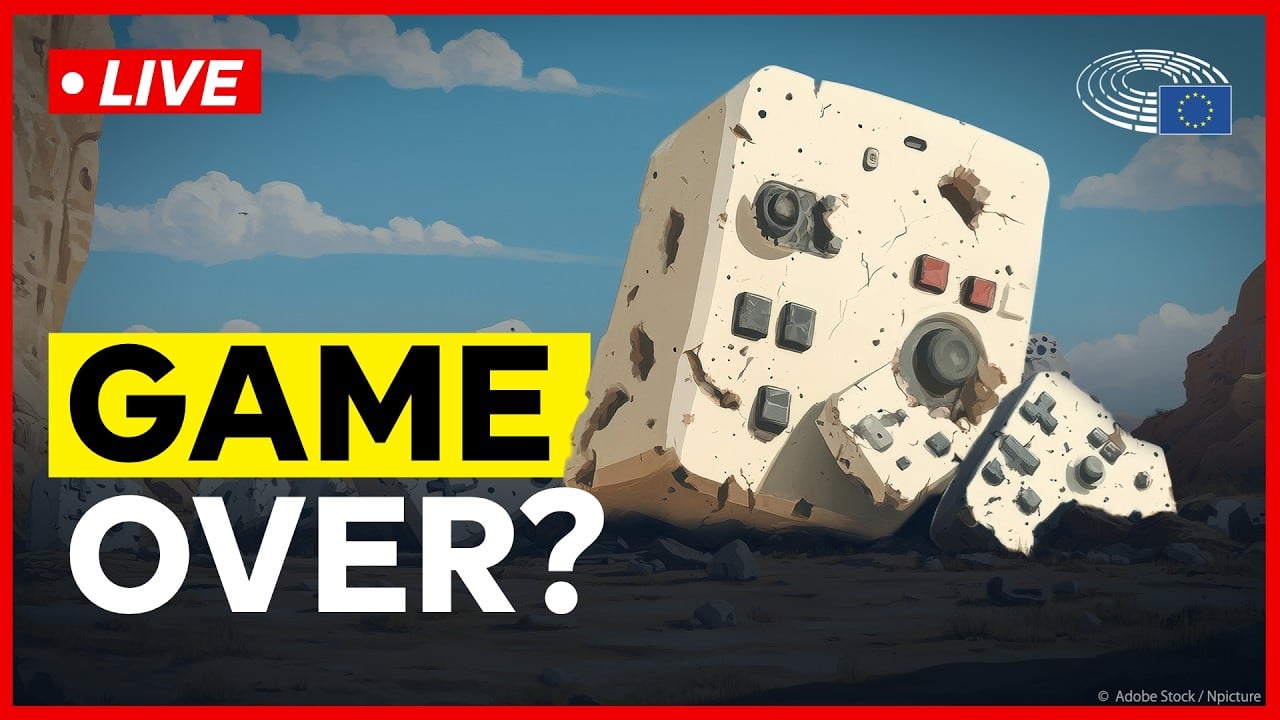
While nothing is finalized yet, the message from lawmakers is pretty blunt. If buying a game today only gives players a ‘fleeting’ right to use it, that’s something regulators may no longer be willing to accept. For the complete EU hearing, you can watch the Stop destroying games livestream archive above.