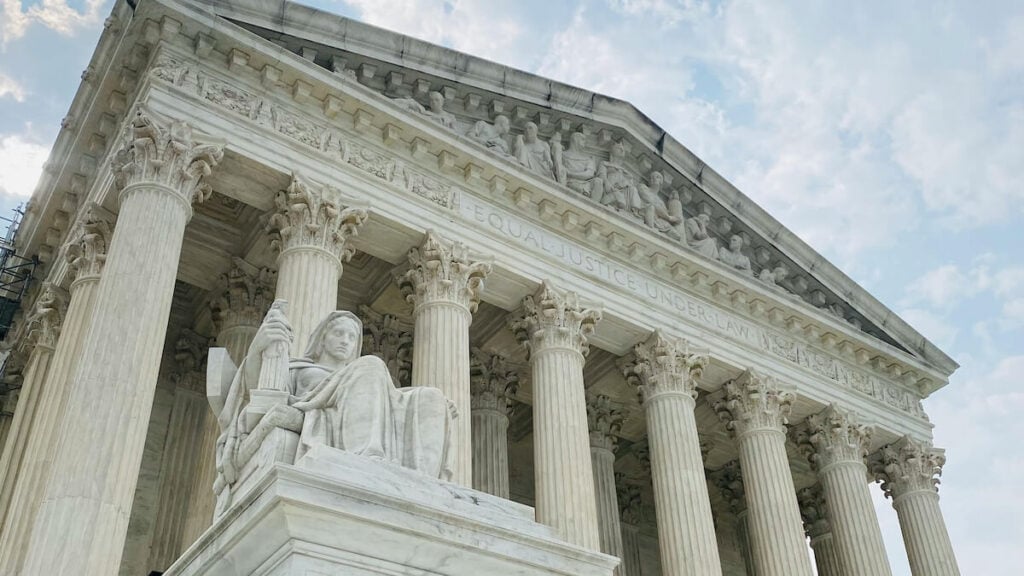
The Supreme Court conservative majority cleared Alabama on Monday to use a congressional map containing only one majority-Black voting district. Official orders tossed out a lower court decision that previously blocked the 2023 legislative boundaries for intentional racial discrimination. Justice Sonia Sotomayor wrote in a dissent that this sudden order will cause confusion as Alabamians prepare to vote.
Alabama officials filed an emergency request following a recent high court ruling that significantly weakened the federal Voting Rights Act. New legal standards now require voting rights groups to prove intentional discrimination rather than just showing a map’s effect. Several Southern states are moving quickly to redraw districts to favor the Republican Party before upcoming November midterm elections.
Attorney General Steve Marshall stated that the court vindicated the state and returned power to the people’s own elected representatives. NAACP President Derrick Johnson described the decision as a “return to Jim Crow” and urged citizens to vote. Governor Kay Ivey signed legislation allowing for new primary dates if the courts permitted the state to use different maps.
Online observers and critics condemn the Supreme Court’s decision
One observer argued that the Republican Party and the court“simple do not want black people voting, at all”. This commenter noted that if they must accept them, they want to ensure they “have no say” on everything.
Another commenter mourned that “people DIED” for voting rights and called the recent redistricting order “white supremacy manifest”. They expressed deep frustration with the radical rightward swing that has become upsetting to watch for many citizens.
A critic questioned why the court is now “approving the map that they refused to approve in 2023”. This observer argued that the justices are failing the public because they are “not even following their own prior rulings”.
An online observer suggested that Democrats should “gerrymander every state they have control over” to create a necessary balance. They argued that the party must “use every tool at their disposal” to protect representation before it is too late.
The legal battle returns to lower courts as civil rights organizations and state officials prepare for upcoming primary election cycles.