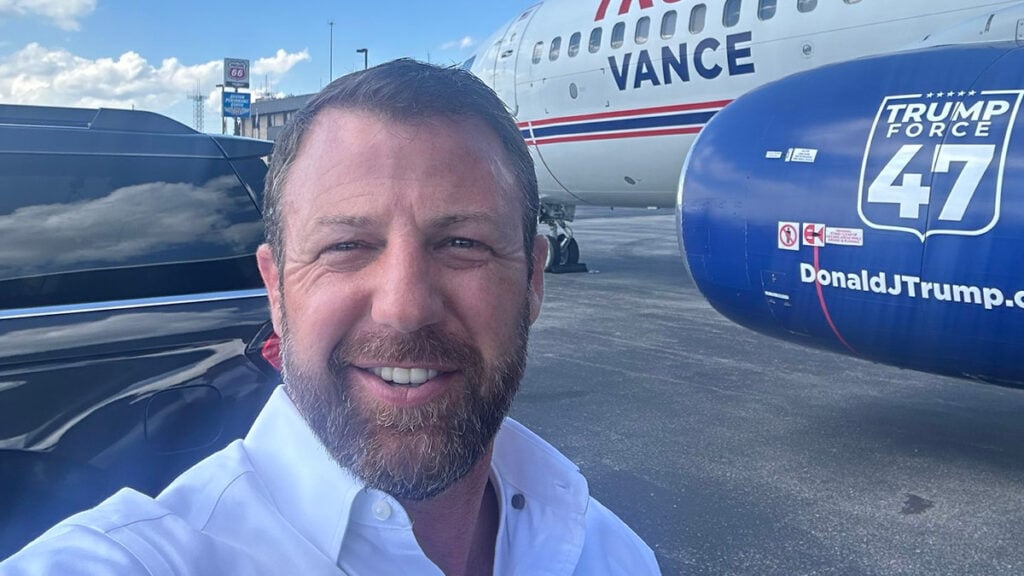
Backlash erupts in Washington, D.C., over a proposal from DHS Secretary Markwayne Mullin to restrict international flights in so-called sanctuary cities. Critics have warned the idea would be both logistically unworkable and economically damaging if implemented. The remarks have also raised questions about how such a policy would function in practice across major U.S. airports.
The debate over the decision in Washington, D.C. quickly spread across Reddit, drawing strong engagement from users on both sides of the political spectrum. The post gained thousands of upvotes and hundreds of comments, with a large portion of users expressing opposition to the proposal.
According to ABC7, speaking on Fox News Channel’s “Hannity,” Markwayne Mullin said federal officials are “drawing up plans” that would stop processing international flights in cities that do not fully cooperate with federal immigration enforcement. He argued the move was a response to what he described as local authorities obstructing federal operations, including incidents where law enforcement allegedly failed to respond to federal requests for assistance during clashes near a facility in Newark.
Mullin framed the proposal as a consequence for jurisdictions he claims are preventing federal immigration enforcement while still relying on federal airport and border processing. He suggested that if local governments refuse to cooperate, then international flight processing in those cities should be reconsidered.
Internet Reacts To Mullin Flight Proposal
The remarks quickly drew strong reactions online, where critics called the idea unrealistic and warned it could disrupt air travel nationwide, including in Washington, D.C. Many commenters argued that international flights cannot simply be redirected at scale without major cancellations, noting that U.S. airports such as those in New York and Los Angeles handle a large share of international arrivals and are deeply integrated into global flight routes.
Some social media users described Mullin’s proposal as “insane,” questioning how border control functions would be shifted without creating widespread disruption at airports that currently serve as major entry points. Others raised concerns that passengers could face increased costs, rerouted travel, or canceled flights if international carriers were forced to avoid major U.S. hubs.
“So they just want to completely stop a huge proportion of all international flights into the U.S.? Do they even realize that they cannot just make those flights go to, say, Miami or DFW instead? Of course not. It’s just the most ludicrous idea picked off the top of their empty heads,” one user wrote.

Even among more supportive voices, debate focused on unclear details of how Mullin’s Washington, D.C. proposal would operate in practice, including whether it would affect passenger flights, cargo transport, or customs procedures. Some users said airlines could redirect routes to other major hubs, while others questioned whether such a shift would be realistic or workable.
Legal and immigration policy analysts cited in public discussion also pushed back on the idea, arguing that airlines and international aviation networks are not easily restructured around local political designations. They warned that any large-scale disruption of international flight routes could have ripple effects beyond the targeted cities, affecting tourism, business travel, and supply chains.
The proposal has not yet been formally implemented, and Markwayne Mullin indicated it remains in the planning stage.