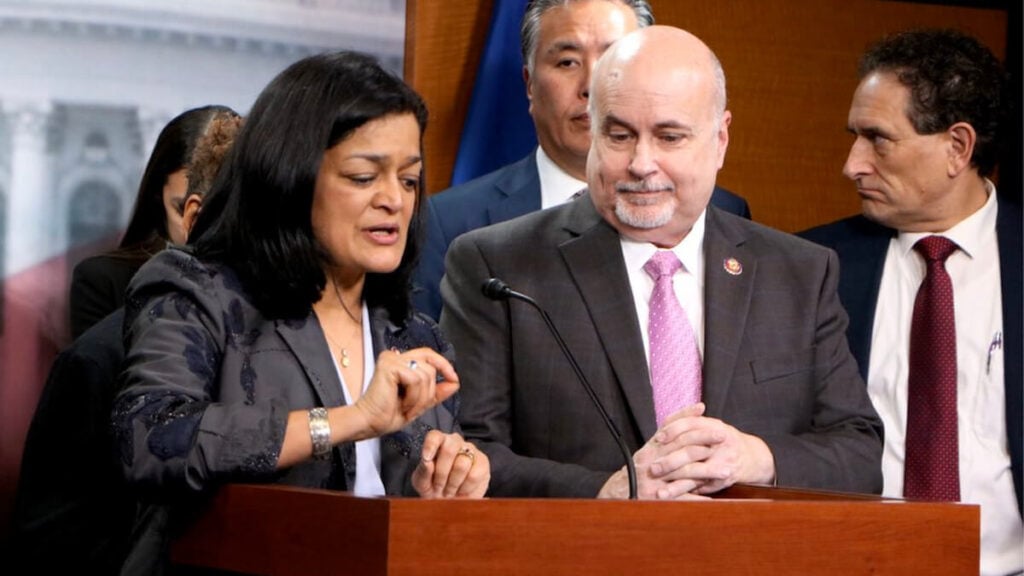
Washington Rep. Pramila Jayapal compared testosterone therapy for male service members with gender-affirming care during a committee hearing. She said Pete Hegseth announced treatment for service members with low testosterone. Her remarks gained attention after critics rejected the comparison. She also questioned government testing of men’s testosterone levels.
A video of Jayapal’s remarks circulated online after the hearing. The clip focused on her comparison and questions directed at male committee members.
Jayapal called the treatment “gender affirming care” and warned male lawmakers to “watch what you vote for.” She asked whether the government should determine if lawmakers were “male enough to be in Congress.”
Jayapal then shifted to transgender and non-binary youths. She said, “In the past year, 40 percent of transgender and non-binary young people seriously considered attempting suicide.”
She urged lawmakers to support those youths instead of “shaming and targeting them for seeking the care they need.”
Public Reaction to Pramila Jayapal Military Testosterone Comparison
The discussion centered on whether testosterone replacement for male service members qualifies as gender-affirming care.
One user wrote, “That is not gender affirming care. HRT is supplementing a deficiency not altering someone’s identity.” Another stated, “It is NOT in any way, shape or form gender affirming care.”
A separate response argued, “Providing Biological MEN with testosterone is not gender affirming care, it’s called TRT: A targeted treatment meant specifically to raise testosterone to normal levels in BIOLOGICAL MALES, your attempt to combine the two shows your stupidity.”
Another wrote, “Hi, nurse here, that is in fact not gender affirming care.” One user added, “No, optimizing actual men’s testosterone for combat performance isn’t ‘gender affirming care.’ Sterilizing and virilizing women to affirm feelings was the experiment the DoD is correctly ending. Stop pretending medicine and ideology are the same thing.”

One response supported Jayapal’s classification, stating, “Correct, this is gender affirming, not denying.”
The dispute remains focused on how military hormone treatment should be defined.