
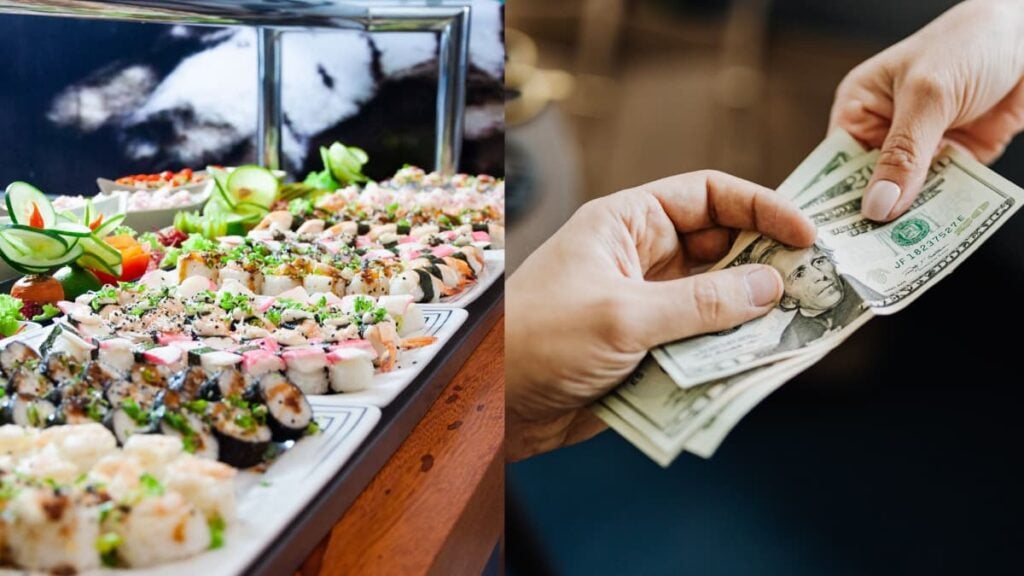
A Japanese buffet in New York went viral after revealing a wall of shame featuring photos of customers who allegedly dined and dashed at the restaurant in the past.
The video showing the buffet’s wall of shame quickly gained over 700,000 views, allowing people to see customers who were allegedly caught dining and dashing. The wall featured dozens of images captured by the restaurant’s security cameras, showing individuals accused of leaving without paying for their meals.
Many of the customers’ pictures had receipts from the unpaid orders placed on top of the images. The majority of those featured appeared unaware at the time that they had been captured on the restaurant’s security cameras. The person filming the wall of shame continued showing the different photos displayed on the wall.
One of the photos on the wall showed a customer using a wheelchair. Above the picture, the restaurant had written, “You are banned.” At the end of the video, a person accompanying the individual filming remarked, “This [expletive] is just wild.” It is unclear whether any of the customers featured on the wall later returned to pay for their meals or had their photos removed.
The restaurant’s display also reflects a broader trend of businesses adopting different strategies to deter dine-and-dash incidents. Many restaurants use security cameras, require payment before meals in certain situations, train staff to recognize suspicious behavior, or rely on license plate information when available.
Some businesses have also shared surveillance images of alleged dine-and-dash suspects on social media. They also displayed photos from security cameras inside their restaurants in an effort to discourage similar behavior. Supporters argue that these measures can help deter theft and recover losses. On the other hand, critics have raised concerns about privacy, mistaken identity, and the legal risks of publicly identifying someone before allegations have been fully verified.
Viewers Criticize Wall of Shame Customers at New York Buffet
The video sparked reactions online. Many viewers criticized the customers featured on the New York buffet’s wall of shame. Several argued that restaurants should require customers to pay before eating to help prevent dine-and-dash incidents. “They need to do what Golden Corral does, which is make you pay upfront for your meal. No more buffets unless you pay from the start,” one person wrote. Another commenter said, “It wouldn’t remotely bother me to pay before eating in a restaurant. This problem would immediately end, and prices would likely reduce.”

Other viewers argued that the customers should be publicly identified even more prominently. “Put these pictures on the ‘outside’ of the door before they enter,” one person wrote. Some commenters also praised the buffet’s approach, with another writing, “Good for you! I hope they never return to your establishment.”
The video sparked a conversation about the increase in alleged dine-and-dash incidents at restaurants and buffets and the financial impact they can have on businesses. It also led to debate over whether restaurants should publicly identify and shame people accused of leaving without paying or instead rely on law enforcement and other legal channels to address such incidents.