If you had told me a few years ago that we would get a gritty, squad-focused Clone Wars strategy RPG that bridges deep turn-based tactics with an incredible character-driven story and base management, I wouldn’t have believed you. Yet Star Wars: Zero Company is very real, and Bit Reactor’s debut title delivers a surprisingly deep and gripping campaign that earns every bit of its runtime.
For a long time, turn-based strategy games had a reputation for being rigid, and usually what they lack in story has to be made up for in deep mechanics. While classics like XCOM 2 moved the genre forward, they could also feel a bit cold outside of battle. Zero Company avoids that trap entirely by ensuring the time spent between firefights matters just as much as your positioning for the next mission-saving attack.
Turn-Based Thermal Detonating
If you missed our preview, Star Wars: Zero Company is built around two distinct gameplay loops. You take control of Hawks, a customized former Republic officer leading a crew of misfits tasked with stopping a shadowy threat known as The Coil. When you aren’t deployed on missions, you operate out of “The Den”, a mobile command base that serves as your home away from home. Rather than managing your base through a menu-driven interface, The Den is an interactive third-person hub where you talk with your crew, manage Holotable operations, and resolve interpersonal squad conflicts. If you ever played the incredible Midnight Suns, it’s not quite as immense, but the Abbey is a similar concept.
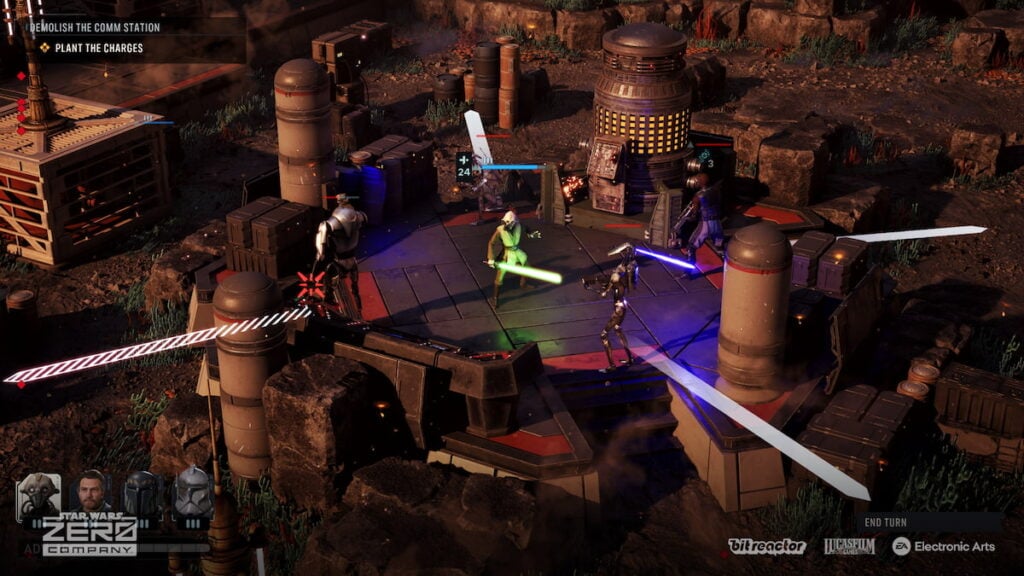
Once preparation wraps up, you deploy your squad directly to story or side missions on one of several planets. Combat relies on a flexible 3-Action Point (AP) system per turn. Basic maneuvers like moving into cover or taking shots draw from your pool, but distance dictates movement cost, and deploying specialized gear, like explosive-laden astromech droids, requires careful resource management. The real tactical depth emerges through class synergies and a vast set of classes and abilities that can mitigate AP cost, restore turns, physically move enemies around the battlefield, and so much more.
Field encounters stay unpredictable thanks to deviously placed enemy units across a large variety of maps. Adding to the tension are Holotable events back at base; ignoring time-sensitive side operations lets enemy factions gain long-term upgrades or inflict campaign penalties across subsequent turns that last the entire campaign. All three touchpoints of the experience are thrilling: the turn-based combat, short- and long-term stress of minor and major decisions, and the story and how you experience it based on who you bond with.
If I had to toss a knock against the game in any significant way, the game’s various classes are all fun, but some feel absolutely essential and much more vital than others. You can make do with any combination of classes, but a team of soldiers and a gunslinger are going to have a tough time without a medic or an Astromech on the squad, for example.
A Padawan, Clone Trooper, and Mandalorian Walk into a Cantina…
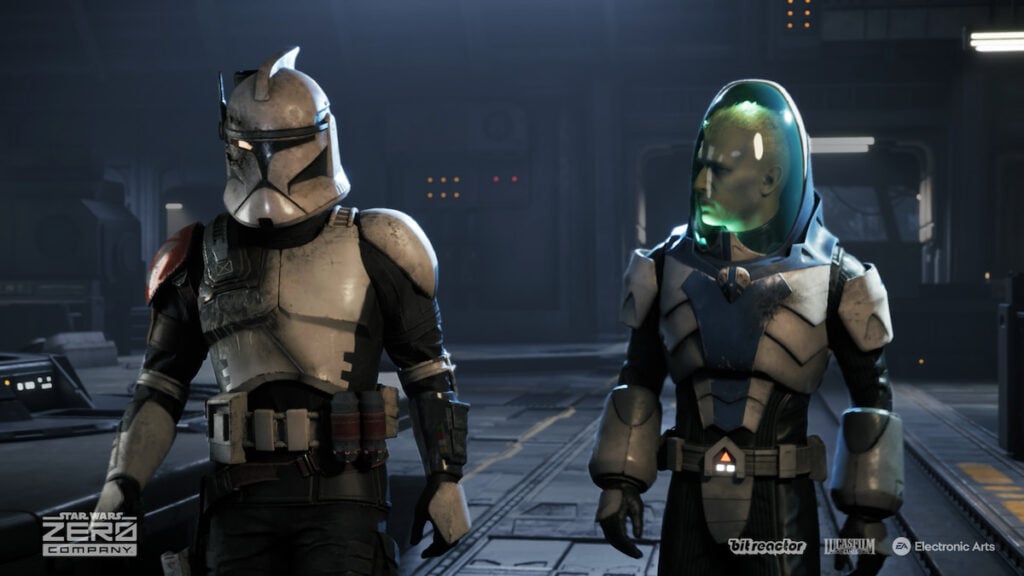
Your interactions back at base directly influence combat performance, creating a continuous loop where narrative and tactics reinforce each other. Squadmates like Trick and Jae aren’t random soldiers filling a role; they carry distinct personalities, butt heads, and react directly to Hawk’s decisions. If you decide to tackle the story with permadeath on, you can also lose these characters, and the mere notion you can lose characters that are just as well developed as the cast of Baldurs Gate and Mass Effect is painful to imagine, but it can happen, which only heightens all the stress of each decision but enhances how sweet a gritty barely survived victory is.
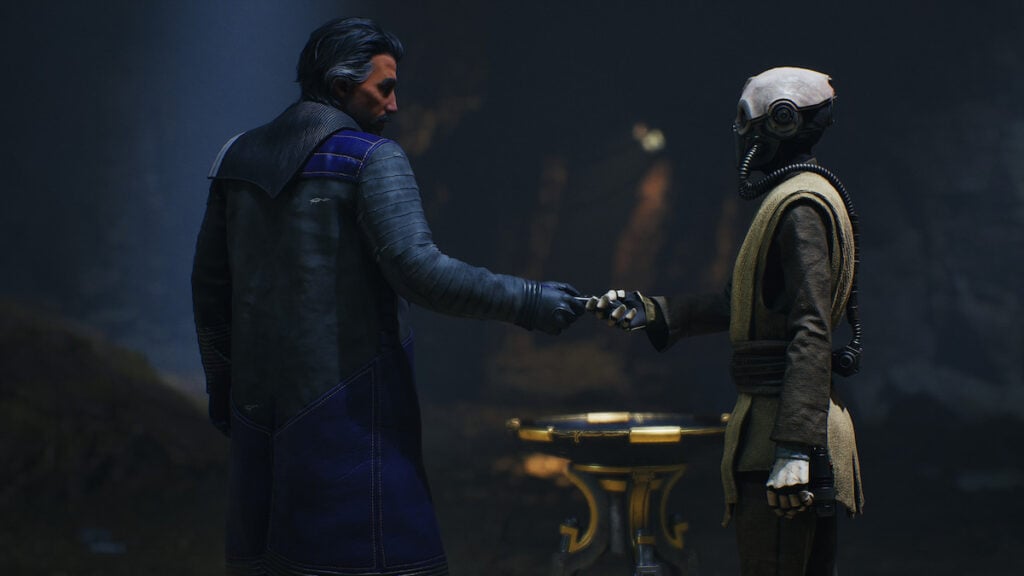
The Coil, and their motivations are also an interesting faction to go against. In Star Wars in general, enemies are often much more interesting when they’re painted in the middle, rather than obvious Light/Dark side differences that separate them. Your squad, too, is an eclectic mix of unique characters that spans the gamut morally and in skill sets. The Young Padawan, Tel-Rea, is a standout. She has unique skills, and instead of items, she can equip force powers. Besides that, her motivations and stoic approach made her one of my favorite force-sensitive characters in the fiction in years, and that means something considering how many great ones exist in the Clone Wars era alone.
Dialogue choices and mission contracts constantly test squad cohesion. In a really neat moment, custom-recruited characters that you edit and customize also have their own thoughts, voice, and opinions, and will also have stuff to say even about main story beats. It’s such a fantastic way to breathe life into what could have easily been hollow squad picks that don’t really matter all that much.
Insert Your Favorite Force-Related Pun Right Here
Star Wars: Zero Company stands out as a remarkable achievement in both Star Wars and turn-based strategy games. Fire Emblem: Three Houses and Midnight Suns both showed how to deliver deep tactics with a great story, and Zero Company easily stands among that elite company of addictive turn-based decision-making and sublime storytelling.
Star Wars Zero Company (PC Reviewed)
Star Wars: Zero Company stands out as a remarkable achievement in both Star Wars and turn-based strategy games
Pros
- Incredible Clone Wars era story
- Genuine and Deep Character Development
- Addicting but Tough turn Based Combat
- Amazing Customization and Small Character Moments
Cons
- Certain Classes Feel Better Than Others
- Some occasional Wonky Camera Work During Combat