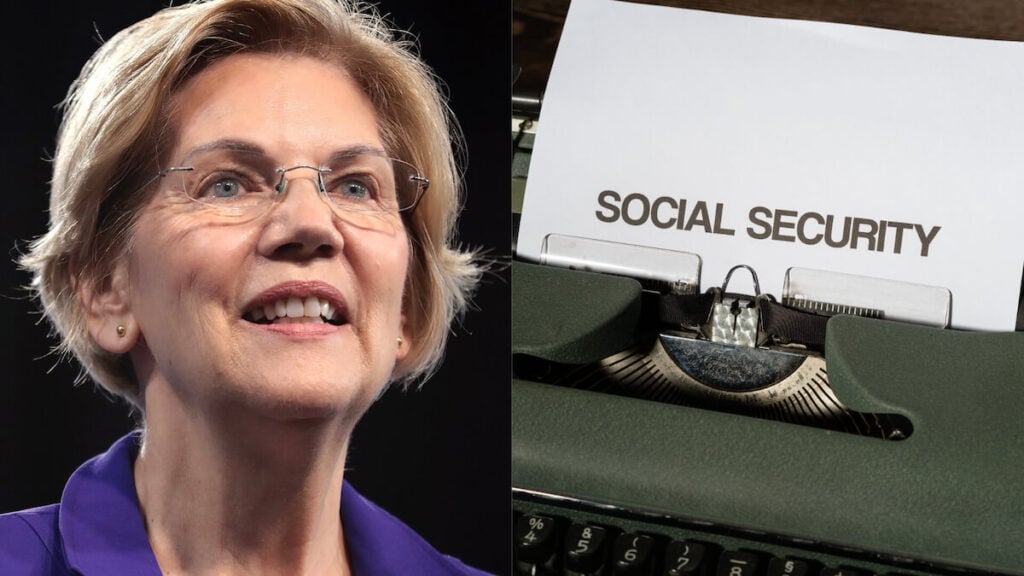
Massachusetts Sen. Elizabeth Warren warned that the Social Security trust fund is projected to run out in 2032. She called the program a promise to workers who pay into the system throughout their careers. Warren said she is fighting to protect Social Security for the next generation.
In a post on X, Warren tied the program to the benefits workers earn for retirement. “Social Security is a promise,” she wrote. “You work hard, pay into the system, and get the benefits you’ve earned at retirement.”
She then returned to the trust fund’s outlook, saying it is projected to run out in 2032. The post did not specify how Warren plans to address that projection.
Elizabeth Warren Faces Pushback Over Social Security ‘Promise’ Message
Warren’s post quickly drew skepticism from users who questioned both the program itself and lawmakers’ handling of it.
“Calling it a ‘promise’ doesn’t fix the math,” one response stated. “Forcing people to fund a system politicians keep warning needs rescuing is a lousy retirement strategy.” Another was more blunt: “Social Security is a Ponzi scheme.”
Others focused on Warren’s time in office. “You have been a senator for over 13 years and you want us to believe you ‘fighting’ for social security with 6 years left on the timer,” one user wrote. A separate response asked, “Weren’t you supposed to be looking after this as a member of the Senate? Why did you let it get to this point?”
The criticism also turned toward what Warren plans to do next. “How are you ‘fighting’ to save social security. Be specific. I’ll wait,” one user wrote. Another pressed, “Seriously, what’s your plan? You have had plenty of time to make one. Let’s go.”

Not every response rejected Warren’s concern. “This is a worthwhile fight. I believe you that social security trust fund will run out in 2032. The fix needs to be permanent,” one user wrote. Another argued, “Social Security is a LEGAL BINDING CONTRACT the minute the Federal Government took that very 1st Cent.”
Warren’s post did not outline a specific proposal for addressing the projected shortfall. The debate now turns on what lawmakers will actually pursue.