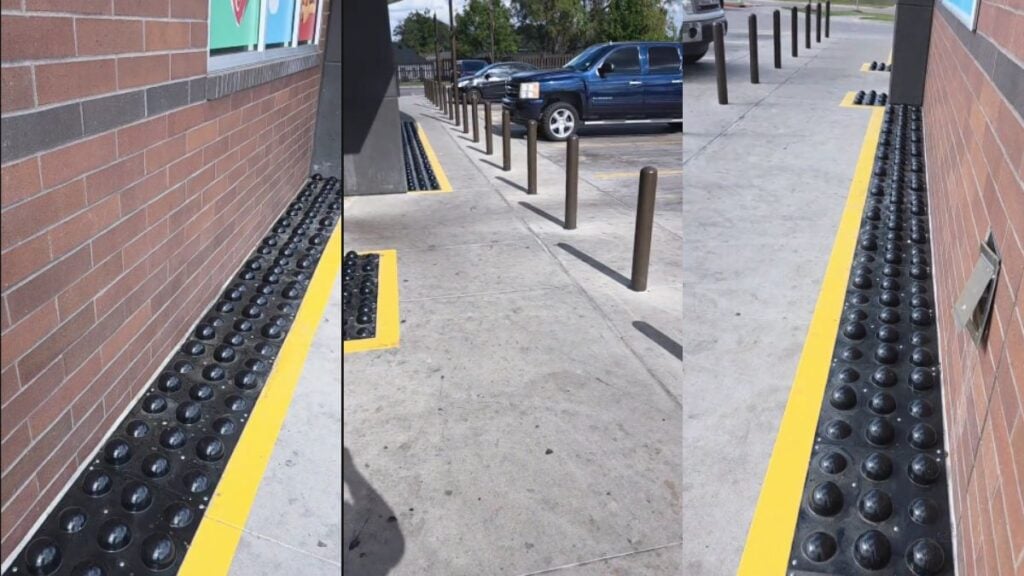
A Texas man’s video of an unusual setup outside a QuikTrip gas station has viewers split over hostile architecture and how businesses treat homeless people. While some see the design as a reasonable way to discourage loitering, others argue that it reflects a larger problem with how society treats people who have nowhere else to go.
Posted to TikTok by @mattstepp817, the short clip shows the Texas creator recording the raised domes outside the building. “I’ve never seen these before in front of a building,” he says. He guesses the design is meant to stop people from hanging out in front of the store. He calls it “kind of crazy” and says he thinks it would work, since the domes would be annoying to stand on.
QuikTrip started testing these mats at select Oklahoma locations in 2024 before they apparently made their way to Texas. QuikTrip’s communications manager said the goal of the 3-D printed mat was “to provide our customers with the best experience while ensuring the safety of both our employees and communities in which we are honored to serve.”
Hostile Architecture Divides the Comments
The design’s purpose was one of the first things viewers brought up. “It’s known as hostile architecture,” one commenter wrote. Another called the design evil and said it was upsetting to see others treating it as a good thing.

Some focused on what it meant for unhoused people who may have nowhere else to go. “We lost our humanity when we started to do this to the homeless,” one viewer wrote. Someone else hoped karma catches the people who do this instead of helping the homeless.
Others saw the mats as a reasonable way to keep people from hanging around the Texas store. “I bet it’s nice not getting asked for a dollar every time you walk out,” one commenter shared. Another said that they saw no problem with the design because nobody wants people loitering around their business.
The comments showed just how differently people view the same situation. For some, keeping people from loitering didn’t justify making public spaces uncomfortable for those with nowhere to go. For others, it was just a way for businesses to protect their property and keep customers comfortable.