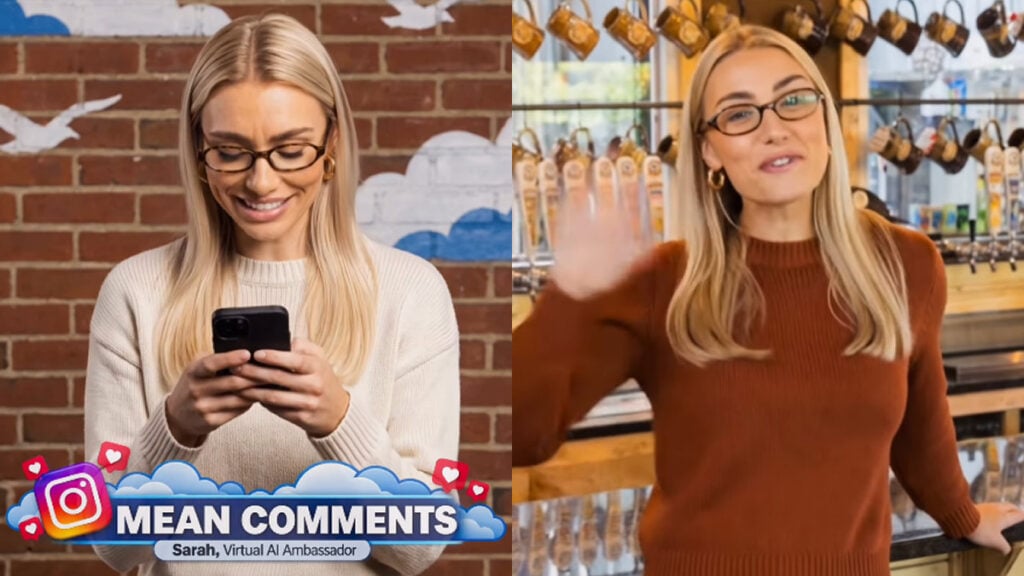
Swedesboro Brewing Company in New Jersey is facing online criticism after introducing an AI-generated spokesperson named Sarah to promote its brewery. The backlash intensified when the brewery published a second video featuring the virtual character responding to comments about the decision, drawing further attention to its marketing strategy.
The controversy began with an Instagram post introducing Sarah as the brewery’s newest representative. The company explained that she would promote its beers, events and activities at its three locations, with plans for her to appear regularly in future promotional content.
The New Jersey brewery compared Sarah to paid actresses hired for advertising, presenting the virtual character as another way to promote its brand. The brewery also acknowledged one limitation: Sarah could not actually drink its beer.
The follow-up video featured Sarah responding to comments about her introduction, reinforcing the company’s decision to use an AI-generated spokesperson rather than a human representative. The move attracted further criticism from viewers who felt the brewery was standing by a campaign that had already drawn negative attention.
New Jersey Brewery’s AI Beer Promoter Raises Eyebrows
Many commenters questioned why the business had not featured its own employees or customers instead. Some argued that even a low-budget campaign with a real person would feel more genuine than an AI character. “Such a bad look for a small business,” one user wrote.
Others questioned how Sarah could effectively promote beer when she could not taste the product herself. For these critics, the issue went beyond artificial intelligence. They felt the campaign lacked the personal touch expected from a local brewery.
Some commenters also threatened to stop visiting or supporting the New Jersey brewery. The discussion extended to the brewery’s products, with users recommending nearby breweries as alternatives. However, online comments do not necessarily reflect the views of the company’s wider customer base, and it remains unclear whether the backlash will affect sales or customer visits.

The controversy comes as businesses increasingly experiment with AI-generated personalities for social media marketing. Virtual spokespeople can provide a consistent face for promotional campaigns, but their use can also raise concerns about replacing human talent and losing the personal connection that helps local businesses build customer loyalty.
Whether customers will eventually accept the AI-generated representative remains to be seen. For now, Sarah can help sell the New Jersey brewery’s beer, but she cannot sit down with customers and enjoy a pint herself.