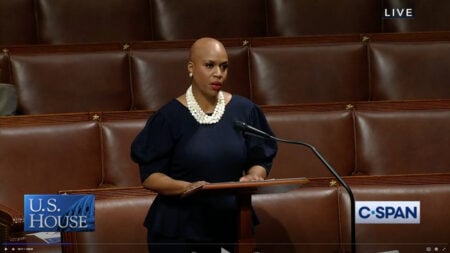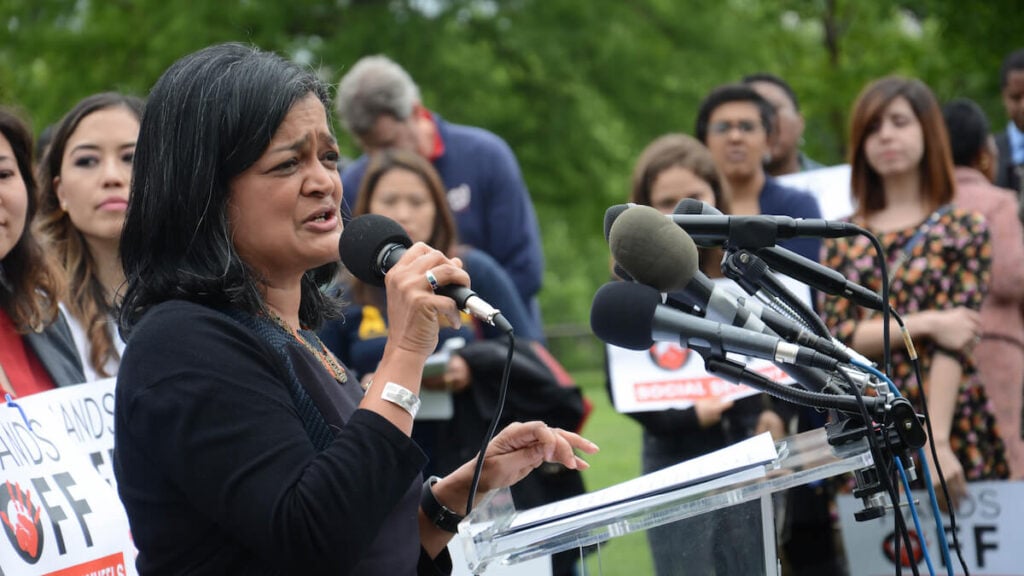
Washington Rep. Pramila Jayapal called for canceling student debt and making public college tuition-free while attacking Republican repayment changes. She accused President Donald Trump and congressional Republicans of worsening financial pressure on millions of borrowers. Her remarks focused on America’s $1.9 trillion student debt burden and the higher payments she says borrowers now face.
In a video, Jayapal said roughly 43 million Americans hold federal student loans. “We should be canceling student debt and helping people get ahead,” she said. She argued that Republican changes reduced repayment protections, increased monthly payments and extended some paths to loan forgiveness. According to her, borrowers would pay an average of $2,100 more annually.
She also warned that federal borrowing limits could push graduate students toward costlier private loans. Parents borrowing for their children’s education would lose income-based relief, while borrowers facing financial hardship would lose certain protections. Jayapal argued that the changes would deepen racial and gender wealth gaps. She also criticized delays to relief regulations for students misled by colleges or left without degrees after school closures.
To address the crisis, she promoted her College for All bill, which would eliminate community college and trade school tuition. The proposal would also make public colleges tuition-free for working families. She urged Congress to pass the measure, arguing that higher education should offer opportunity rather than lifelong debt.
Pramila Jayapal Faces Backlash Over Student Debt Cancellation and Tuition-Free College
Jayapal’s proposal drew criticism over taxpayer costs, personal responsibility and whether lawmakers should tackle rising college tuition instead.
One critic rejected the idea of taxpayers covering student debt, writing, “Don’t you DARE use MY tax money to pay someone ELSES debt.”
Another questioned the fairness of the proposal for people who pursued vocational education, asking, “So why should someone who went to trade school or technical school pay for someone to go to college?”
Others argued that lawmakers should address tuition costs before expanding government-funded education. One response asked, “Why not investigate uni’s pricing schemes? Take the problem to the source instead of inventing ways to spend more money.”
Jayapal’s record in Congress also faced scrutiny. A separate commenter wrote, “You’ve been there for almost 10 years and done nothing about it, but now we’re supposed to think you care with a free tuition bill.”
The debate over who should finance tuition-free college remains unresolved. Jayapal’s remarks did not specify how Congress would fund her proposal.