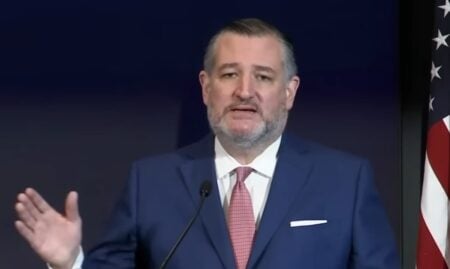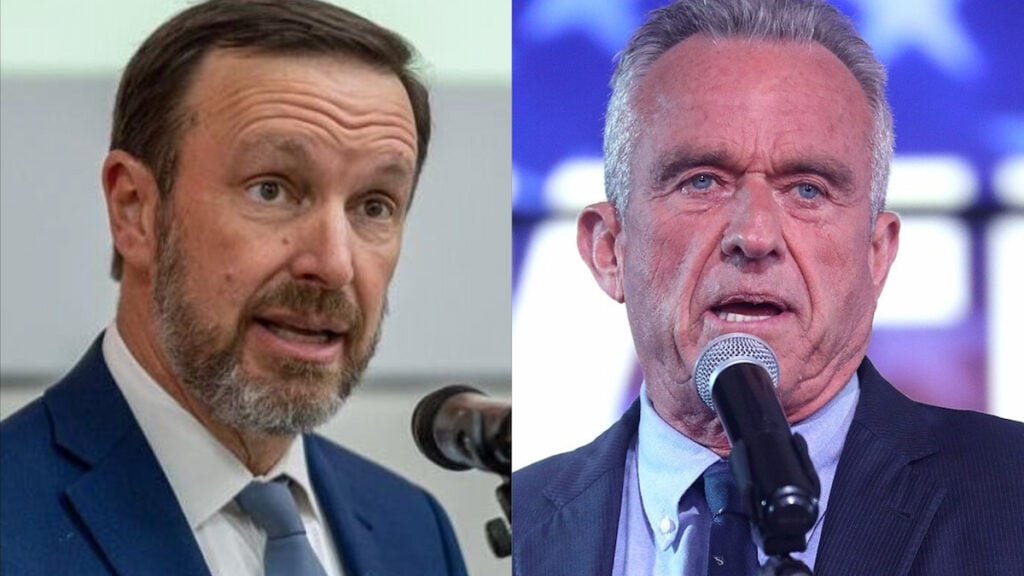
Connecticut Sen. Chris Murphy criticized Robert F. Kennedy Jr. after Kennedy claimed Arabs “don’t produce science” or literature and rarely win major international prizes. Reacting to a video of the remarks on X, Murphy described them as part of a broader campaign against Muslim Americans. He warned that the rhetoric could have serious consequences after the election.
In the clip, Kennedy claimed that the world’s roughly 500 million Arabs “don’t produce science,” literature, or win major international prizes. However, those sweeping claims are false. Arab and Arab-descended scientists, writers, and mathematicians have won the very prizes Kennedy mentioned, including Nobel Prizes, the Fields Medal, and the Wolf Prize.
Examples that contradict Kennedy’s claim include Egyptian-American chemist Ahmed Zewail, who won the Nobel Prize in Chemistry in 1999, and Egyptian author Naguib Mahfouz, who won the Nobel Prize in Literature in 1988. More recently, Jordanian-born Palestinian-American scientist Omar Yaghi shared the 2025 Nobel Prize in Chemistry and previously won the Wolf Prize.
Kennedy did acknowledge the Muslim world’s historical intellectual achievements, pointing to the extensive libraries maintained by Muslim rulers centuries ago. He then blamed the Muslim Brotherhood for destroying that tradition, accusing the organization of creating stagnant societies characterized by “hatred and war and victimization.”
The Muslim Brotherhood, however, wasn’t founded until 1928 in Egypt. Historians who reviewed Kennedy’s remarks have disputed his suggestion that the 20th-century political movement can explain the Arab world’s scientific or literary output. The organization has also been banned or restricted in several Middle Eastern countries.
Kennedy’s remarks also came with an important political backdrop. He made them while campaigning in Michigan for Republican Senate candidate Mike Rogers, who is running against Democrat Abdul El-Sayed, an Egyptian-American Muslim. Rogers and other Republicans have raised allegations linking El-Sayed to the Muslim Brotherhood, claims El-Sayed has repeatedly denied while disavowing the organization.
Responding to those remarks, Murphy urged people to recognize what he called a coordinated campaign to delegitimize Muslim Americans. He warned that the attacks targeted them “not just as citizens but as humans.” The senator described the rhetoric as increasingly hysterical and warned that it could take the country to “a very, very dark place after the election.”
The backlash hasn’t been limited to Kennedy’s political opponents. His sister, Kerry Kennedy, also publicly condemned the remarks, saying she was “deeply ashamed” of her brother over his comments about Arabs.
Connecticut Sen. Chris Murphy’s RFK Jr. Criticism Draws Divided Reactions
Murphy’s warning prompted disagreements over how Kennedy’s remarks should be interpreted, with some condemning his sweeping comments about Arabs and others arguing that his real target was the Muslim Brotherhood.
One user questioned his sweeping characterization, stating, “To talk about an entire group of people like this!”
Another rejected the hostility toward Muslim Americans. “I refuse to participate in that mess they’re trying to cause. Muslim Americans have done nothing to harm me or my community,” the user wrote.
However, some disputed Murphy’s interpretation of Kennedy’s remarks. “Do you have ears? That wasn’t an attack on Arabs. It was an honest assessment of the Muslim Brotherhood who destroyed Arab advancements,” one commenter argued.
Kennedy’s broader claims about Arabs aren’t a matter of interpretation: Arab and Arab-descended scientists, writers, and mathematicians have won several of the major prizes he said they had not. The political dispute instead centers on what Kennedy intended by tying those claims to the Muslim Brotherhood and whether his remarks fit the broader campaign rhetoric surrounding El-Sayed. Murphy believes they do, while Kennedy’s defenders argue his target was the Brotherhood rather than Arabs or Muslims as a whole.