A black TikToker in California is being slammed online after telling a woman that she looked like Emmett Till in his casket.
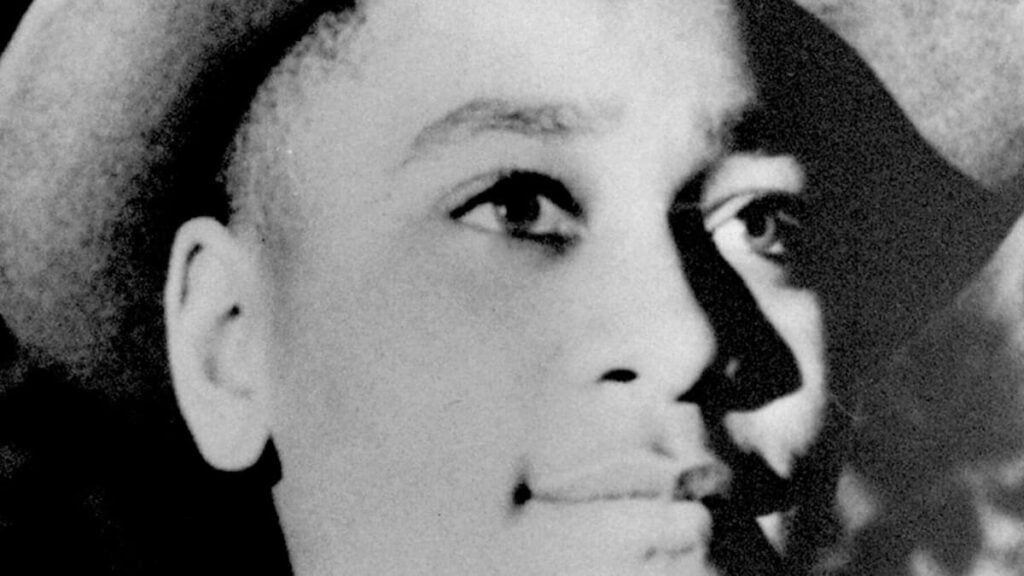
Emmett Till was a 14-year-old black boy from Chicago, Illinois, who was brutally murdered in Mississippi in August 1955 after being accused of offending a white woman named Carolyn Bryant at a grocery store in Money, Mississippi. Till was abducted, beaten, and murdered by Bryant’s husband, Roy Bryant, and his half-brother, J.W. Milam.
Following his murder, Till’s mother, Mamie Till-Mobley, insisted on holding an open-casket funeral so that the public could witness the brutality inflicted upon her son. Photographs of his disfigured body were published in magazines and newspapers, drawing national attention to racial violence and injustice in the United States. Although both men were acquitted by an all-white jury, they later admitted to the murder in a magazine interview. Till’s murder became a pivotal moment in the American civil rights movement.
Till’s death recently became the subject of online discussion after TikToker Ruthillea, known as @ruthyandthebrain, allegedly mocked a woman by comparing her appearance to Till’s disfigured body. A video purportedly featuring Ruthillea’s voice captured the shocking remarks.
“You look like Emmett Till. You know how Emmett Till’s mammy wanted to show her son in that body open casket, and his face has swollen up to where he was unrecognizable. That’s what you look like, [expletive]. You look like posthumous. He was a posthumous Emmett Till, [expletive],” Ruthillea allegedly said in the video. She then continued insulting the woman, saying, “[Expletive], you look swollen and bloated.”
What Caused Backlash
The TikToker’s alleged comments drew criticism for using the brutal murder of a black child to insult another woman’s physical appearance. The comparison was considered particularly insensitive given the historical significance of Till’s death and his mother’s decision to hold an open-casket funeral to expose the horrors of racial violence.
Her use of the word “mammy” when referring to Till’s mother also drew criticism due to the term’s historical association with a racist stereotype that portrayed black women as submissive domestic servants devoted to white families.
Although the word can be used as an informal term for a mother in some contexts, it carries derogatory racial connotations in American history. The remarks were viewed as disrespectful not only to Till’s memory but also to his mother and the legacy of her fight against racial injustice.
Many people called out the TikToker, including a woman who shared a video addressing the controversy. She expressed hope that Ruthillea would be visited by Emmett Till whenever she closed her eyes and that she would continue to see both his and his mother’s faces. She also described Ruthillea’s alleged remarks as a “level of disgusting that only a truly evil person would reach.”
Viewers Slam California TikToker Over Shocking Comments
Many viewers online slammed the California TikToker over her alleged comments about Emmett Till, expressing disbelief that someone would reference his tragic death in such a manner. “That baby suffered. My heart. Why would one even say that??,” one person asked. Another person said, “like it’s so unbelievably cruel and disgusting to invoke his name as an insult.”
Others continued to criticize the TikToker, with some expressing their growing frustration with her behavior. “Everything I know about that woman is against my will and the lore gets worse and worse,” one person wrote. Another commenter revealed that they had unfollowed Ruthillea following the controversy, saying, “Her comment have been limited cause I was going to ask her. I unfollowed her! Cause that’s disgusting.”
The backlash against Ruthillea’s alleged remarks highlighted the importance of treating victims of racial violence and their legacies with respect. Many viewers were particularly disturbed by the use of Emmett Till’s suffering as a personal insult. The controversy also served as a reminder that using historical tragedies to mock others can trivialize the pain of victims and the injustices they endured.